







Question: 1.27 Experiment 8: Transformers Name: Partner (s): Data Analysis and Conclusions All questions should be answered in complete sentences and in a manner such that
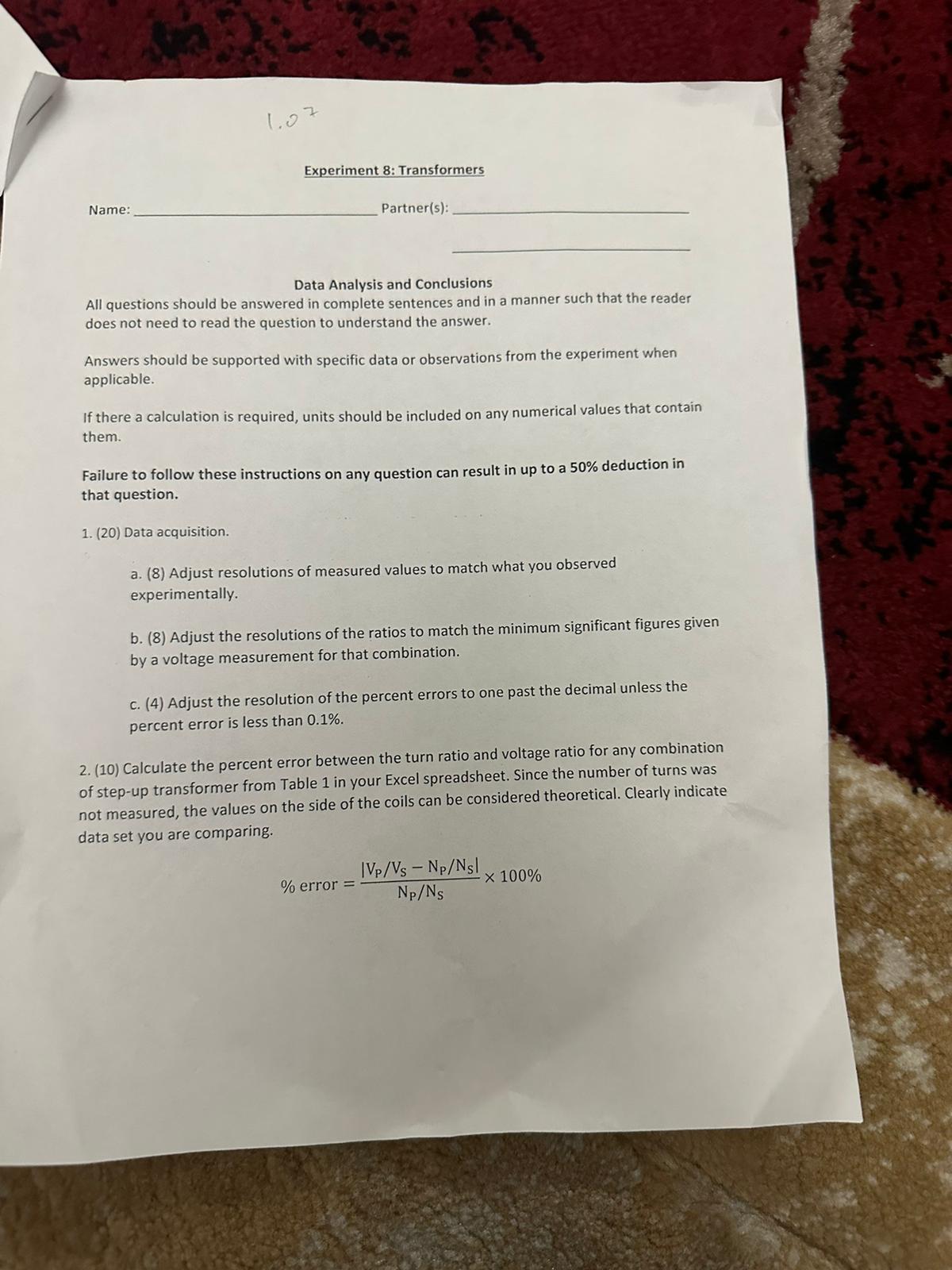
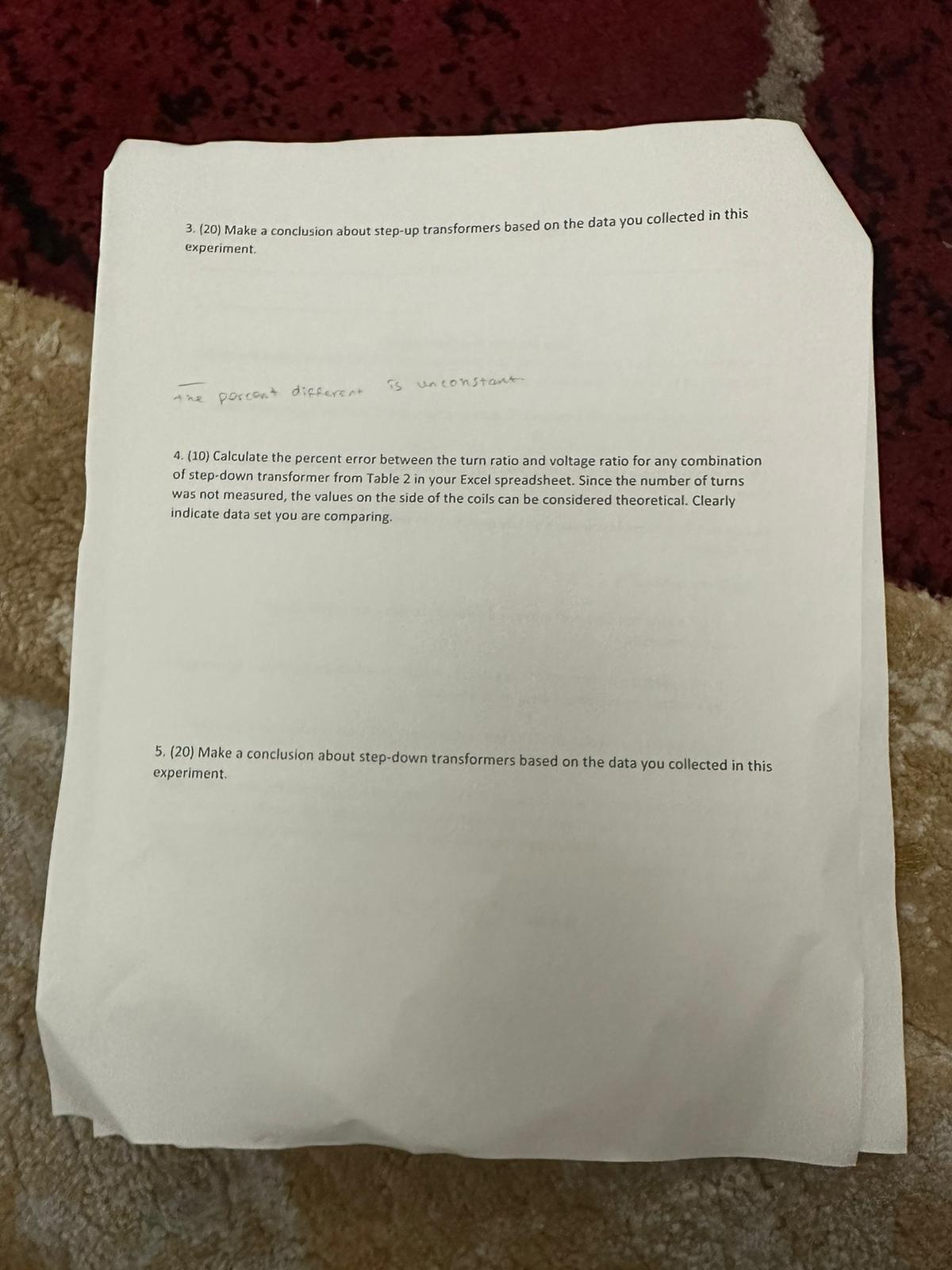
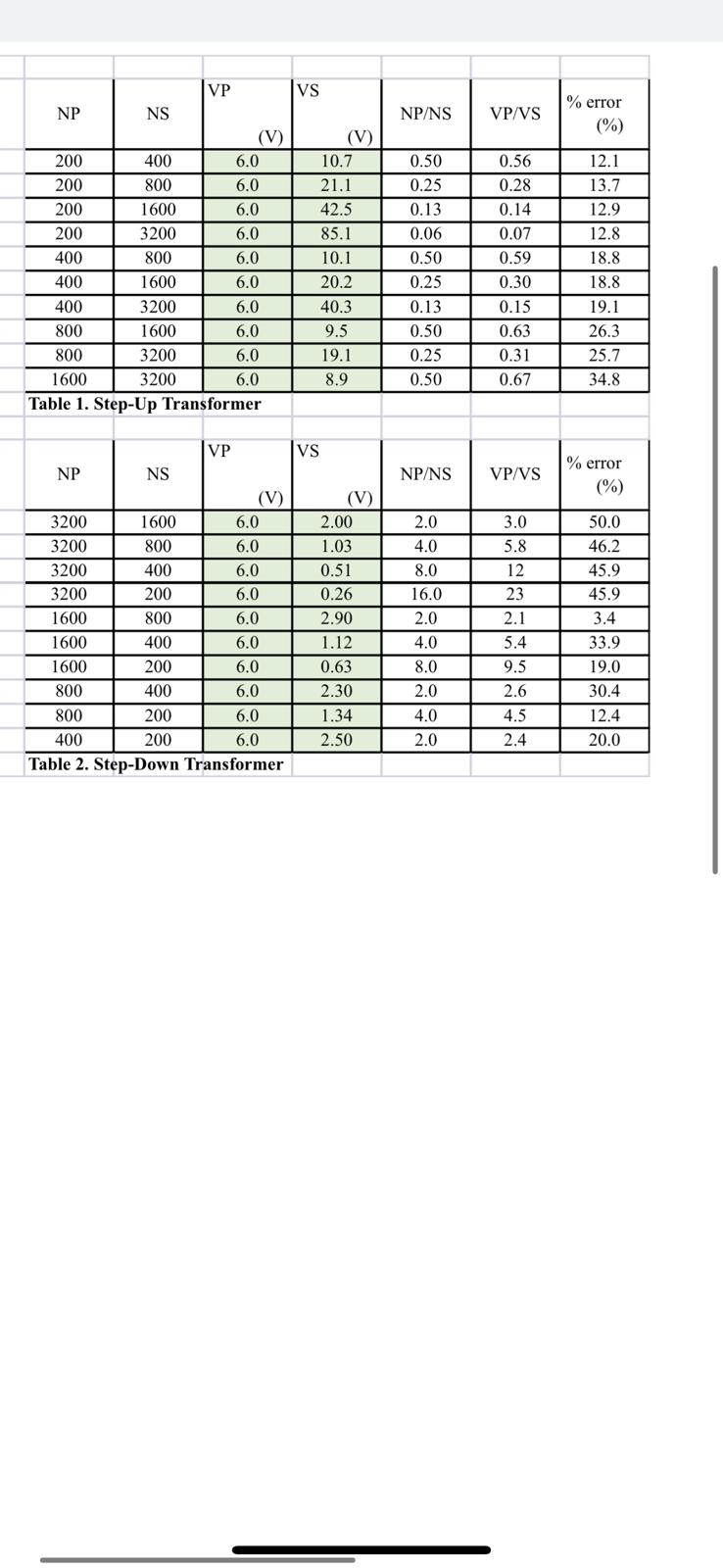

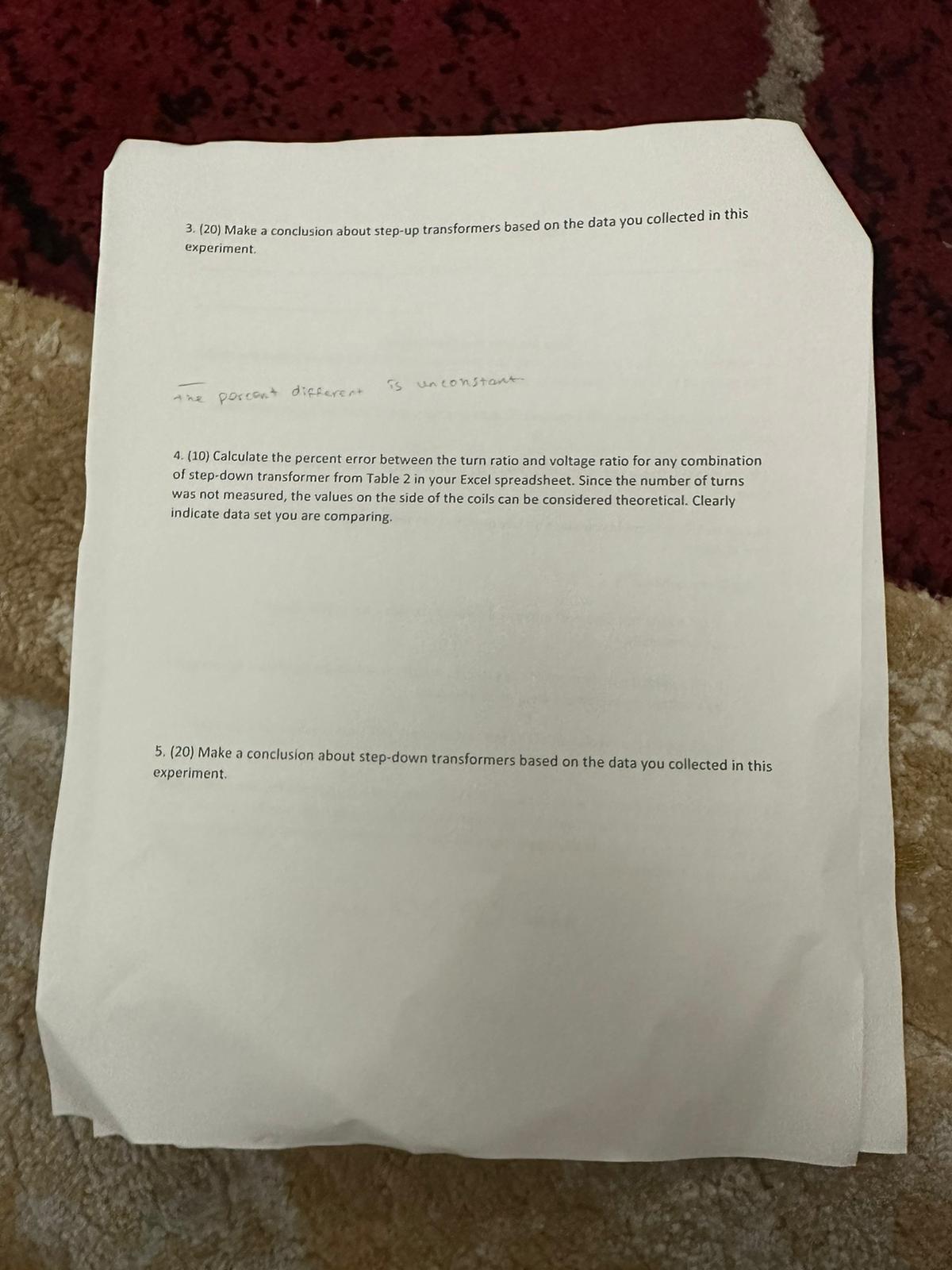
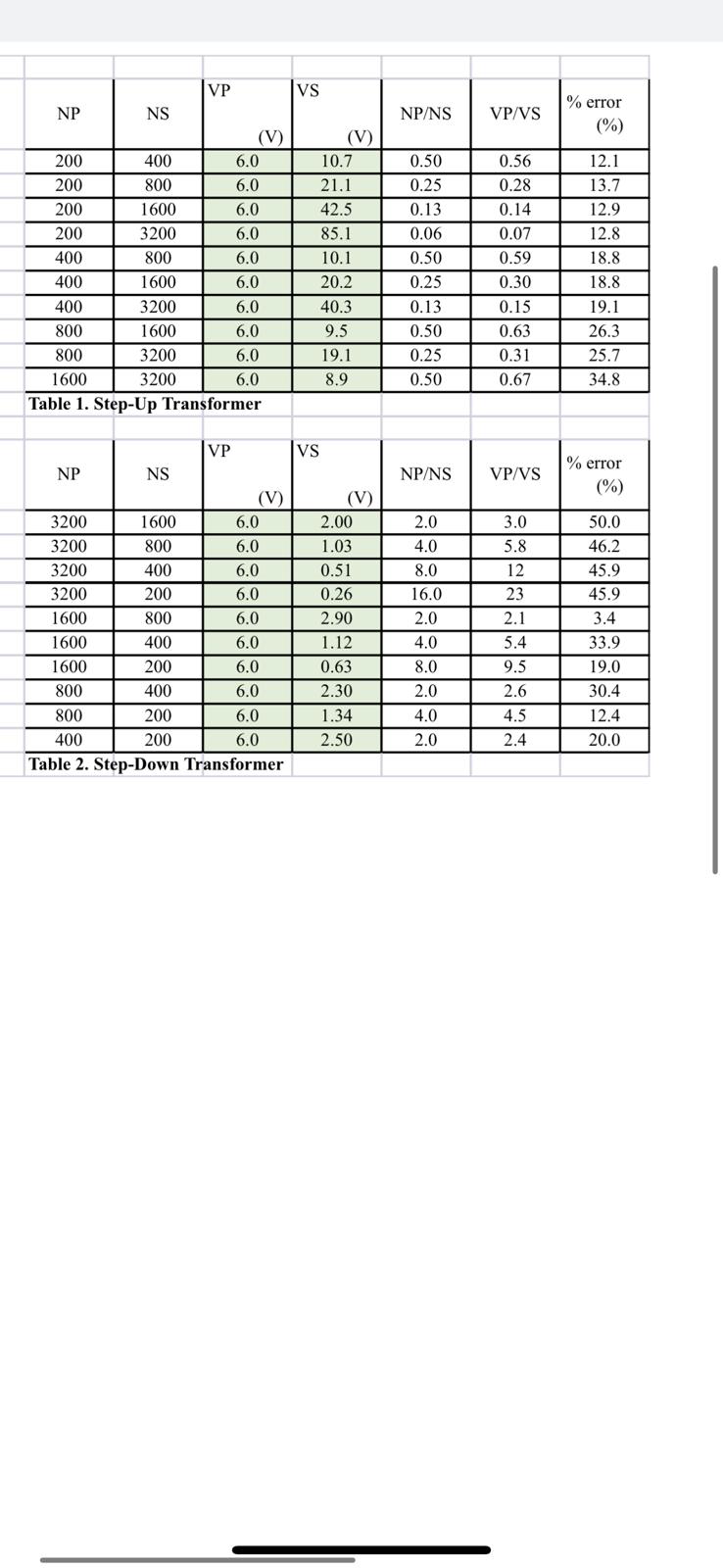

1.27 Experiment 8: Transformers Name: Partner (s): Data Analysis and Conclusions All questions should be answered in complete sentences and in a manner such that the reader does not need to read the question to understand the answer. Answers should be supported with specific data or observations from the experiment when applicable. If there a calculation is required, units should be included on any numerical values that contain them. Failure to follow these instructions on any question can result in up to a 50% deduction in that question. 1. (20) Data acquisition. a. (8) Adjust resolutions of measured values to match what you observed experimentally. b. (8) Adjust the resolutions of the ratios to match the minimum significant figures given by a voltage measurement for that combination. c. (4) Adjust the resolution of the percent errors to one past the decimal unless the percent error is less than 0.1%. 2. (10) Calculate the percent error between the turn ratio and voltage ratio for any combination of step-up transformer from Table 1 in your Excel spreadsheet. Since the number of turns was not measured, the values on the side of the coils can be considered theoretical. Clearly indicate data set you are comparing. _IVP/Vs - Np/Nal % error = x 100% NP/Ns3. (20) Make a conclusion about step-up transformers based on the data you collected in this experiment. is unconstant percent different 4. (10) Calculate the percent error between the turn ratio and voltage ratio for any combination of step-down transformer from Table 2 in your Excel spreadsheet. Since the number of turns was not measured, the values on the side of the coils can be considered theoretical. Clearly indicate data set you are comparing. 5. (20) Make a conclusion about step-down transformers based on the data you collected in this experiment.VP VS NP NS NP/NS VP/VS % error (V) (V) (%) 200 400 6.0 10.7 0.50 0.56 12.1 200 800 6.0 21.1 0.25 0.28 13.7 200 1600 6.0 42.5 0.13 0.14 12.9 200 3200 6.0 85.1 0.06 0.07 12.8 400 800 6.0 10.1 0.50 0.59 18.8 400 1600 6.0 20.2 0.25 0.30 18.8 400 3200 6.0 40.3 0.13 0.15 19.1 800 1600 6.0 9.5 0.50 0.63 26.3 800 3200 6.0 19.1 0.25 0.31 25.7 1600 3200 5.0 8.9 0.50 0.67 34.8 Table 1. Step-Up Transformer VP VS NP NS NP/NS VP/VS % error (V) (V) (%) 3200 1600 6.0 2.00 2.0 3.0 50.0 3200 800 6.0 1.03 4.0 5.8 46.2 3200 400 6.0 0.51 8.0 12 45.9 3200 200 6.0 ).26 16.0 23 45.9 600 800 6.0 2.90 2.0 2.1 3.4 600 100 6.0 1.12 4.0 5.4 33.9 600 200 6.0 ).63 8.0 9.5 19.0 800 400 6.0 2.30 2.0 2.6 30.4 300 200 6.0 1.34 4.0 4.5 12.4 400 200 6.0 2.50 2.0 2.4 20.0 Table 2. Step-Down Transformer6. (20) Describe at least 2 systematic errors that may have led to your experimental results being out of line with the theoretical predictions
Step by Step Solution
There are 3 Steps involved in it

Get step-by-step solutions from verified subject matter experts
 Study Help