







Question: 1.3 An auditor makes multiple materiality judgements. a. Define planning materiality. Explain how the auditor typically determines and uses it in the audit. b. Define
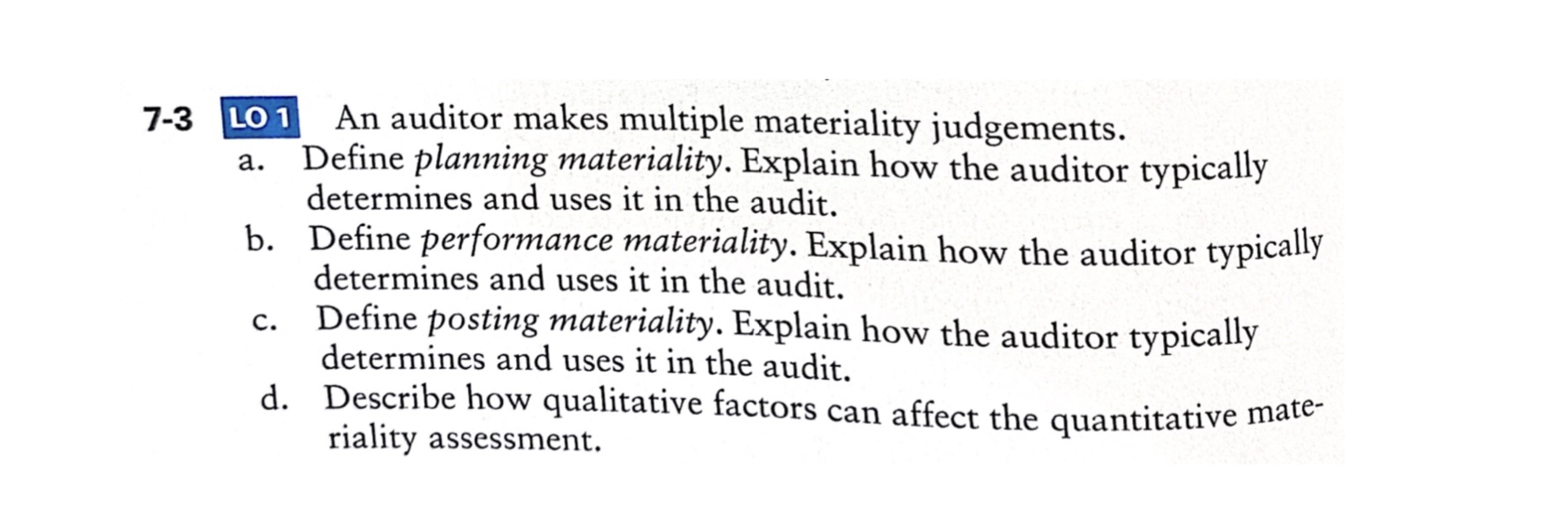
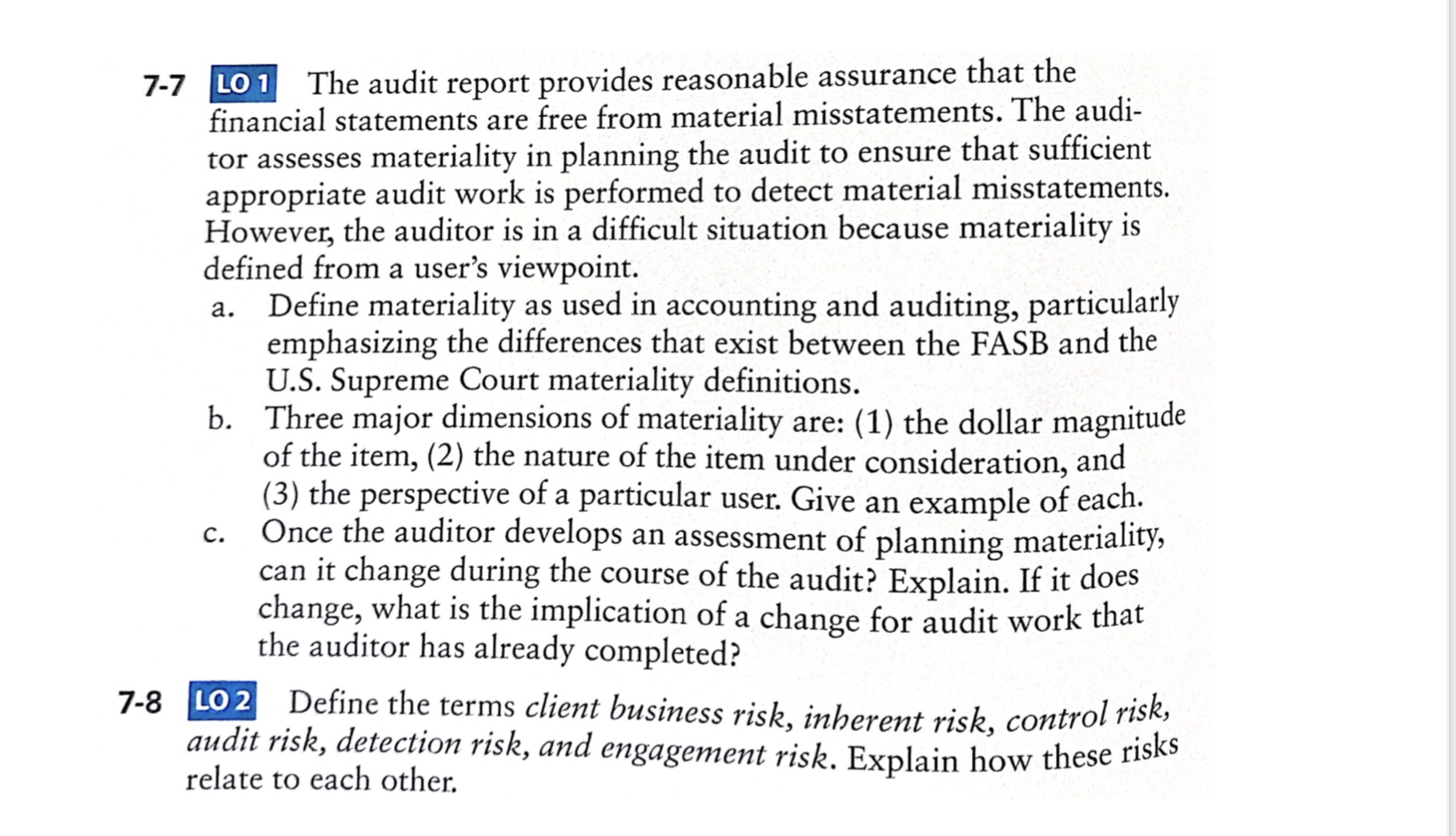
1.3 An auditor makes multiple materiality judgements. a. Define planning materiality. Explain how the auditor typically determines and uses it in the audit. b. Define performance materiality. Explain how the auditor typically determines and uses it in the audit. c. Define posting materiality. Explain h determines and uses it in the audit. d. Describe how qualitative factors riality assessment. ow the auditor typicallY can affect the quantitative mate' 7-7 LO 1 The audit report provides reasonable assurance that the financial statements are free from material misstatements. The audi- tor assesses materiality in planning the audit to ensure that sufficient appropriate audit work is performed to detect material misstatements. However, the auditor is in a difficult situation because materiality is defined from a user's viewpoint. a. Define materiality as used in accounting and auditing, particularly emphasizing the differences that exist between the FASB and the U.S. Supreme Court materiality definitions. b. Three major dimensions of materiality are: (1) the dollar magnitude of the item, (2) the nature of the item under consideration, and (3) the perspective of a particular user. Give an example of each. c. Once the auditor develops an assessment of planning materiality, can it change during the course of the audit? Explain. If it does change, what is the implication of a change for audit work that the auditor has already completed? 7-8 LO 2 Define the terms client business risk, inherent risk, control risk, audit risk, detection risk, and engagement risk. Explain how these risks relate to each other
Step by Step Solution
There are 3 Steps involved in it

Get step-by-step solutions from verified subject matter experts
 Study Help