Question: 13. The additional current criteria includes many categories; Please summarize and explain these categories based on the information provided below 3. Additional Current Criteria Supply
13. The additional current criteria includes many categories; Please summarize and explain these categories based on the information provided below
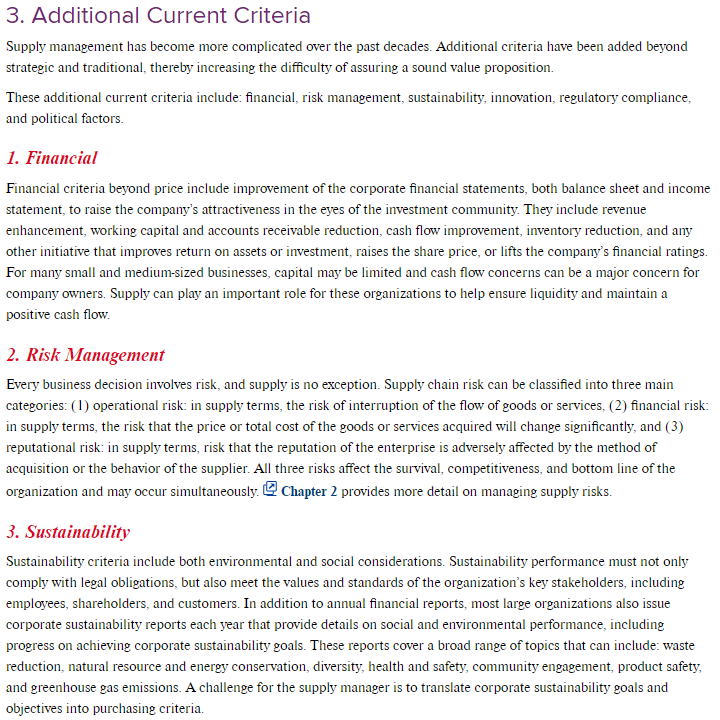
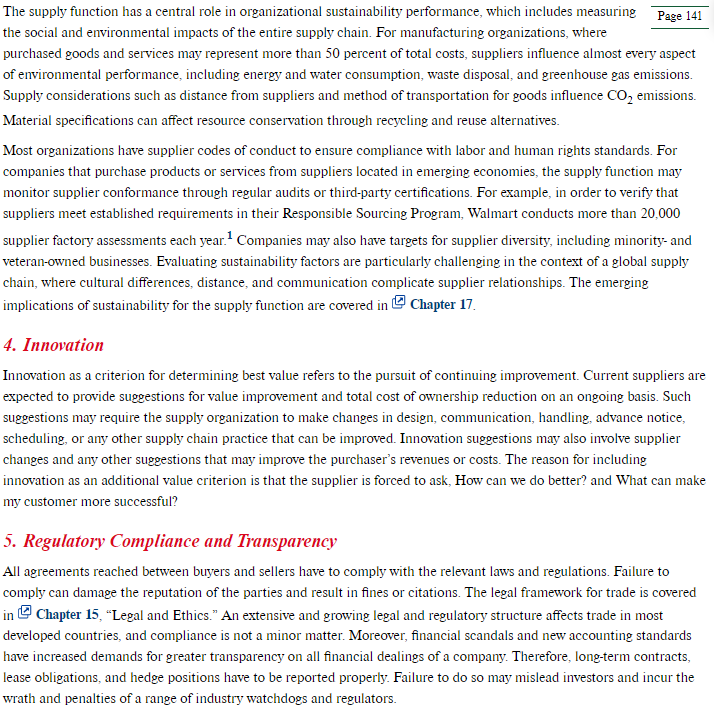
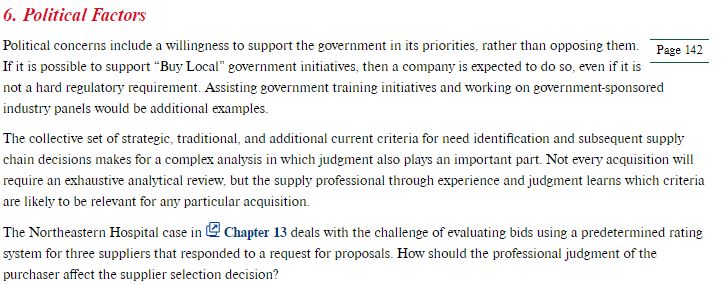
3. Additional Current Criteria Supply management has become more complicated over the past decades. Additional criteria have been added beyond strategic and traditional, thereby increasing the difficulty of assuring a sound value proposition. These additional current criteria include: financial, risk management, sustainability, innovation, regulatory compliance, and political factors 1. Financial Financial criteria beyond price include improvement of the corporate financial statements, both balance sheet and income statement, to raise the company's attractiveness in the eyes of the investment community. They include revenue enhancement, working capital and accounts receivable reduction, cash flow improvement, inventory reduction, and any other initiative that improves return on assets or investment, raises the share price, or lifts the company's financial ratings. For many small and medium-sized businesses, capital may be limited and cash flow concerns can be a major concern for company owners. Supply can play an important role for these organizations to help ensure liquidity and maintain a positive cash flow 2. Risk Management Every business decision involves risk, and supply is no exception. Supply chain risk can be classified into three main categories: (1) operational risk: in supply terms, the risk of interruption of the flow of goods or services, (2) financial risk: in supply terms, the risk that the price or total cost of the goods or services acquired will change significantly, and (3) reputational risk: in supply terms, risk that the reputation of the enterprise is adversely affected by the method of acquisition or the behavior of the supplier. All three risks affect the survival, competitiveness, and bottom line of the organization and may occur simultaneously. Chapter 2 provides more detail on managing supply risks. 3. Sustainability Sustainability criteria include both environmental and social considerations. Sustainability performance must not only comply with legal obligations, but also meet the values and standards of the organization's key stakeholders, including employees, shareholders, and customers. In addition to annual financial reports, most large organizations also issue corporate sustainability reports each year that provide details on social and environmental performance, including progress on achieving corporate sustainability goals. These reports cover a broad range of topics that can include: waste reduction, natural resource and energy conservation, diversity, health and safety, community engagement, product safety, and greenhouse gas emissions. A challenge for the supply manager is to translate corporate sustainability goals and objectives into purchasing criteria. The supply function has a central role in organizational sustainability performance, which includes measuring Page 141 the social and environmental impacts of the entire supply chain. For manufacturing organizations, where purchased goods and services may represent more than 50 percent of total costs, suppliers influence almost every aspect of environmental performance, including energy and water consumption, waste disposal, and greenhouse gas emissions. Supply considerations such as distance from suppliers and method of transportation for goods influence CO2 emissions. Material specifications can affect resource conservation through recycling and reuse alternatives. Most organizations have supplier codes of conduct to ensure compliance with labor and human rights standards. For companies that purchase products or services from suppliers located in emerging economies, the supply function may monitor supplier conformance through regular audits or third-party certifications. For example, in order to verify that suppliers meet established requirements in their Responsible Sourcing Program, Walmart conducts more than 20,000 supplier factory assessments each year. Companies may also have targets for supplier diversity, including minority- and veteran-owned businesses. Evaluating sustainability factors are particularly challenging in the context of a global supply chain, where cultural differences, distance, and communication complicate supplier relationships. The emerging implications of sustainability for the supply function are covered in Chapter 17. 4. Innovation Innovation as a criterion for determining best value refers to the pursuit of continuing improvement. Current suppliers are expected to provide suggestions for value improvement and total cost of ownership reduction on an ongoing basis. Such suggestions may require the supply organization to make changes in design, communication, handling, advance notice, scheduling, or any other supply chain practice that can be improved. Innovation suggestions may also involve supplier changes and any other suggestions that may improve the purchaser's revenues or costs. The reason for including innovation as an additional value criterion is that the supplier is forced to ask, How can we do better? and What can make my customer more successful? 5. Regulatory Compliance and Transparency All agreements reached between buyers and sellers have to comply with the relevant laws and regulations. Failure to comply can damage the reputation of the parties and result in fines or citations. The legal framework for trade is covered in Chapter 15, Legal and Ethics." An extensive and growing legal and regulatory structure affects trade in most developed countries, and compliance is not a minor matter. Moreover, financial scandals and new accounting standards have increased demands for greater transparency on all financial dealings of a company. Therefore, long-term contracts, lease obligations, and hedge positions have to be reported properly. Failure to do so may mislead investors and incur the wrath and penalties of a range of industry watchdogs and regulators. 6. Political Factors Political concerns include a willingness to support the government in its priorities, rather than opposing them. Page 142 If it is possible to support Buy Local" government initiatives, then a company is expected to do so, even if it is not a hard regulatory requirement. Assisting government training initiatives and working on government-sponsored industry panels would be additional examples. The collective set of strategic, traditional, and additional current criteria for need identification and subsequent supply chain decisions makes for a complex analysis in which judgment also plays an important part. Not every acquisition will require an exhaustive analytical review, but the supply professional through experience and judgment learns which criteria are likely to be relevant for any particular acquisition. The Northeastern Hospital case in Chapter 13 deals with the challenge of evaluating bids using a predetermined rating system for three suppliers that responded to a request for proposals. How should the professional judgment of the purchaser affect the supplier selection decision









 Study Help