



Question: 13. Two friends (call them A and B) each rolls two fair dice in that order (i.e., A rolls, then B rolls, then A rolls
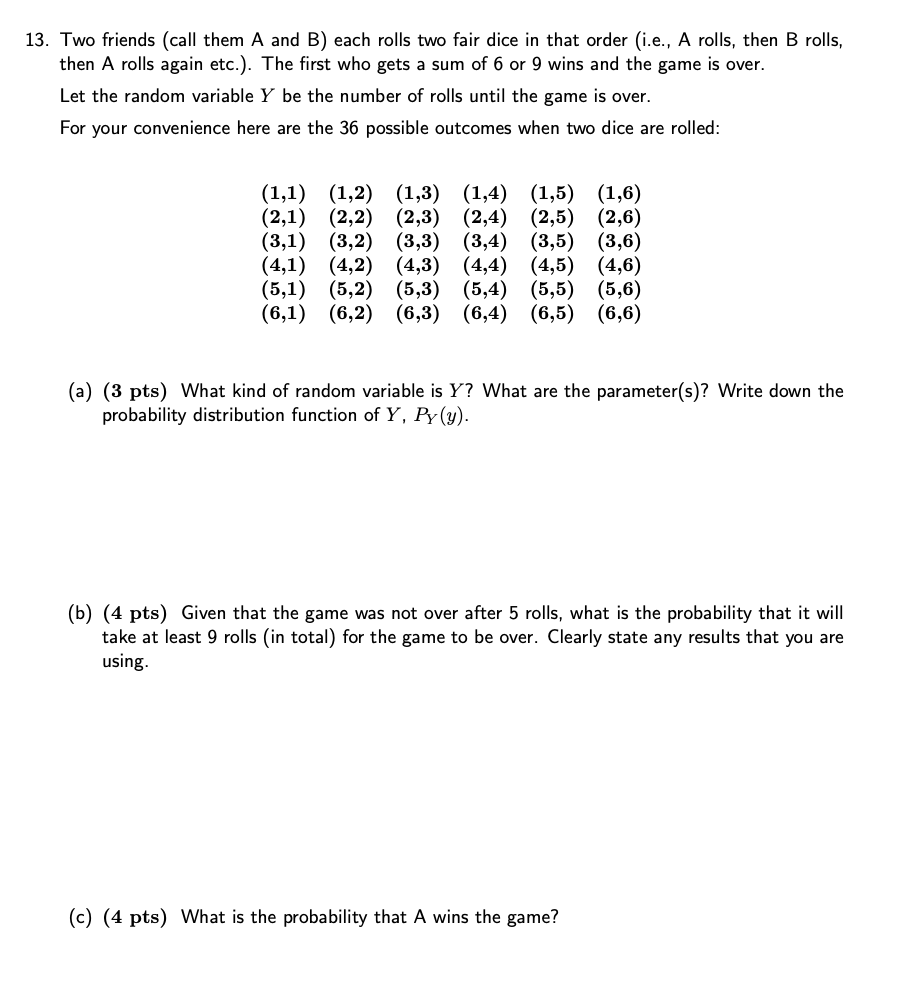
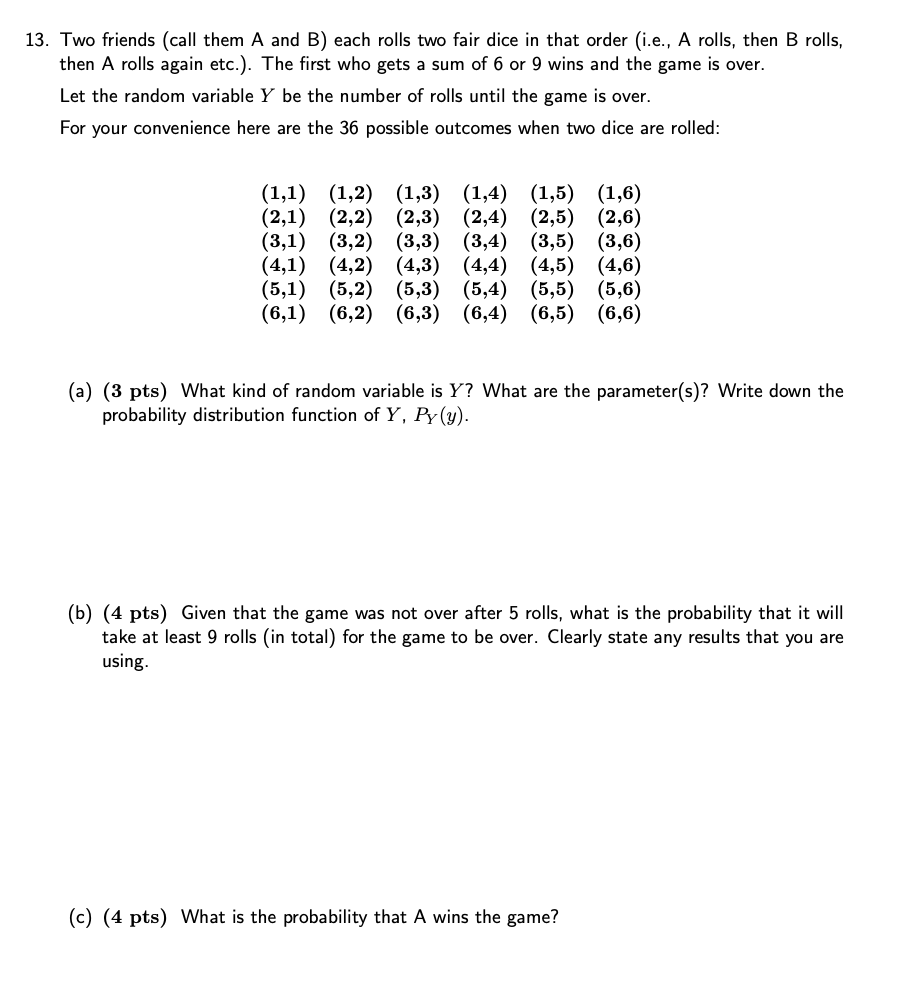
13. Two friends (call them A and B) each rolls two fair dice in that order (i.e., A rolls, then B rolls, then A rolls again etc.). The rst who gets a sum of 6 or 9 wins and the game is over. Let the random variable Y be the number of rolls until the game is over. For your convenience here are the 36 possible outcomes when two dice are rolled: (1,1) (1,2) (1:3) (1:4) (1,5) (1,6) (2,1) (2,2) (2:3) (2:4) (2,5) (2,6) (3,1) (3,2) (3:3) (3:4) (3,5) (3,6) (4,1) (4,2) (4:3) (4:4) (4,5) (4,6) (5,1) (5,2) (5:3) (5:4) (5,5) (5,6) (6,1) (6,2) (6:3) (6:4) (6,5) (6,6) {3) (3 pts) What kind of random variable is Y? What are the parameter(s)? Write down the probability distribution Function of Y, Pyy). (b) (4 pts) Given that the game was not over after 5 rolls, what is the probability that it will take at least 9 rolls (in total) For the game to be over. Clearly state any results that you are using. (c) (4 pts) What is the probability that A wins the game
Step by Step Solution
There are 3 Steps involved in it

Get step-by-step solutions from verified subject matter experts