







Question: 13 x B C D E A Label Arrow Material Arrow Fletching 1 2 3 4 5 6 7 8 9 10 2 3 4
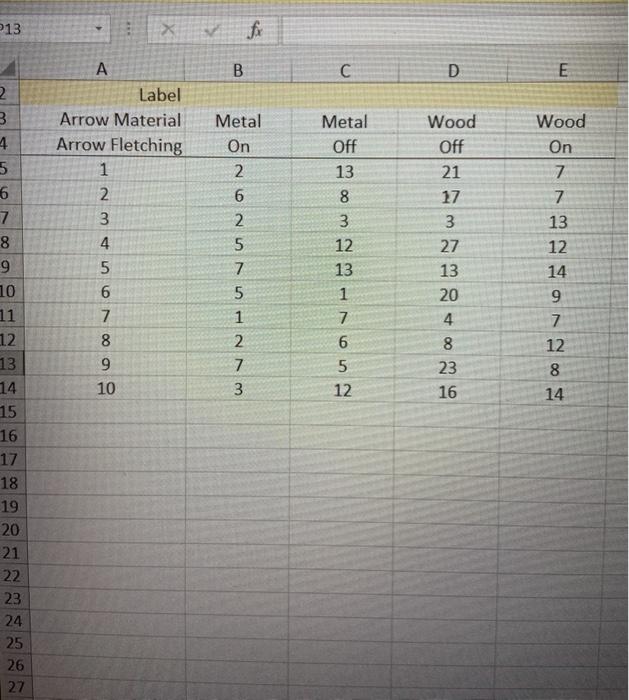
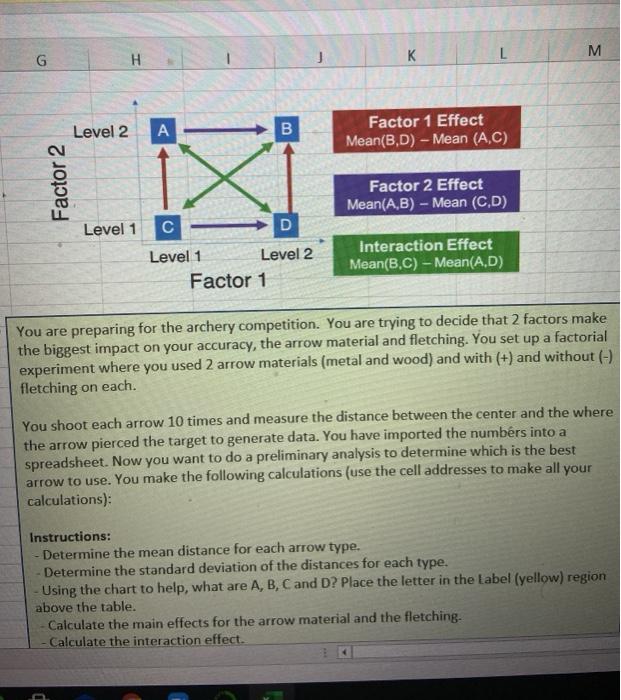
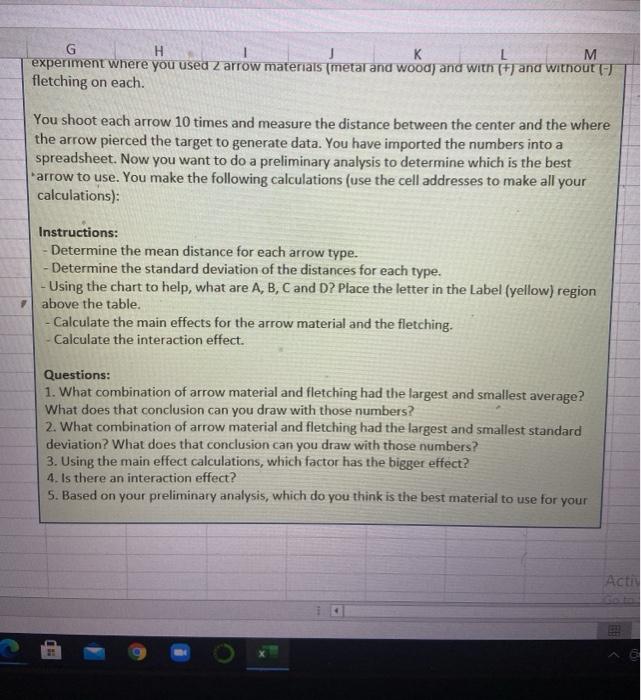
13 x B C D E A Label Arrow Material Arrow Fletching 1 2 3 4 5 6 7 8 9 10 2 3 4 5 6 7 8 9 10 11 12 13 14 15 16 17 18 19 20 21 22 23 24 25 26 27 Metal On 2. 6 2 5 7 5 1 2 7 3 Wood Off 21 17 3 27 Metal Off 13 8 3 12 13 1 7 6 5 12 Wood On 7 7 13 12 14 9 7 12 8 14 13 20 4 8 23 16 G L M K H J Level 2 A B Factor 1 Effect Mean(B,D) - Mean (A,C) Factor 2 Factor 2 Effect Mean(A,B) - Mean (C,D) Level 1 D Level 1 Level 2 Factor 1 Interaction Effect Mean(B,C) - Mean(A,D) You are preparing for the archery competition. You are trying to decide that 2 factors make the biggest impact on your accuracy, the arrow material and fletching. You set up a factorial experiment where you used 2 arrow materials (metal and wood) and with (+) and without (-) fletching on each. You shoot each arrow 10 times and measure the distance between the center and the where the arrow pierced the target to generate data. You have imported the numbers into a spreadsheet. Now you want to do a preliminary analysis to determine which is the best arrow to use. You make the following calculations (use the cell addresses to make all your calculations): Instructions: Determine the mean distance for each arrow type. Determine the standard deviation of the distances for each type. Using the chart to help, what are A, B, C and D? Place the letter in the Label (yellow) region above the table. Calculate the main effects for the arrow material and the fletching. Calculate the interaction effect. G H L M experiment where you used Z arrow materials (metar and wood) and with and without fletching on each You shoot each arrow 10 times and measure the distance between the center and the where the arrow pierced the target to generate data. You have imported the numbers into a spreadsheet. Now you want to do a preliminary analysis to determine which is the best "arrow to use. You make the following calculations (use the cell addresses to make all your calculations): Instructions: Determine the mean distance for each arrow type. - Determine the standard deviation of the distances for each type. Using the chart to help, what are A, B, C and D? Place the letter in the Label (yellow) region above the table. - Calculate the main effects for the arrow material and the fletching. - Calculate the interaction effect. Questions: 1. What combination of arrow material and fletching had the largest and smallest average? What does that conclusion can you draw with those numbers? 2. What combination of arrow material and fletching had the largest and smallest standard deviation? What does that conclusion can you draw with those numbers? 3. Using the main effect calculations, which factor has the bigger effect? 4. Is there an interaction effect? 5. Based on your preliminary analysis, which do you think is the best material to use for your Act 13 x B C D E A Label Arrow Material Arrow Fletching 1 2 3 4 5 6 7 8 9 10 2 3 4 5 6 7 8 9 10 11 12 13 14 15 16 17 18 19 20 21 22 23 24 25 26 27 Metal On 2. 6 2 5 7 5 1 2 7 3 Wood Off 21 17 3 27 Metal Off 13 8 3 12 13 1 7 6 5 12 Wood On 7 7 13 12 14 9 7 12 8 14 13 20 4 8 23 16 G L M K H J Level 2 A B Factor 1 Effect Mean(B,D) - Mean (A,C) Factor 2 Factor 2 Effect Mean(A,B) - Mean (C,D) Level 1 D Level 1 Level 2 Factor 1 Interaction Effect Mean(B,C) - Mean(A,D) You are preparing for the archery competition. You are trying to decide that 2 factors make the biggest impact on your accuracy, the arrow material and fletching. You set up a factorial experiment where you used 2 arrow materials (metal and wood) and with (+) and without (-) fletching on each. You shoot each arrow 10 times and measure the distance between the center and the where the arrow pierced the target to generate data. You have imported the numbers into a spreadsheet. Now you want to do a preliminary analysis to determine which is the best arrow to use. You make the following calculations (use the cell addresses to make all your calculations): Instructions: Determine the mean distance for each arrow type. Determine the standard deviation of the distances for each type. Using the chart to help, what are A, B, C and D? Place the letter in the Label (yellow) region above the table. Calculate the main effects for the arrow material and the fletching. Calculate the interaction effect. G H L M experiment where you used Z arrow materials (metar and wood) and with and without fletching on each You shoot each arrow 10 times and measure the distance between the center and the where the arrow pierced the target to generate data. You have imported the numbers into a spreadsheet. Now you want to do a preliminary analysis to determine which is the best "arrow to use. You make the following calculations (use the cell addresses to make all your calculations): Instructions: Determine the mean distance for each arrow type. - Determine the standard deviation of the distances for each type. Using the chart to help, what are A, B, C and D? Place the letter in the Label (yellow) region above the table. - Calculate the main effects for the arrow material and the fletching. - Calculate the interaction effect. Questions: 1. What combination of arrow material and fletching had the largest and smallest average? What does that conclusion can you draw with those numbers? 2. What combination of arrow material and fletching had the largest and smallest standard deviation? What does that conclusion can you draw with those numbers? 3. Using the main effect calculations, which factor has the bigger effect? 4. Is there an interaction effect? 5. Based on your preliminary analysis, which do you think is the best material to use for your Act
Step by Step Solution
There are 3 Steps involved in it

Get step-by-step solutions from verified subject matter experts
 Study Help