







Question: 15 = 16 = 17 = 18 = 19 = 20 21 = 22 = 23 = 24 ordinary (fair) die is a cube with
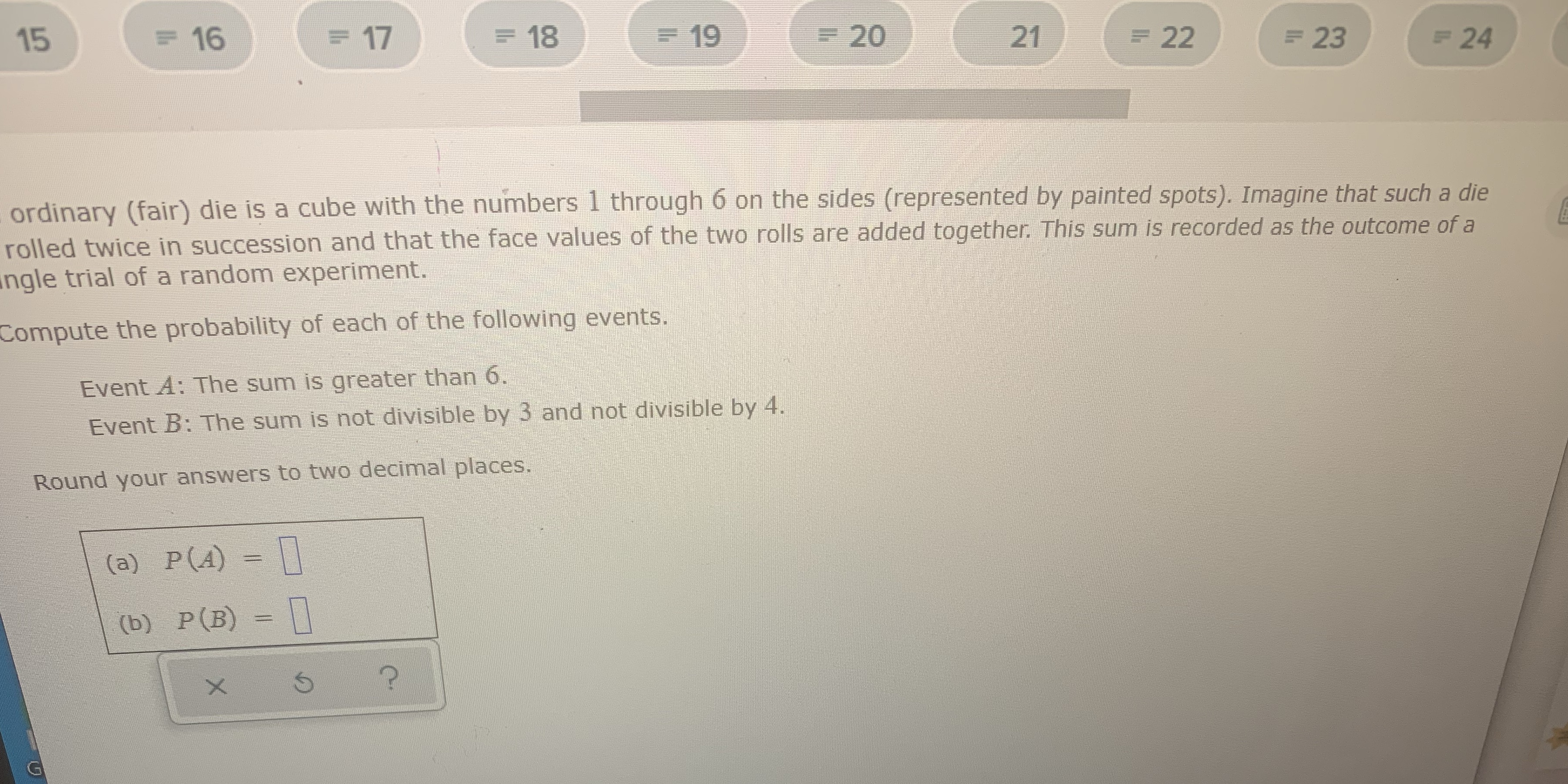
15 = 16 = 17 = 18 = 19 = 20 21 = 22 = 23 = 24 ordinary (fair) die is a cube with the numbers 1 through 6 on the sides (represented by painted spots). Imagine that such a die rolled twice in succession and that the face values of the two rolls are added together. This sum is recorded as the outcome of a Ingle trial of a random experiment. Compute the probability of each of the following events. Event A: The sum is greater than 6. Event B: The sum is not divisible by 3 and not divisible by 4. Round your answers to two decimal places. (a) P(A) = (b) P(B) = X
Step by Step Solution
There are 3 Steps involved in it
1 Expert Approved Answer
Step: 1 Unlock

Question Has Been Solved by an Expert!
Get step-by-step solutions from verified subject matter experts
Step: 2 Unlock
Step: 3 Unlock
 Study Help