







Question: 15: Data Table Print B10 440 2 Direct materials and supplies purchased on credit Direct materials used 710 Indirect materials issued to various production departments
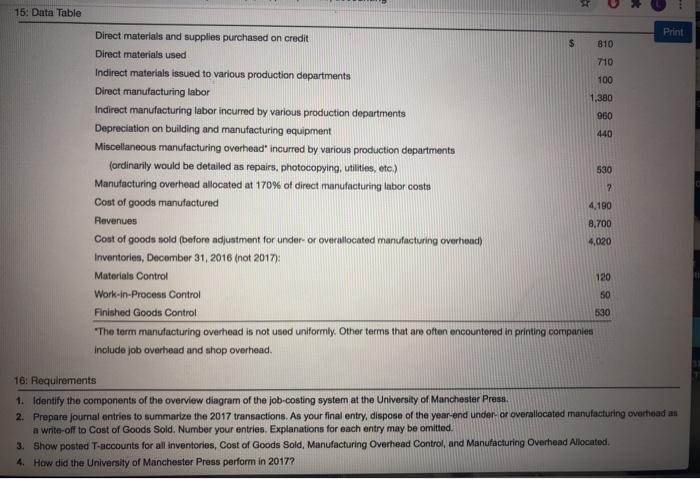
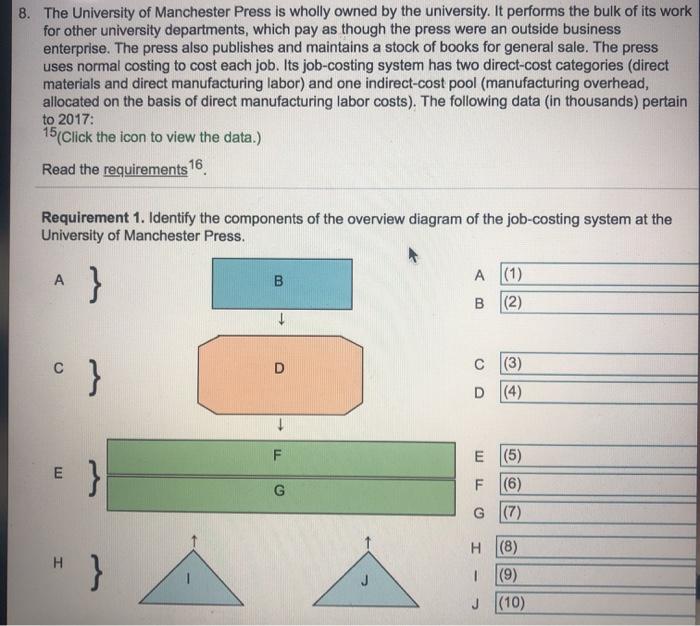
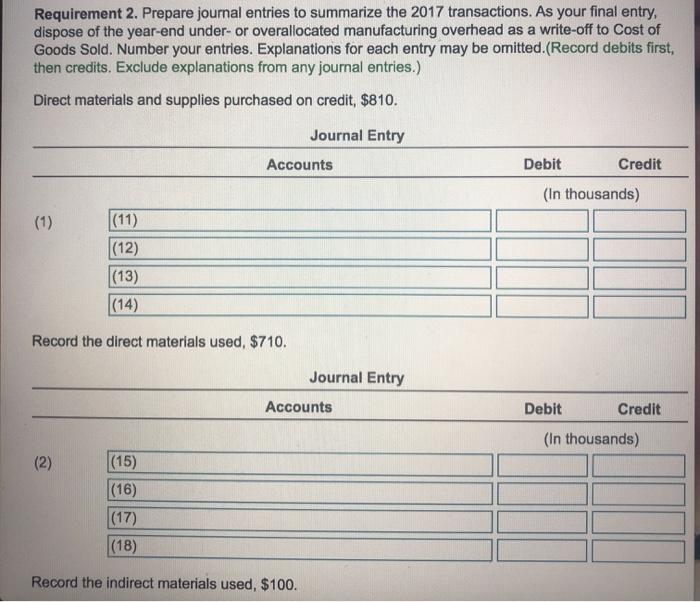
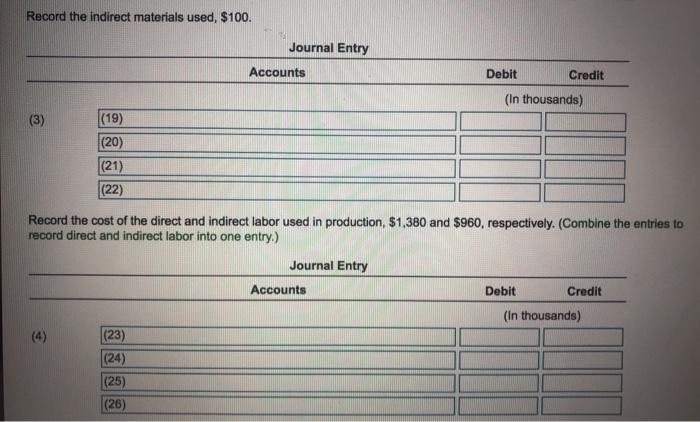
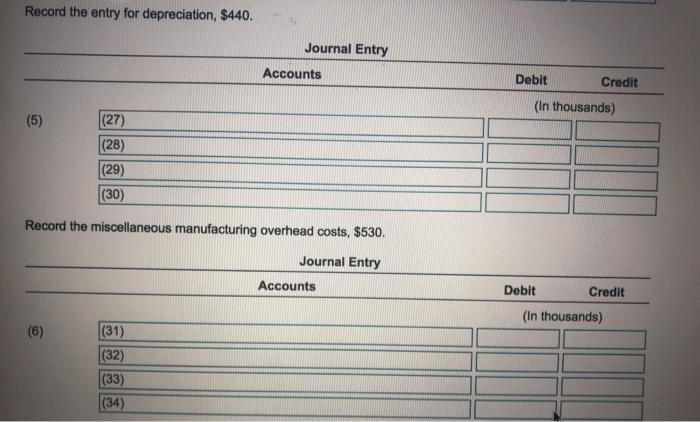
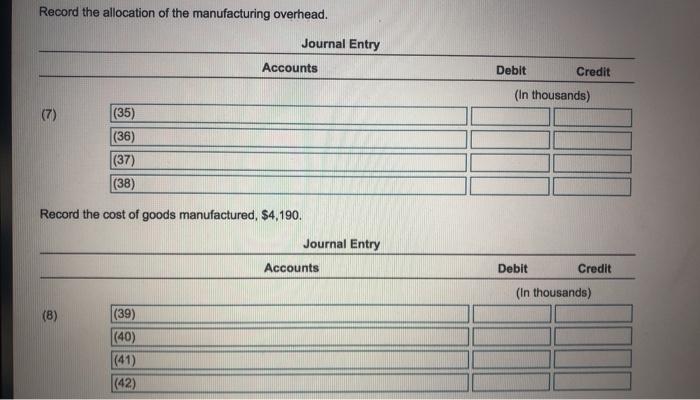
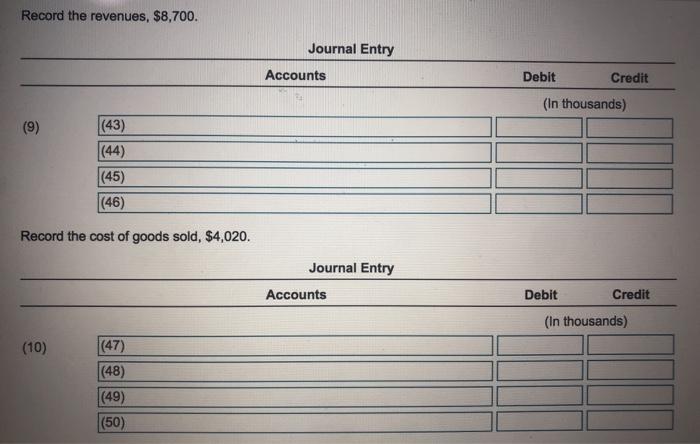
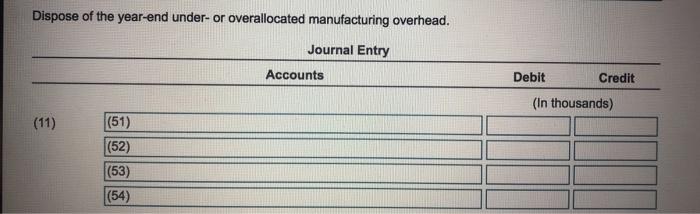
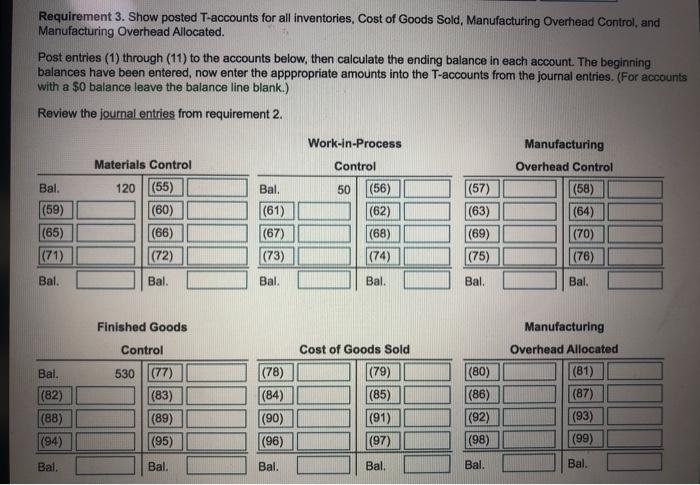

15: Data Table Print B10 440 2 Direct materials and supplies purchased on credit Direct materials used 710 Indirect materials issued to various production departments 100 Direct manufacturing labor 1.380 Indirect manufacturing labor incurred by various production departments 960 Depreciation on building and manufacturing equipment Miscellaneous manufacturing overhead" incurred by various production departments (ordinarily would be detailed as repairs, photocopying, utilities, etc.) 530 Manufacturing overhead allocated at 170% of direct manufacturing Inbor costs Cost of goods manufactured 4.190 Revenues 8,700 Cost of goods sold (before adjustment for under or overallocated manufacturing overhead) 4,020 Inventorien, December 31, 2016 (not 2017): Materials Control 120 Work-in-Process Control Finished Goods Control 530 "The term manufacturing overhead is not used uniformly. Other terms that are often encountered in printing companies Include job overhead and shop overhead. 50 16: Requirements 1. Identify the components of the overview diagram of the job costing system at the University of Manchester Press, 2. Prepare Journal entries to summarize the 2017 transactions. As your final entry, dispose of the year-end under-or overallocated manufacturing overhead an a write-off to Cost of Goods Sold. Number your entries. Explanations for each entry may be omitted. 3. Show posted T-accounts for all inventories, Cost of Goods Sold, Manufacturing Overhead Control, and Manufacturing Overhead Allocated 4. How did the University of Manchester Press perform in 2017? 8. The University of Manchester Press is wholly owned by the university. It performs the bulk of its work for other university departments, which pay as though the press were an outside business enterprise. The press also publishes and maintains a stock of books for general sale. The press uses normal costing to cost each job. Its job-costing system has two direct-cost categories (direct materials and direct manufacturing labor) and one indirect-cost pool (manufacturing overhead, allocated on the basis of direct manufacturing labor costs). The following data (in thousands) pertain to 2017: 15(Click the icon to view the data.) Read the requirements 16. Requirement 1. Identify the components of the overview diagram of the job-costing system at the University of Manchester Press. A } A (1) B (2) D (3) } D (4) F E G (5) F (6) G (7) H } H (8) 1 (9) J (10) Requirement 2. Prepare journal entries to summarize the 2017 transactions. As your final entry, dispose of the year-end under- or overallocated manufacturing overhead as a write-off to Cost of Goods Sold. Number your entries. Explanations for each entry may be omitted.(Record debits first, then credits. Exclude explanations from any journal entries.) Direct materials and supplies purchased on credit, $810. Journal Entry Accounts Debit Credit (In thousands) (1) (11) (12) (13) (14) Record the direct materials used, $710. Journal Entry Accounts Debit Credit (In thousands) (2) (15) (16) (17) (18) Record the indirect materials used, $100. Record the indirect materials used, $100. Journal Entry Accounts Debit Credit (In thousands) (19) (20) (21) (22) Record the cost of the direct and indirect labor used in production, $1,380 and $960, respectively. (Combine the entries to record direct and indirect labor into one entry) Journal Entry Accounts Debit Credit (In thousands) (23) (24) (25) (26) Record the entry for depreciation, $440. Journal Entry Accounts Debit Credit (In thousands) (5) (27) (28) (29) (30) Record the miscellaneous manufacturing overhead costs, $530. Journal Entry Accounts Debit Credit (In thousands) (6) (31) (32) (33) (34) Record the allocation of the manufacturing overhead. Journal Entry Accounts Debit Credit (In thousands) (7) (35) (36) (37) (38) Record the cost of goods manufactured, $4,190, Journal Entry Accounts Debit Credit (In thousands) (8) (39) (40) (41) (42) Record the revenues, $8,700. Journal Entry Accounts Debit Credit (In thousands) (9) (43) (44) (45) (46) Record the cost of goods sold, $4,020. Journal Entry Accounts Debit Credit (In thousands) (10) (47) (48) (49) (50) Dispose of the year-end under-or overallocated manufacturing overhead. Journal Entry Accounts Debit Credit (In thousands) (11) (51) (52) (53) (54) Requirement 3. Show posted T-accounts for all inventories, Cost of Goods Sold, Manufacturing Overhead Control, and Manufacturing Overhead Allocated. Post entries (1) through (11) to the accounts below, then calculate the ending balance in each account. The beginning balances have been entered, now enter the apppropriate amounts into the T-accounts from the journal entries. (For accounts with a $0 balance leave the balance line blank.) Review the journal entries from requirement 2. Work-in-Process Bal. Bal. (59) (65) (71) Materials Control 120 (55) (60) (66) (72) Control 50 (56) (62) (68) Manufacturing Overhead Control (58) (64) (70) (76) (57) (63) (69) (75) (61) (67) (73) Bal. Bal. Bal. Bal Bal. Bal. Finished Goods Control Cost of Goods Sold (79) Bal. 530 ||(77) (83) (89) (95) (82) (88) (78) (84) (90) Manufacturing Overhead Allocated (81) (87) (93) (99) (80) (86) (92) (98) (85) (91) (97) (96) Bal. Bal. Bal. Bal Bal. Bal. Requirement 4. How did the University of Manchester Press perform in 2017? (Round your answer to the nearest whole percent.) Manchester Press' gross margin percentage of % is (100) This indicates that University of Manchester Press (101) in 2017. Gross margins above 30% are generally considered very good. 15: Data Table Print B10 440 2 Direct materials and supplies purchased on credit Direct materials used 710 Indirect materials issued to various production departments 100 Direct manufacturing labor 1.380 Indirect manufacturing labor incurred by various production departments 960 Depreciation on building and manufacturing equipment Miscellaneous manufacturing overhead" incurred by various production departments (ordinarily would be detailed as repairs, photocopying, utilities, etc.) 530 Manufacturing overhead allocated at 170% of direct manufacturing Inbor costs Cost of goods manufactured 4.190 Revenues 8,700 Cost of goods sold (before adjustment for under or overallocated manufacturing overhead) 4,020 Inventorien, December 31, 2016 (not 2017): Materials Control 120 Work-in-Process Control Finished Goods Control 530 "The term manufacturing overhead is not used uniformly. Other terms that are often encountered in printing companies Include job overhead and shop overhead. 50 16: Requirements 1. Identify the components of the overview diagram of the job costing system at the University of Manchester Press, 2. Prepare Journal entries to summarize the 2017 transactions. As your final entry, dispose of the year-end under-or overallocated manufacturing overhead an a write-off to Cost of Goods Sold. Number your entries. Explanations for each entry may be omitted. 3. Show posted T-accounts for all inventories, Cost of Goods Sold, Manufacturing Overhead Control, and Manufacturing Overhead Allocated 4. How did the University of Manchester Press perform in 2017? 8. The University of Manchester Press is wholly owned by the university. It performs the bulk of its work for other university departments, which pay as though the press were an outside business enterprise. The press also publishes and maintains a stock of books for general sale. The press uses normal costing to cost each job. Its job-costing system has two direct-cost categories (direct materials and direct manufacturing labor) and one indirect-cost pool (manufacturing overhead, allocated on the basis of direct manufacturing labor costs). The following data (in thousands) pertain to 2017: 15(Click the icon to view the data.) Read the requirements 16. Requirement 1. Identify the components of the overview diagram of the job-costing system at the University of Manchester Press. A } A (1) B (2) D (3) } D (4) F E G (5) F (6) G (7) H } H (8) 1 (9) J (10) Requirement 2. Prepare journal entries to summarize the 2017 transactions. As your final entry, dispose of the year-end under- or overallocated manufacturing overhead as a write-off to Cost of Goods Sold. Number your entries. Explanations for each entry may be omitted.(Record debits first, then credits. Exclude explanations from any journal entries.) Direct materials and supplies purchased on credit, $810. Journal Entry Accounts Debit Credit (In thousands) (1) (11) (12) (13) (14) Record the direct materials used, $710. Journal Entry Accounts Debit Credit (In thousands) (2) (15) (16) (17) (18) Record the indirect materials used, $100. Record the indirect materials used, $100. Journal Entry Accounts Debit Credit (In thousands) (19) (20) (21) (22) Record the cost of the direct and indirect labor used in production, $1,380 and $960, respectively. (Combine the entries to record direct and indirect labor into one entry) Journal Entry Accounts Debit Credit (In thousands) (23) (24) (25) (26) Record the entry for depreciation, $440. Journal Entry Accounts Debit Credit (In thousands) (5) (27) (28) (29) (30) Record the miscellaneous manufacturing overhead costs, $530. Journal Entry Accounts Debit Credit (In thousands) (6) (31) (32) (33) (34) Record the allocation of the manufacturing overhead. Journal Entry Accounts Debit Credit (In thousands) (7) (35) (36) (37) (38) Record the cost of goods manufactured, $4,190, Journal Entry Accounts Debit Credit (In thousands) (8) (39) (40) (41) (42) Record the revenues, $8,700. Journal Entry Accounts Debit Credit (In thousands) (9) (43) (44) (45) (46) Record the cost of goods sold, $4,020. Journal Entry Accounts Debit Credit (In thousands) (10) (47) (48) (49) (50) Dispose of the year-end under-or overallocated manufacturing overhead. Journal Entry Accounts Debit Credit (In thousands) (11) (51) (52) (53) (54) Requirement 3. Show posted T-accounts for all inventories, Cost of Goods Sold, Manufacturing Overhead Control, and Manufacturing Overhead Allocated. Post entries (1) through (11) to the accounts below, then calculate the ending balance in each account. The beginning balances have been entered, now enter the apppropriate amounts into the T-accounts from the journal entries. (For accounts with a $0 balance leave the balance line blank.) Review the journal entries from requirement 2. Work-in-Process Bal. Bal. (59) (65) (71) Materials Control 120 (55) (60) (66) (72) Control 50 (56) (62) (68) Manufacturing Overhead Control (58) (64) (70) (76) (57) (63) (69) (75) (61) (67) (73) Bal. Bal. Bal. Bal Bal. Bal. Finished Goods Control Cost of Goods Sold (79) Bal. 530 ||(77) (83) (89) (95) (82) (88) (78) (84) (90) Manufacturing Overhead Allocated (81) (87) (93) (99) (80) (86) (92) (98) (85) (91) (97) (96) Bal. Bal. Bal. Bal Bal. Bal. Requirement 4. How did the University of Manchester Press perform in 2017? (Round your answer to the nearest whole percent.) Manchester Press' gross margin percentage of % is (100) This indicates that University of Manchester Press (101) in 2017. Gross margins above 30% are generally considered very good
Step by Step Solution
There are 3 Steps involved in it

Get step-by-step solutions from verified subject matter experts
 Study Help