







Question: 1.5. Need help calculating please, based on m y answers. It is better to negotiate alone than as a team. Companies are more successful when
1.5. Need help calculating please, based on m
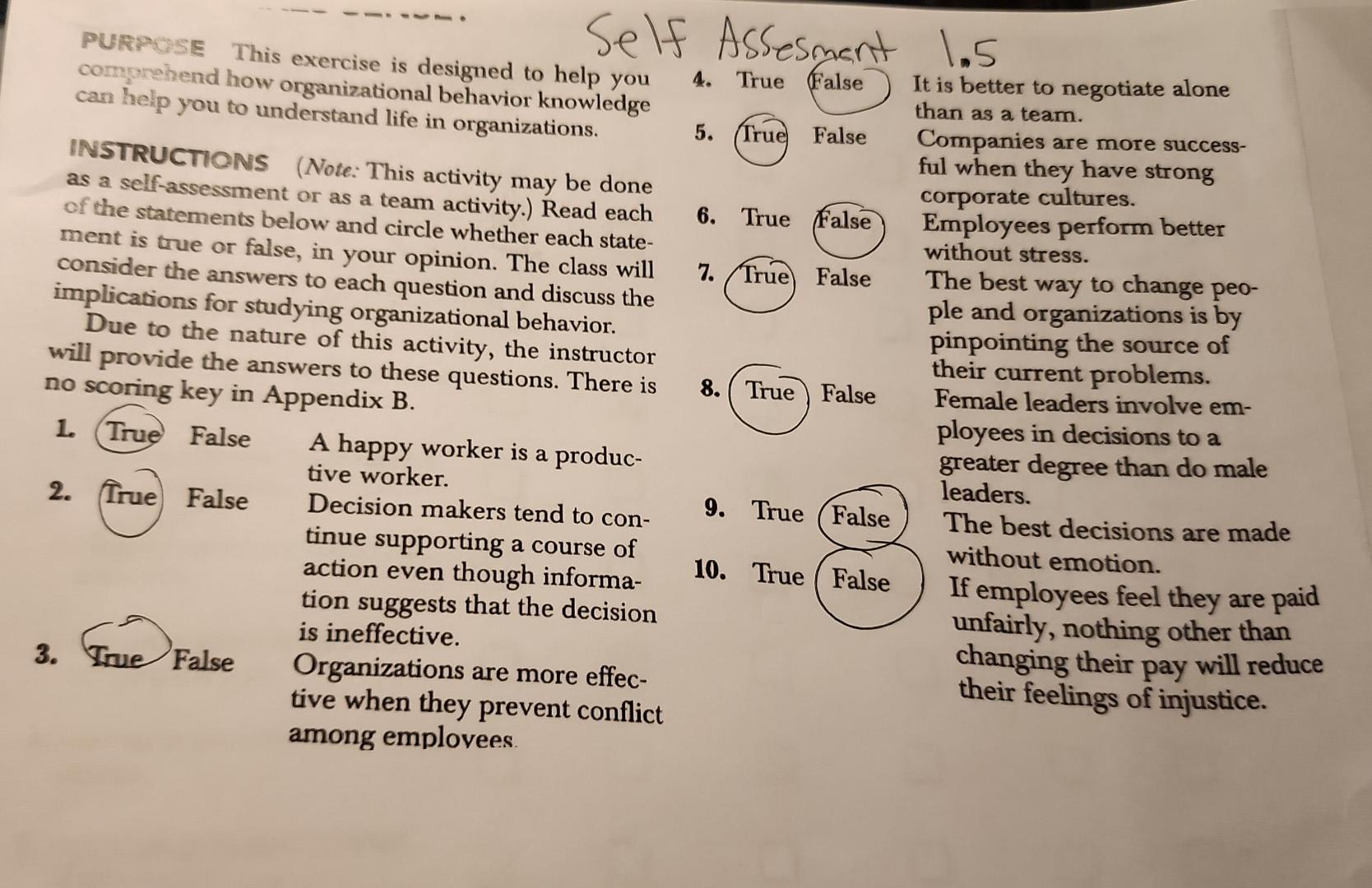
y answers.
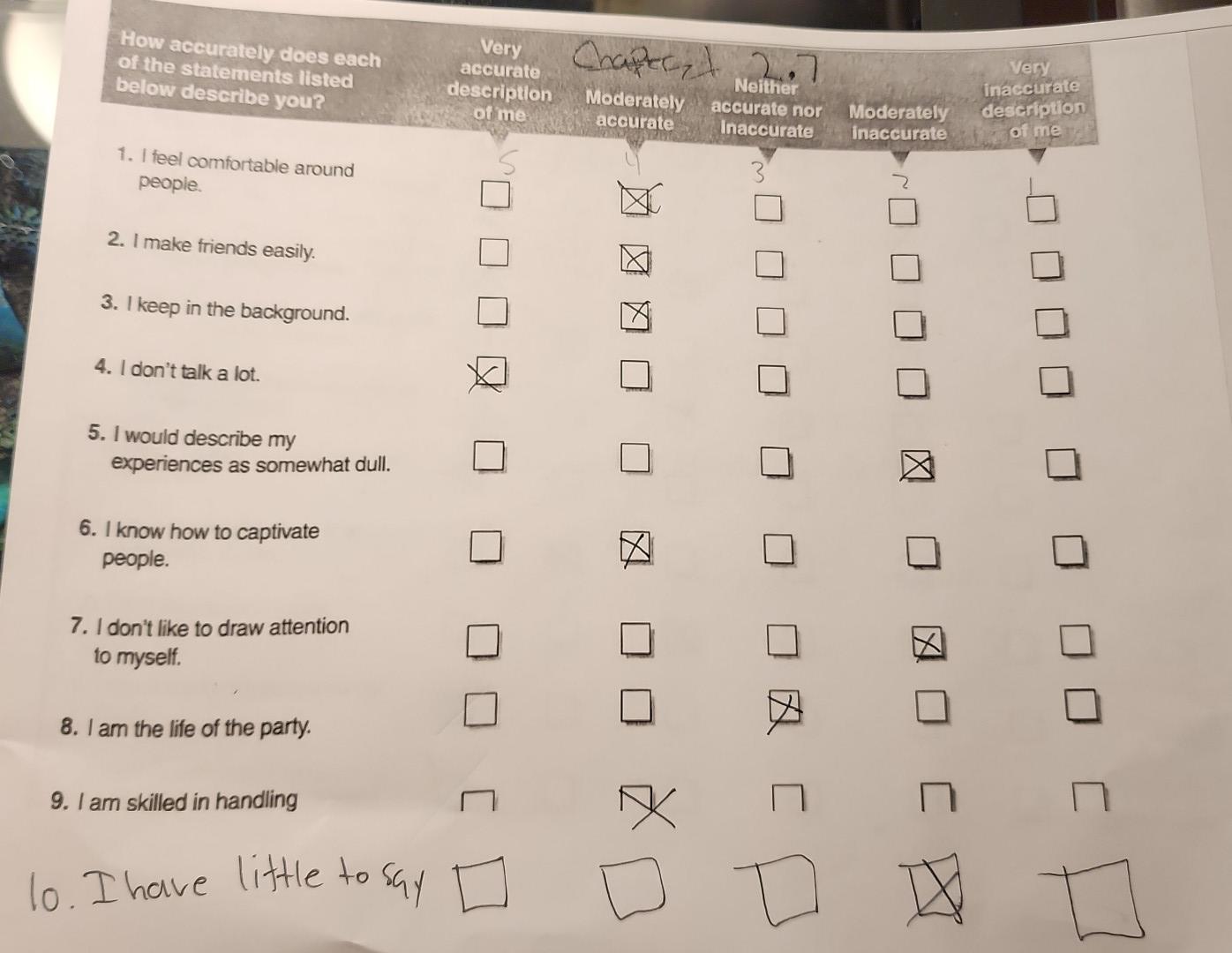
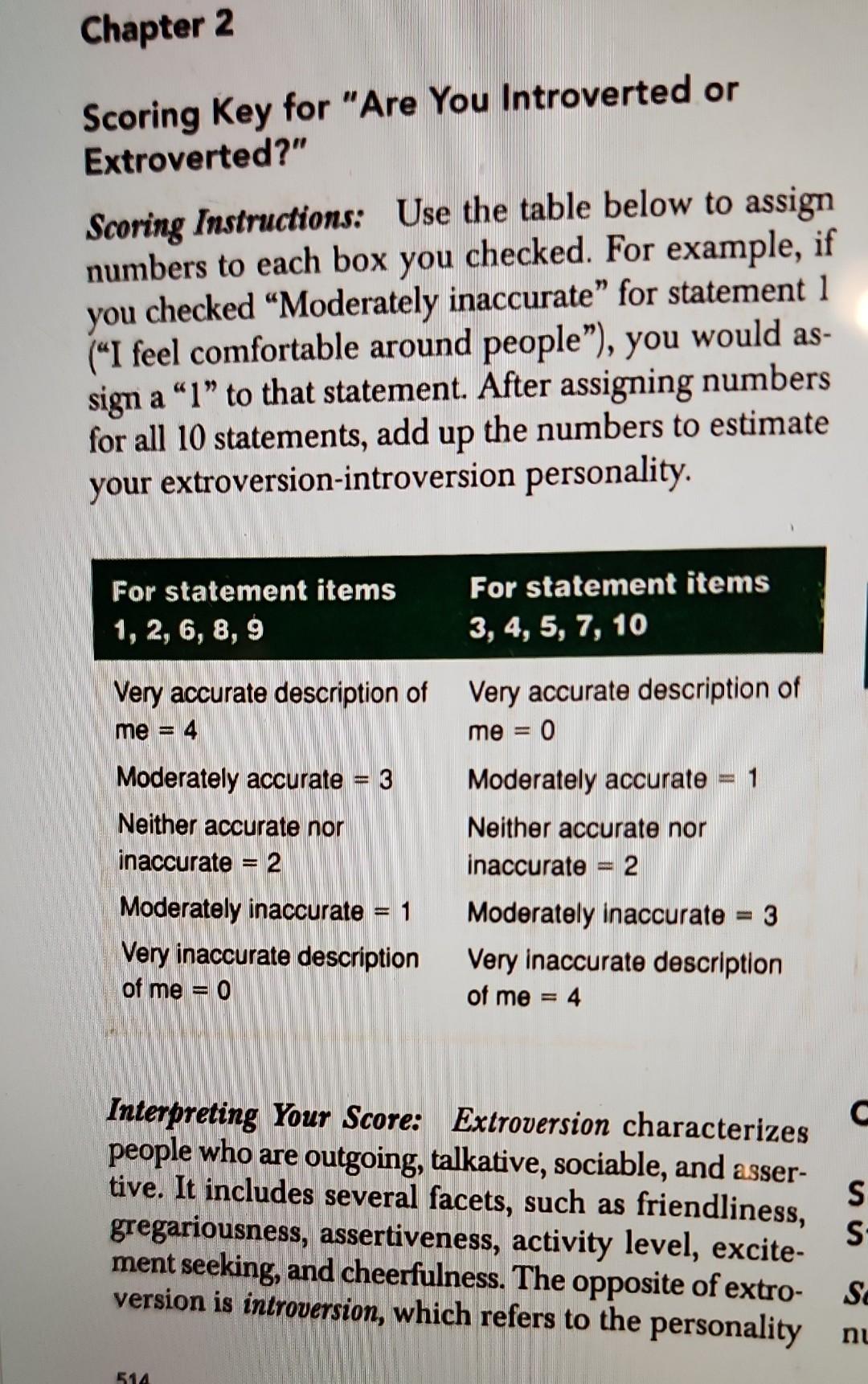
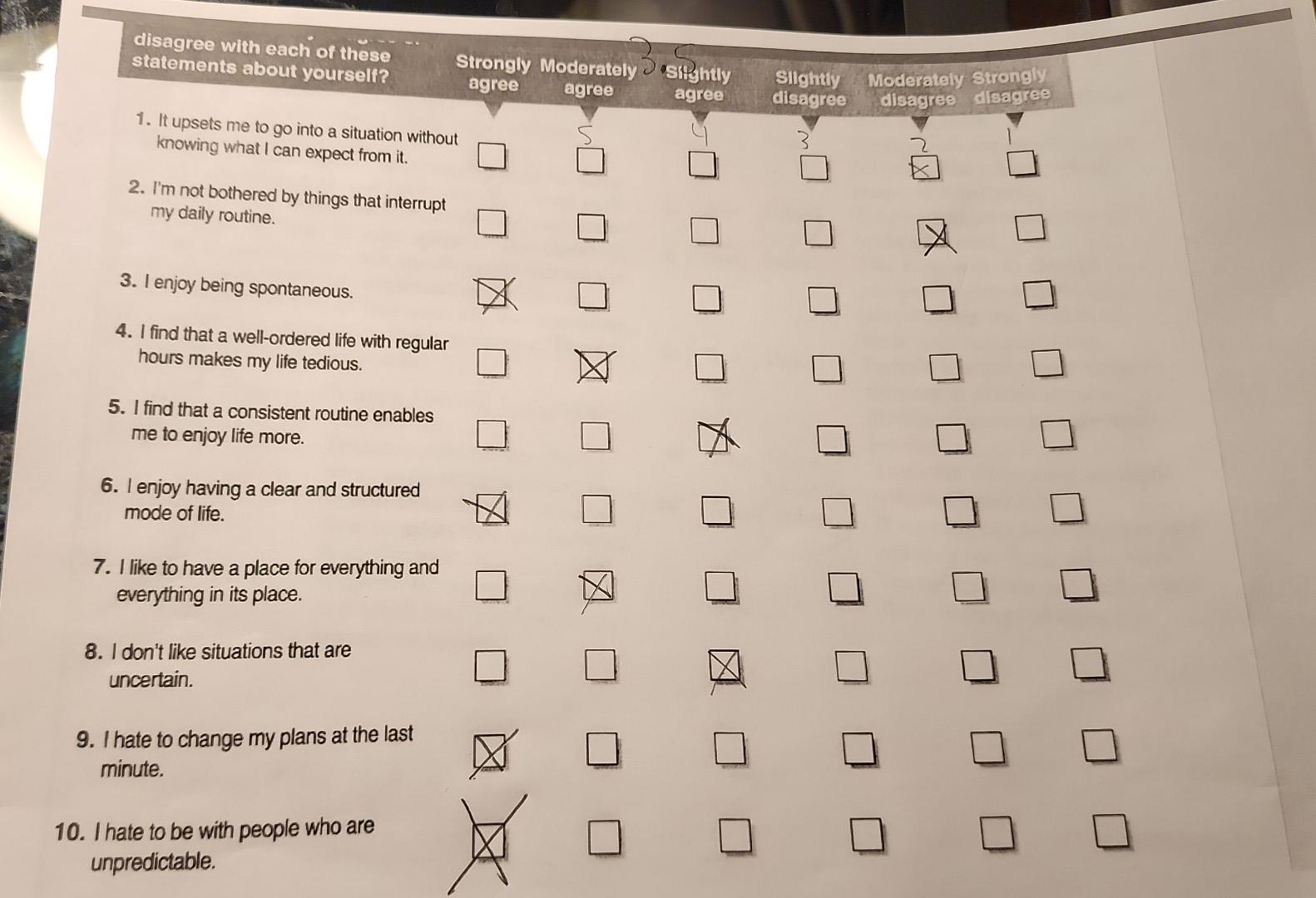
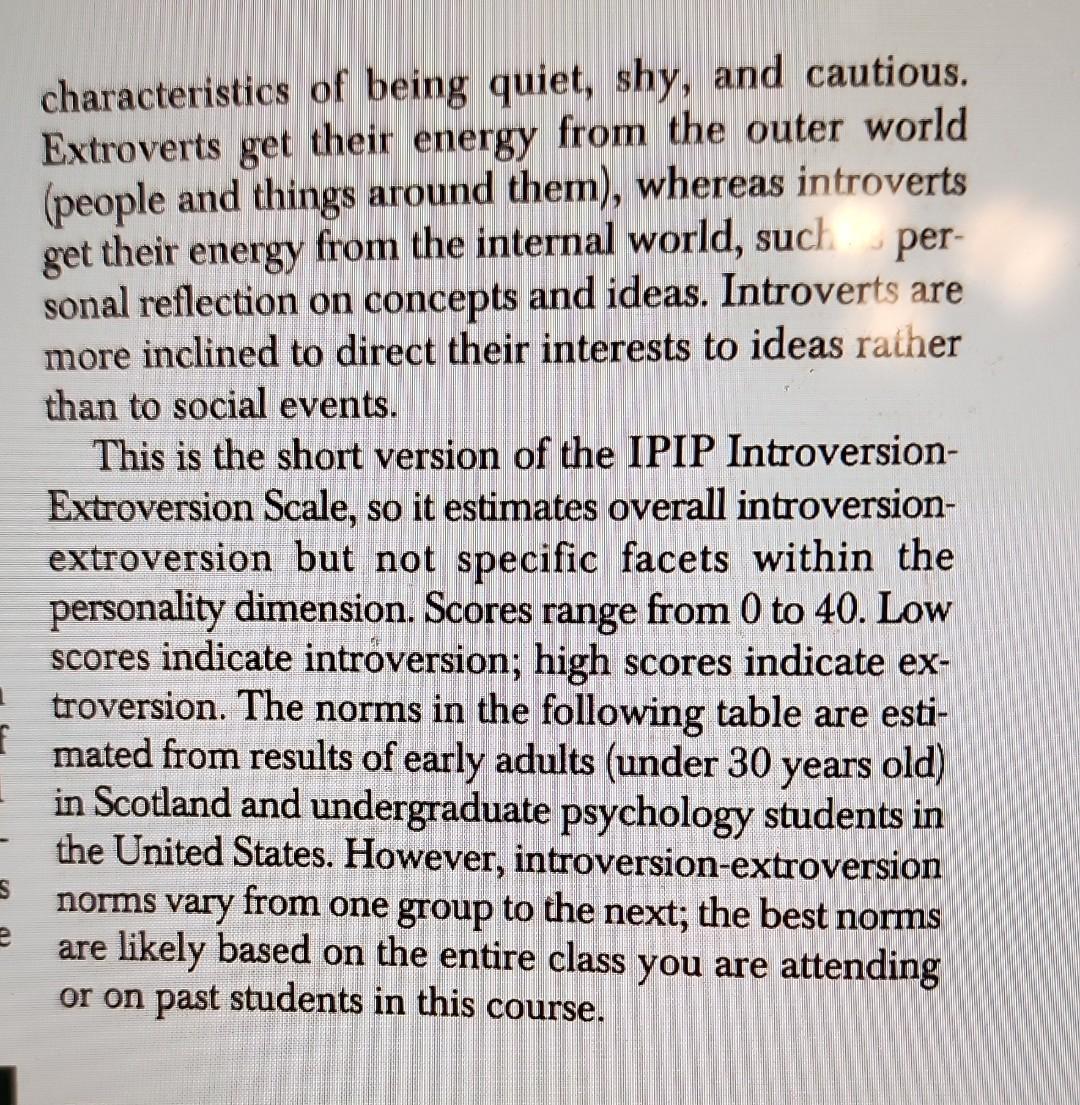
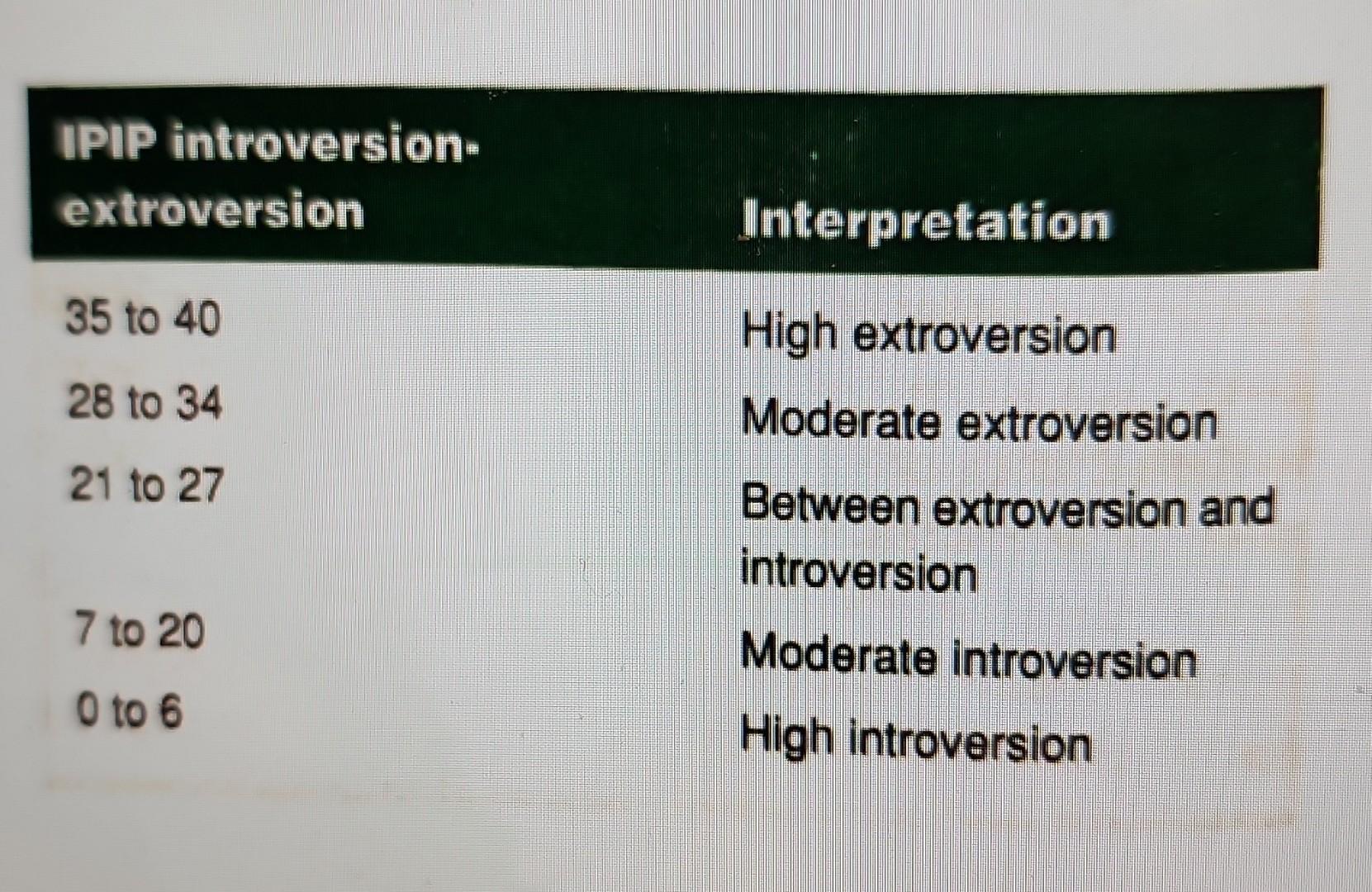
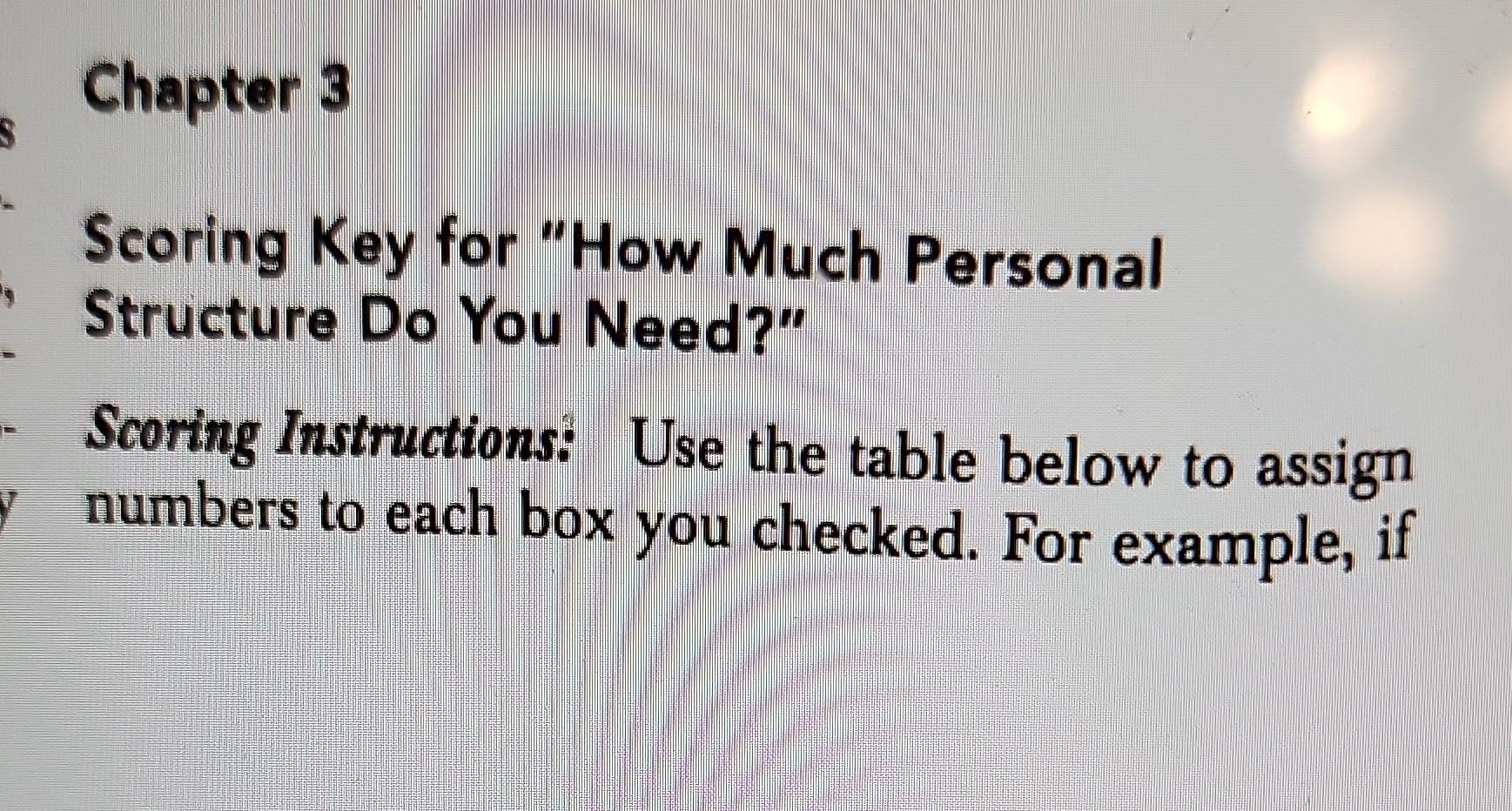
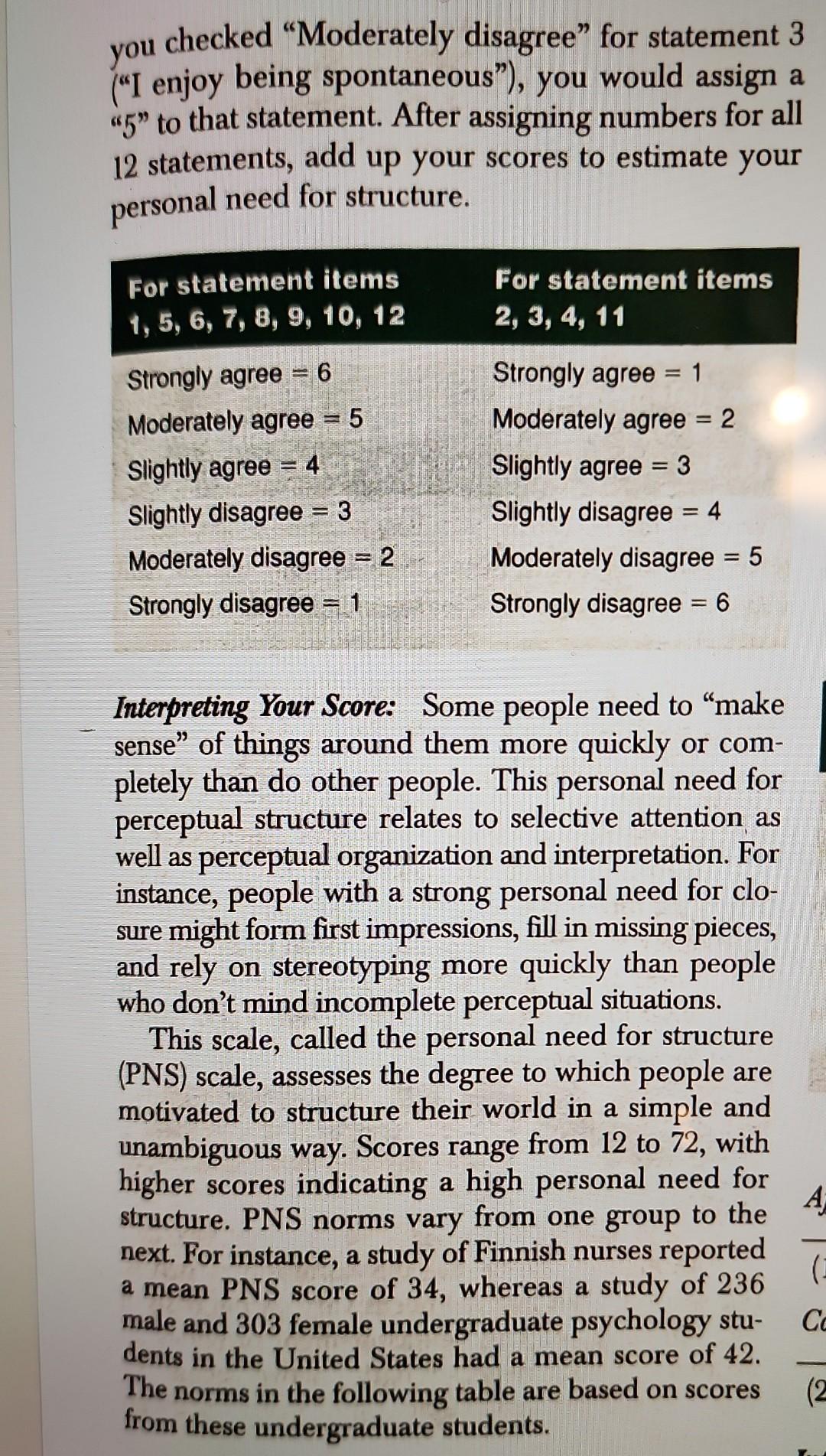
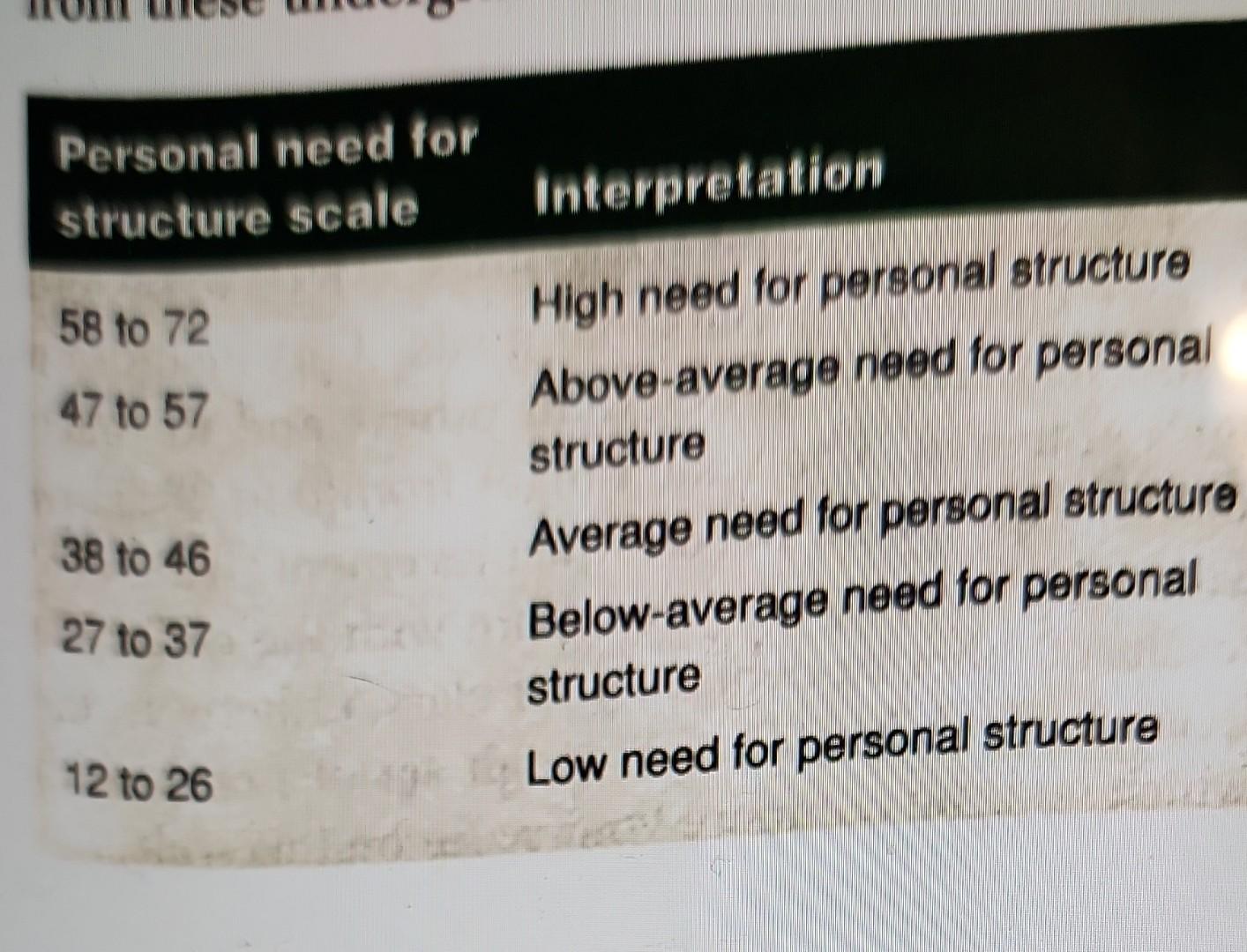
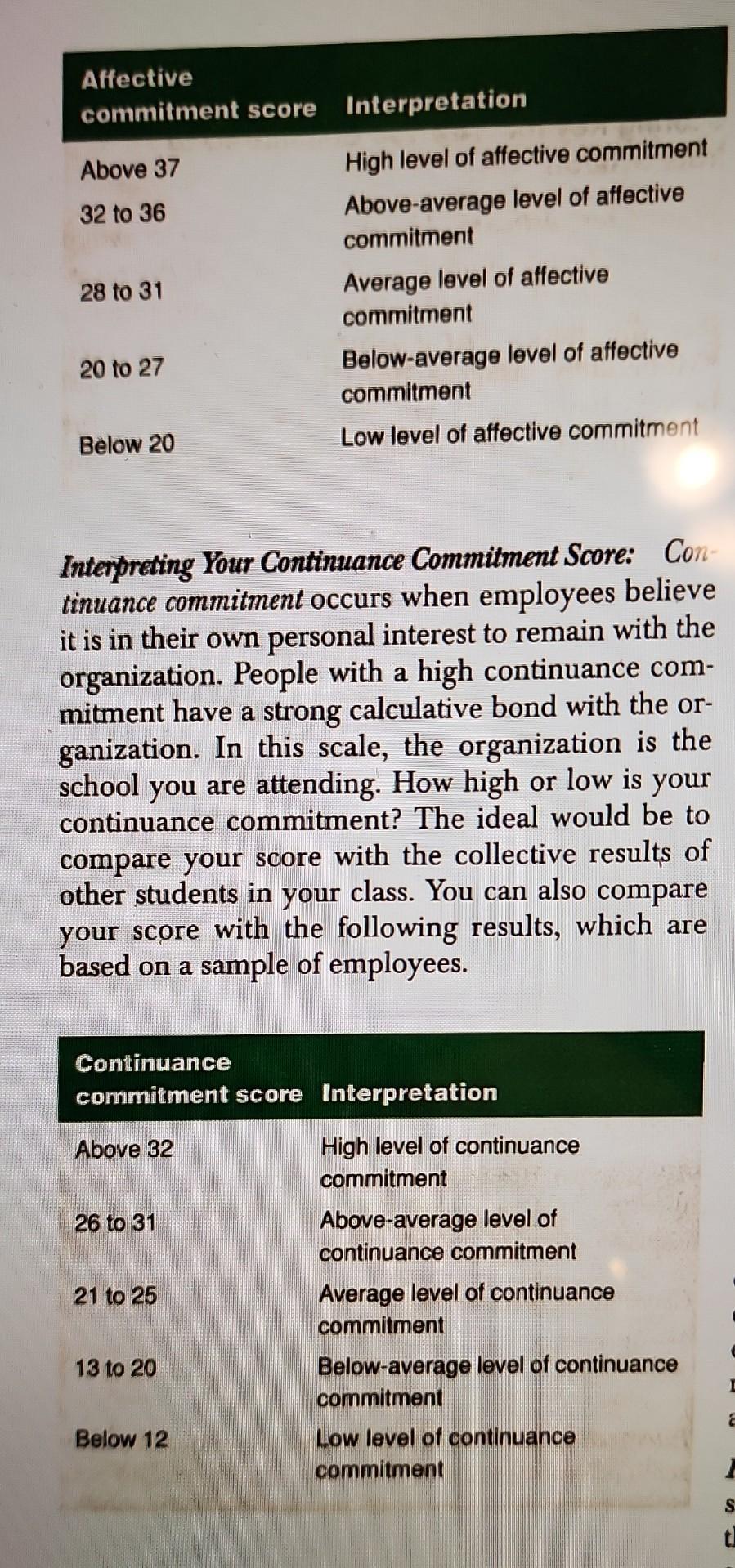
It is better to negotiate alone than as a team. Companies are more successful when they have strong corporate cultures. Employees perform better without stress. The best way to change people and organizations is by pinpointing the source of their current problems. Female leaders involve employees in decisions to a greater degree than do male leaders. The best decisions are made without emotion. If employees feel they are paid unfairly, nothing other than changing their pay will reduce their feelings of injustice. 8 9. Scoring Key for "Are You Introverted or Extroverted?" Scoring Instructions: Use the table below to assign numbers to each box you checked. For example, if you checked "Moderately inaccurate" for statement 1 ("I feel comfortable around people"), you would assign a " 1 " to that statement. After assigning numbers for all 10 statements, add up the numbers to estimate your extroversion-introversion personality. Interpreting Your Score: Extroversion characterizes people who are outgoing, talkative, sociable, and assertive. It includes several facets, such as friendliness, gregariousness, assertiveness, activity level, excitement seeking, and cheerfulness. The opposite of extroversion is introversion, which refers to the personality 1. It upsets me to go into a situation without knowing what I can expect from it. 2. I' m not bothered by things that interrupt my daily routine. 3. I enjoy being spontaneous. 4. I find that a well-ordered life with regular hours makes my life tedious. 5. I find that a consistent routine enables me to enjoy life more. 6. I enjoy having a clear and structured mode of life. 7. I like to have a place for everything and everything in its place. 8. I don't like situations that are uncertain. 9. I hate to change my plans at the last minute. 10. I hate to be with people who are unpredictable. characteristics of being quiet, shy, and cautious. Extroverts get their energy from the outer world (people and things around them), whereas introverts get their energy from the internal world, such personal reflection on concepts and ideas. Introverts are more inclined to direct their interests to ideas rather than to social events. This is the short version of the IPIP IntroversionExtroversion Scale, so it estimates overall introversionextroversion but not specific facets within the personality dimension. Scores range from 0 to 40 . Low scores indicate introversion; high scores indicate extroversion. The norms in the following table are estimated from results of early adults (under 30 years old) in Scotland and undergraduate psychology students in the United States. However, introversion-extroversion norms vary from one group to the next; the best norms are likely based on the entire class you are attending or on past students in this course. IPIP introversion- extroversion Interpretation 35 to 40 High extroversion 28 to 34 Moderate extroversion 21 to 27 Between extroversion and introversion 7 to 20 Moderate introversion 0 to 6 High introversion Scoring Key for "How Much Personal Structure Do You Need?" Scoring Instructions: Use the table below to assign numbers to each box you checked. For example, if you checked "Moderately disagree" for statement 3 ("I enjoy being spontaneous"), you would assign a "5" to that statement. After assigning numbers for all 12 statements, add up your scores to estimate your personal need for structure. Interpreting Your Score: Some people need to "make sense" of things around them more quickly or completely than do other people. This personal need for perceptual structure relates to selective attention as well as perceptual organization and interpretation. For instance, people with a strong personal need for closure might form first impressions, fill in missing pieces, and rely on stereotyping more quickly than people who don't mind incomplete perceptual situations. This scale, called the personal need for structure (PNS) scale, assesses the degree to which people are motivated to structure their world in a simple and unambiguous way. Scores range from 12 to 72 , with higher scores indicating a high personal need for structure. PNS norms vary from one group to the next. For instance, a study of Finnish nurses reported a mean PNS score of 34 , whereas a study of 236 male and 303 female undergraduate psychology students in the United States had a mean score of 42. The norms in the following table are based on scores from these underoraduate students. Personal need for structure scale Interpretation 58 to 72 High need for personal structure 47 to 57 Above-average need for personal structure 38 to 46 Average need for personal structure 27 to 37 Below-average need for personal structure 12 to 26 Low need for personal structure Interpreting Your Continuance Commitment Score: Continuance commitment occurs when employees believe it is in their own personal interest to remain with the organization. People with a high continuance commitment have a strong calculative bond with the organization. In this scale, the organization is the school you are attending. How high or low is your continuance commitment? The ideal would be to compare your score with the collective results of other students in your class. You can also compare your score with the following results, which are based on a sample of employees
Step by Step Solution
There are 3 Steps involved in it

Get step-by-step solutions from verified subject matter experts
 Study Help