







Question: 1:52 C A g+ E . . . Chapter 12 1) What is the impact of the Federal Rules of Civil Procedure on the timetable
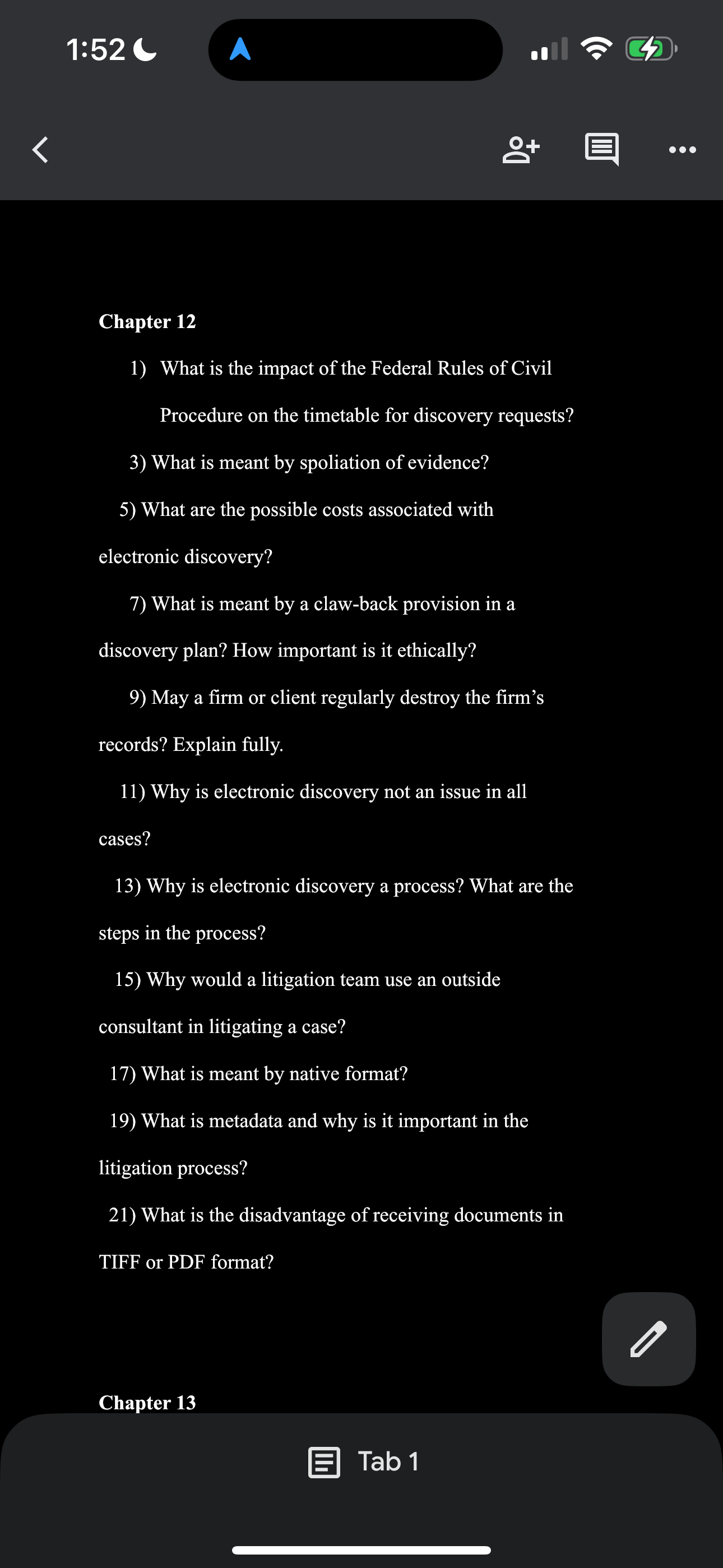
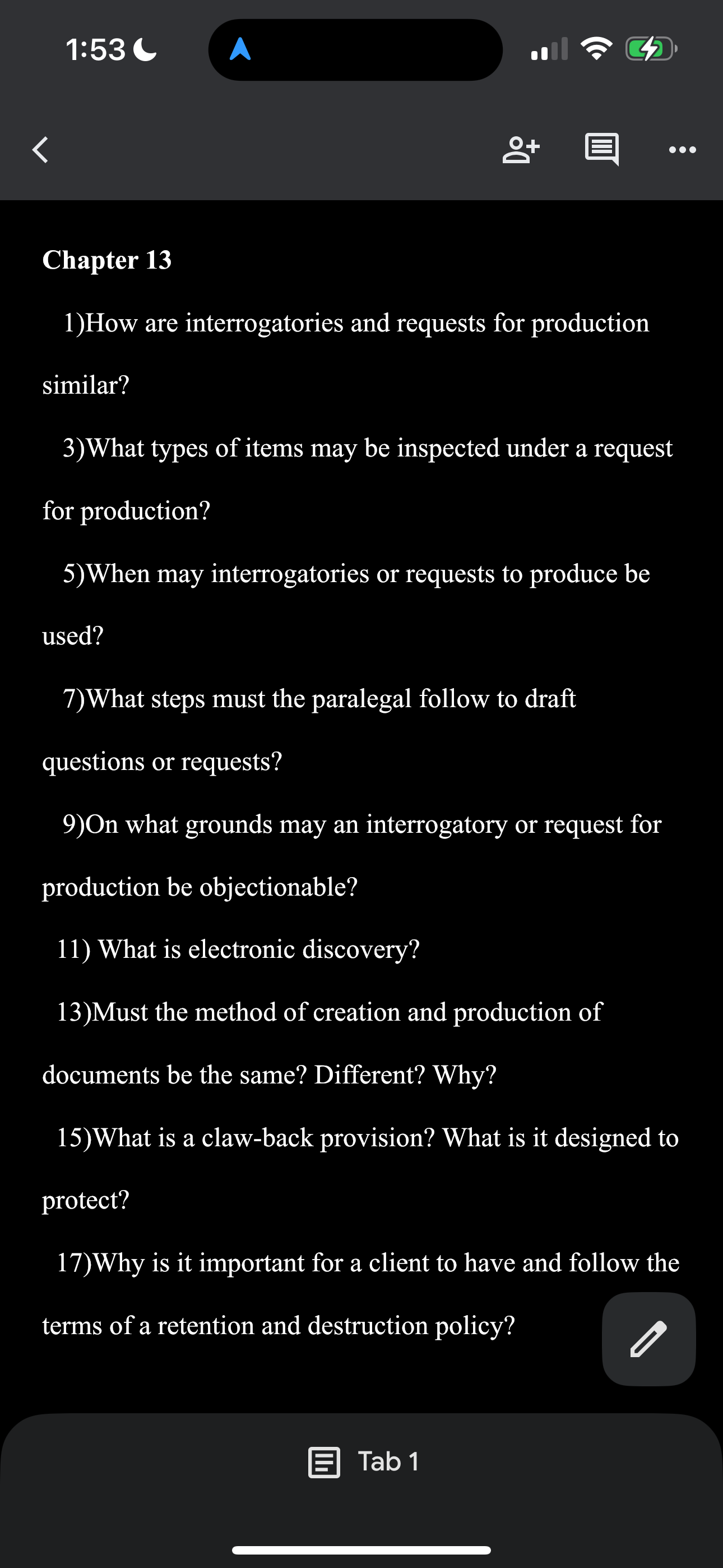
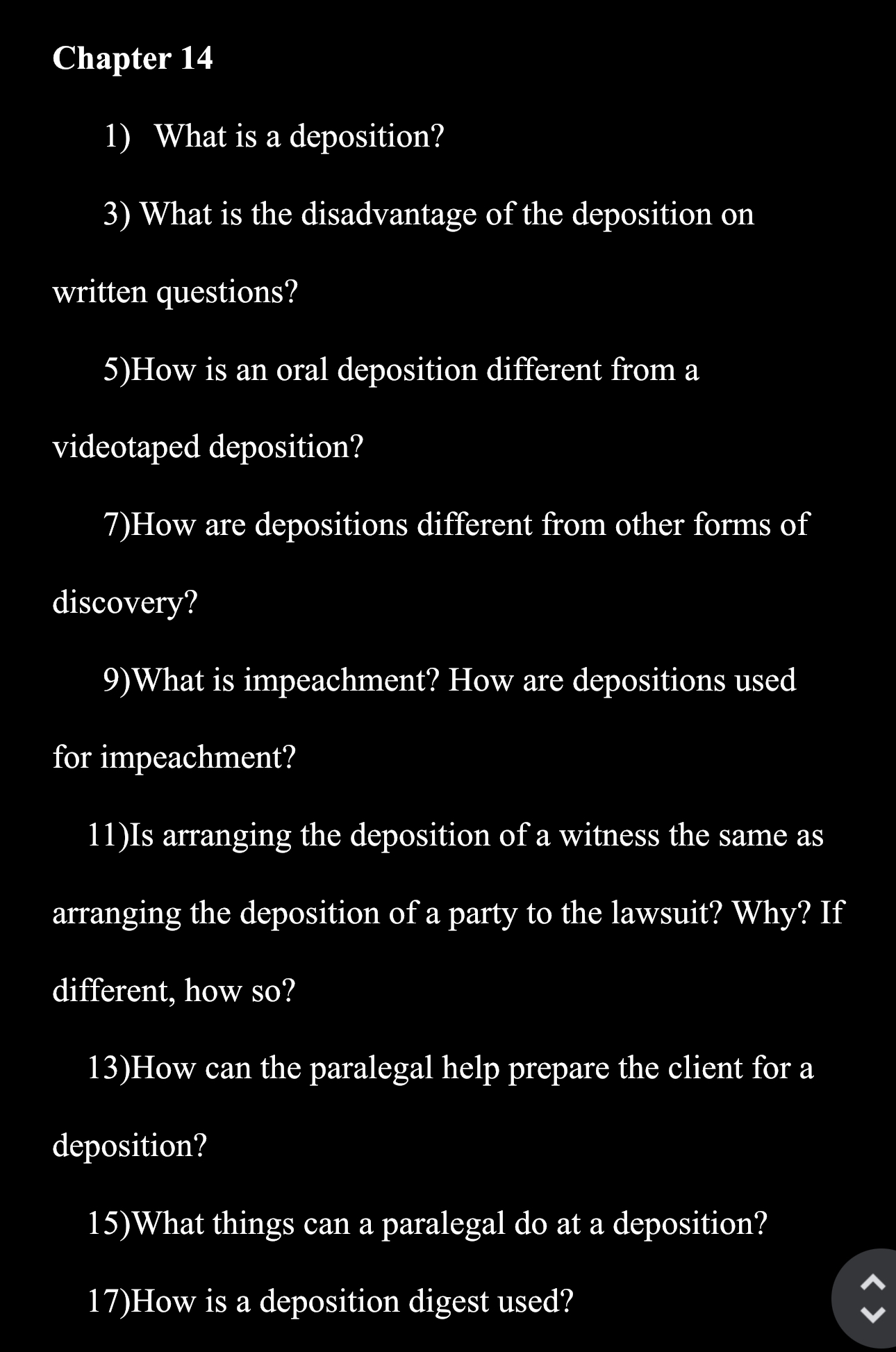
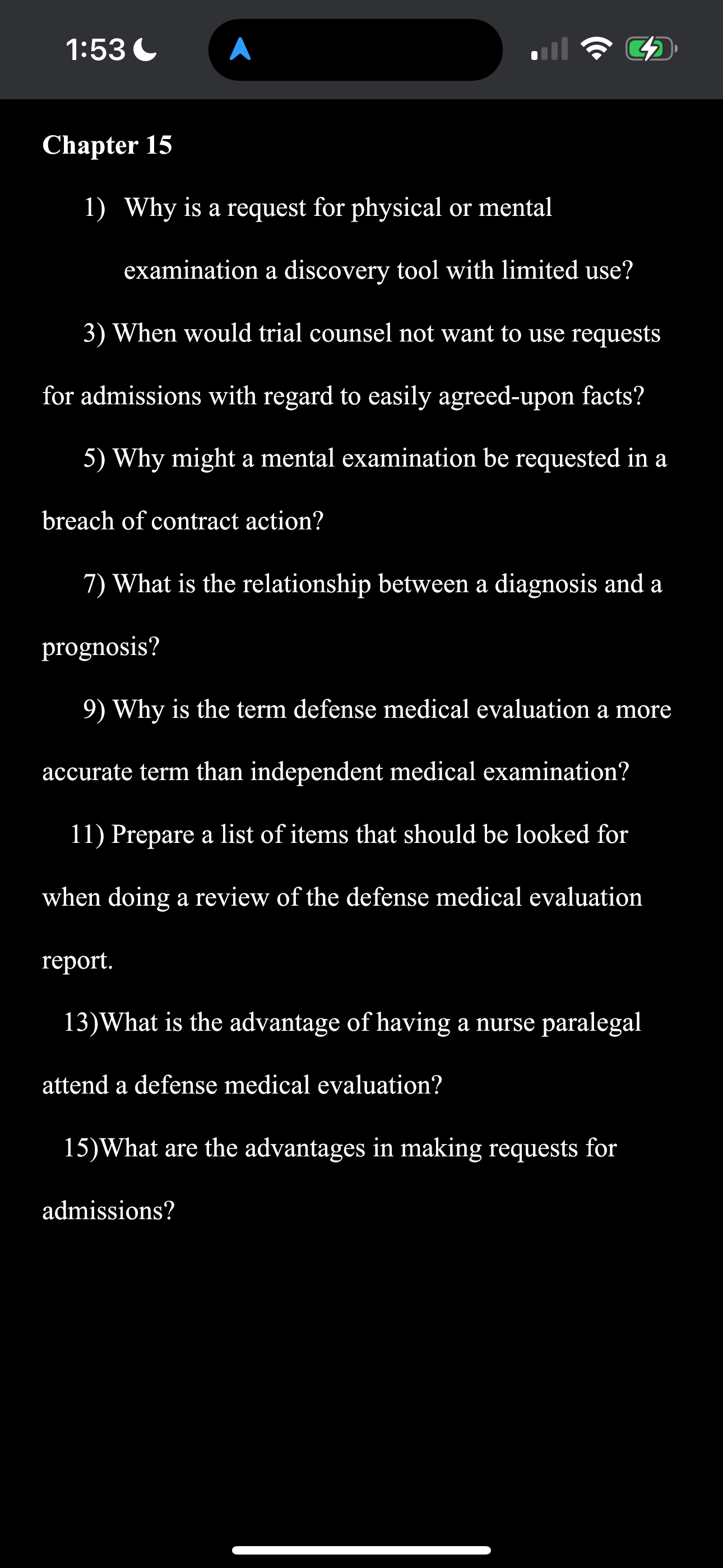
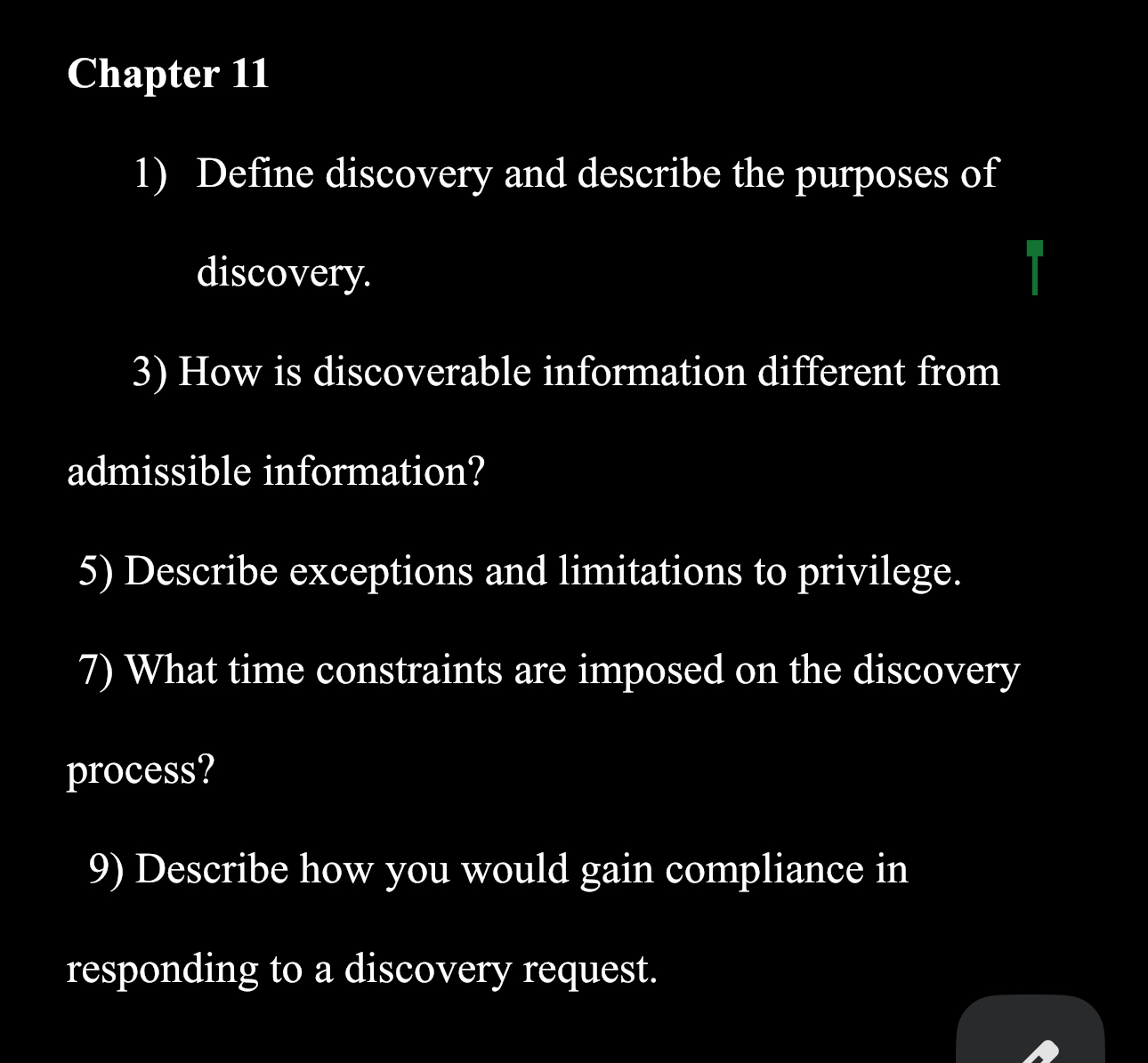 1:52 C A g+ E . . . Chapter 12 1) What is the impact of the Federal Rules of Civil Procedure on the timetable for discovery requests? 3) What is meant by spoliation of evidence? 5) What are the possible costs associated with electronic discovery? 7) What is meant by a claw-back provision in a discovery plan? How important is it ethically? 9) May a firm or client regularly destroy the firm's records? Explain fully. 11) Why is electronic discovery not an issue in all cases? 13) Why is electronic discovery a process? What are the steps in the process? 15) Why would a litigation team use an outside consultant in litigating a case? 17) What is meant by native format? 19) What is metadata and why is it important in the litigation process? 21) What is the disadvantage of receiving documents in TIFF or PDF format? Chapter 13 Tab 11:53 A g+ E . . . Chapter 13 1 ) How are interrogatories and requests for production similar? 3) What types of items may be inspected under a request for production? 5) When may interrogatories or requests to produce be used? 7) What steps must the paralegal follow to draft questions or requests? 9)On what grounds may an interrogatory or request for production be objectionable? 11) What is electronic discovery? 13)Must the method of creation and production of documents be the same? Different? Why? 15) What is a claw-back provision? What is it designed to protect? 17) Why is it important for a client to have and follow the terms of a retention and destruction policy? ET Tab 1Chapter 14 1) What is a deposition? 3) What is the disadvantage of the deposition on written questions? 5)How is an oral deposition different from a videotaped deposition? 7)How are depositions different from other forms of discovery? 9)What is impeachment? How are depositions used for impeachment? 11)Is arranging the deposition of a witness the same as arranging the deposition of a party to the lawsuit? Why? If different, how so? 13)How can the paralegal help prepare the client for a rel otersua (evens 15)What things can a paralegal do at a deposition? 17)How is a deposition digest used? 1:53 A Chapter 15 1) Why is a request for physical or mental examination a discovery tool with limited use? 3) When would trial counsel not want to use requests for admissions with regard to easily agreed-upon facts? 5) Why might a mental examination be requested in a breach of contract action? 7) What is the relationship between a diagnosis and a prognosis? 9) Why is the term defense medical evaluation a more accurate term than independent medical examination? 11) Prepare a list of items that should be looked for when doing a review of the defense medical evaluation report. 13)What is the advantage of having a nurse paralegal attend a defense medical evaluation? 15)What are the advantages in making requests for admissions? Chapter 11 1) Define discovery and describe the purposes of discovery. 3) How is discoverable information different from admissible information? 5) Describe exceptions and limitations to privilege. 7) What time constraints are imposed on the discovery Ree 9) Describe how you would gain compliance in responding to a discovery request
Step by Step Solution
There are 3 Steps involved in it

Get step-by-step solutions from verified subject matter experts
 Study Help