







Question: 16. The following table specifies a cryptosystem based around a very simple encryp- tion algorithm with four different plaintexts A, B. C, and D (one
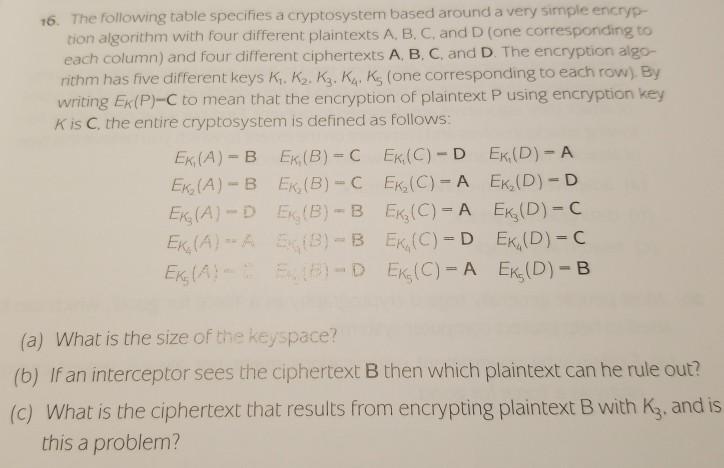
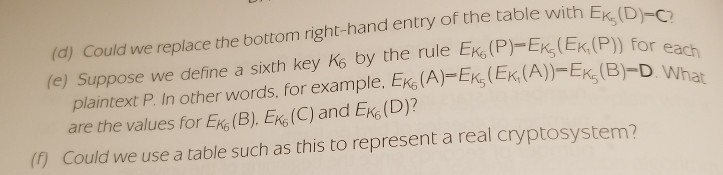
16. The following table specifies a cryptosystem based around a very simple encryp- tion algorithm with four different plaintexts A, B. C, and D (one corresponding to each column) and four different ciphertexts A, B. C, and D. The encryption algo- rithm has five different keys K. K2. K3. K Ks (one corresponding to each row). By writing Ex(P)-C to mean that the encryption of plaintext P using encryption key K is C, the entire cryptosystem is defined as follows: (a) What is the size of the keyspace? (b) If an interceptor sees the ciphertext B then which plaintext can he rule out? (c) What is the ciphertext that results from encrypting plaintext B with K3, and is this a
Step by Step Solution
There are 3 Steps involved in it

Get step-by-step solutions from verified subject matter experts
 Study Help