







Question: 1a-3 E7-11 (Algo) Evaluating the Choice among Three Alternative Inventory Methods Based on Income and Cash Flow Effects LO7-2, 7-3 Daniel Company uses a periodic
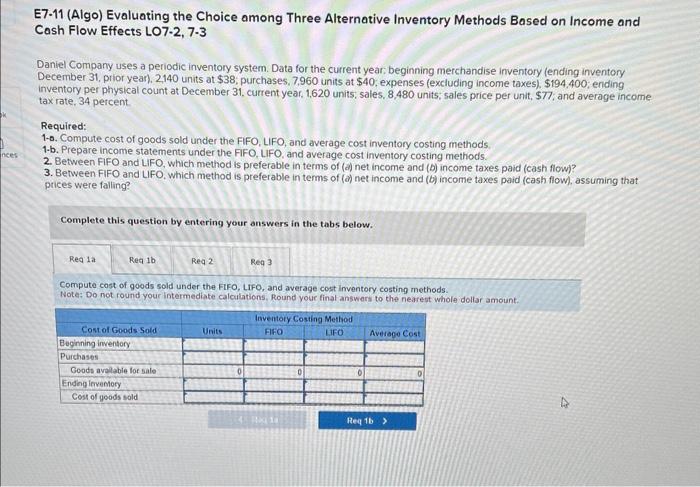
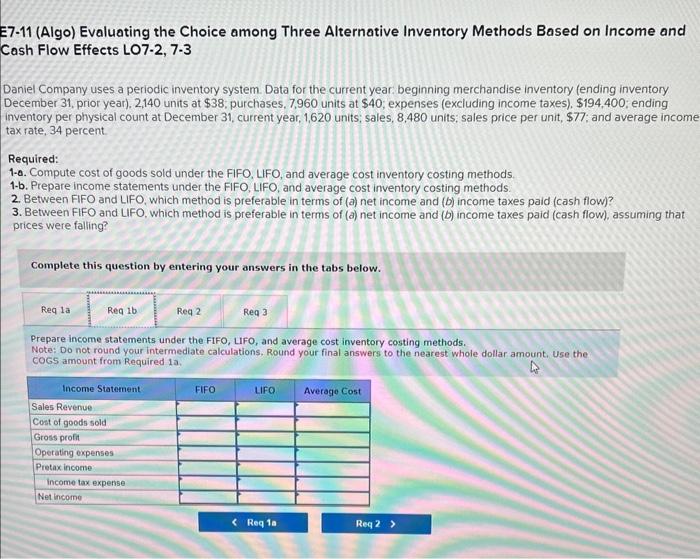
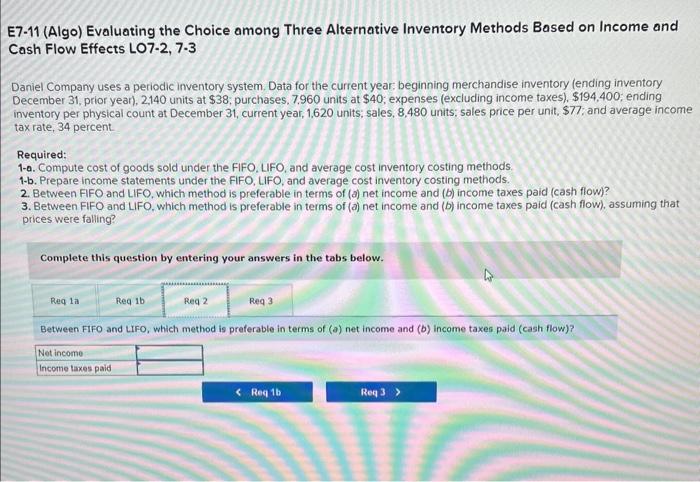
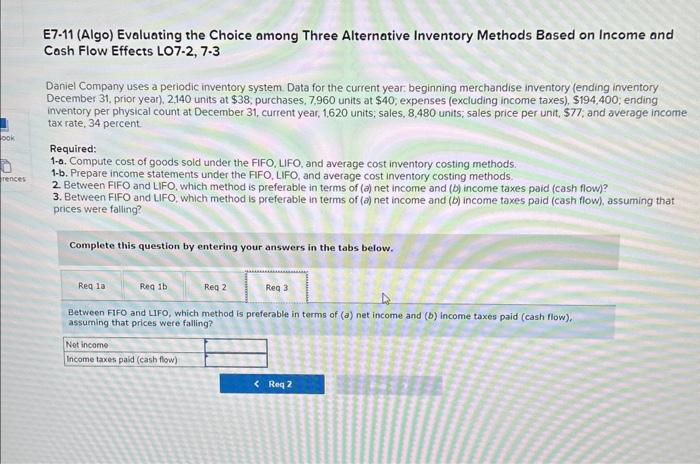
E7-11 (Algo) Evaluating the Choice among Three Alternative Inventory Methods Based on Income and Cash Flow Effects LO7-2, 7-3 Daniel Company uses a periodic inventory system. Data for the current year beginning merchandise inventory (ending inventory December 31, prior year), 2,140 units at \$38; purchases, 7,960 units at $40, expenses (excluding income taxes), $194,400; ending inventory per physical count at December 31 , current year. 1,620 units; sales, 8,480 units; sales price per unit, $77; and average income tax rate, 34 percent Required: 1-0. Compute cost of goods sold under the FIFO, LIFO, and average cost inventory costing methods 1-b. Prepare income statements under the FIFO, LFO, and average cost inventory costing methods. 2. Between FIFO and LIFO, which method is preferable in terms of (a) net income and (b) income taxes paid (cash flow)? 3. Between FIFO and LIFO, which method is preferable in terms of (a) net income and (b) income taxes paid (cash flow), assuming that prices were falling? Complete this question by entering your answers in the tabs below. Compute cost of goods sold under the FIFO, LiFO, and average cost imventory costing methods. Note: Do not round your intermediate calculations, Round your final answers to the nearest whole dollar amount. 7-11 (Algo) Evaluating the Choice among Three Alternative Inventory Methods Based on Income and Cash Flow Effects LO7-2, 7-3 Daniel Company uses a periodic inventory system. Data for the current year beginning merchandise inventory (ending inventory December 31, prior year), 2,140 units at \$38; purchases, 7,960 units at $40; expenses (excluding income taxes), \$194,400; ending inventory per physical count at December 31 , current year, 1,620 units; sales, 8.480 units; sales price per unit, $77; and average income taxrate, 34 percent. Required: 1-e. Compute cost of goods sold under the FIFO, LIFO, and average cost inventory costing methods. 1-b. Prepare income statements under the FIFO, LIFO, and average cost inventory costing methods. 2. Between FIFO and LIFO, which method is preferable in terms of (a) net income and (b) income taxes paid (cash flow)? 3. Between FIFO and LIFO, which method is preferable in terms of (a) net income and (b) income taxes paid (cash flow), assuming that prices were falling? Complete this question by entering your answers in the tabs below. Prepare income statements under the FIFO, LFO, and average cost inventory costing methods. Note: Do not round your intermediate calculations. Round your final answers to the nearest whole dollar amount, Use the COGS amount from Required 1 a. E7-11 (Algo) Evaluating the Choice among Three Alternative Inventory Methods Based on Income and Cash Flow Effects LO7-2,7.3 Daniel Company uses a periodic inventory system. Data for the current year beginning merchandise inventory (ending inventory December 31, prior year), 2,140 units at \$38; purchases, 7.960 units at $40; expenses (excluding income taxes), $194,400; ending inventory per physical count at December 31 , current year, 1,620 units; sales, 8,480 units; sales price per unit, $77; and average income taxrate, 34 percent. Required: 1-a. Compute cost of goods sold under the FIFO. LFF, and average cost inventory costing methods 1-b. Prepare income statements under the FIFO, LIFO, and average cost inventory costing methods. 2. Between FIFO and LIFO, which method is preferable in terms of (a) net income and (b) income taxes paid (cash flow)? 3. Between FIFO and LIFO, which method is preferable in terms of (a) net income and (b) income taxes paid (cash flow), assuming that prices were falling? Complete this question by entering your answers in the tabs below. Between FIFO and LIFO, which method is preferable in terms of (a) net income and (b) income taxe paid (cash flow)? E7-11 (Algo) Evaluating the Choice among Three Alternative Inventory Methods Based on Income and Cosh Flow Effects LO7-2, 7.3 Daniel Company uses a periodic inventory system. Data for the current year. beginning merchandise inventory (ending inventory December 31, prior year), 2,140 units at \$38, purchases, 7,960 units at $40, expenses (excluding income taxes), \$194,400; ending inventory per physical count at December 31 , current year, 1,620 units; sales, 8,480 units; sales price per unit, $77, and average income taxrate, 34 percent. Required: 1-0. Compute cost of goods sold under the FIFO, LIFO, and average cost inventory costing methods. 1-b. Prepare income statements under the FIFO, LIFO, and average cost inventory costing methods. 2. Between FIFO and LIFO, which method is preferable in terms of (a) net income and (b) income taxes paid (cash flow)? 3. Between FIFO and LIFO, which method is preferable in terms of (a) net income and (b) income taxes paid (cash flow), assuming that prices were falling? Complete this question by entering your answers in the tabs below. Between FIFO and LIFO, which method is preferable in terms of (a) net income and (b) income taxes paid (cash flow), assuming that prices were falling
Step by Step Solution
There are 3 Steps involved in it

Get step-by-step solutions from verified subject matter experts
 Study Help