







Question: 1.In a certain department of a factory there are two shops. Total departmental overheads for a year are `1,20,000 and the estimated number of direct
1.In a certain department of a factory there are two shops. Total departmental overheads for a year are `1,20,000 and the estimated number of direct labour hour is 24,000 (10 men employed for 48 hours per week during 50 weeks in the year). From the particulars given below calculate the prime cost and works cost of a work order No. 54 which passes through both shops:
(1) Material consumed `1,000.
(2) Direct labor hours shop A -8hrs at '6.00 per hour
Shop B-5hrs 7.50 per hour
3) Works overheads are to be levied by means of a direct hour rate
2.How can consumer satisfaction be measured using perspectives of financial and non-financial measures.
3.What is just in time technique for managerial accounting.
4.How do you measure impact of managerial control on employees behavior
5.What are some alternative methods of measuring value of intangible assets
6.What impacts do managerial accounting for operation managers have in decision making and planning.
7.Discuss the need of database logical structures and their significance in effective management of database.
8.Why are retained earnings not distributed to shareholders in a public company.
9.State and explain when a company should report a balanced sheet
10.Why is volume a totally independent variable from price in the market
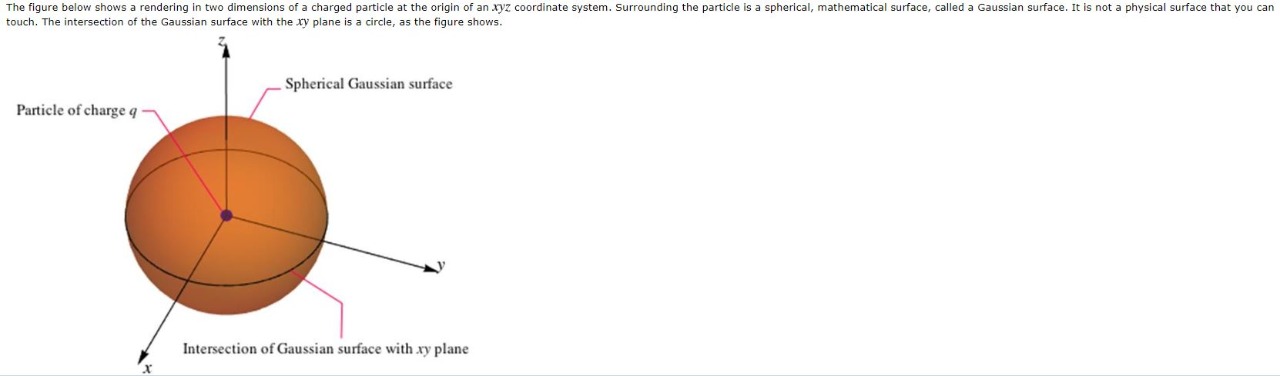
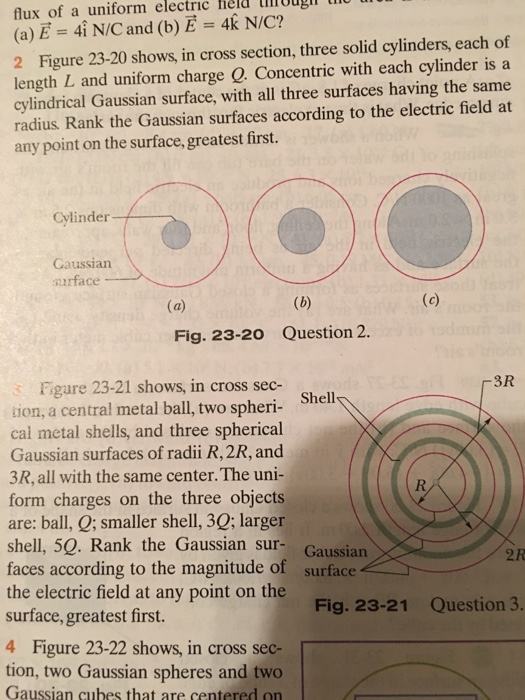
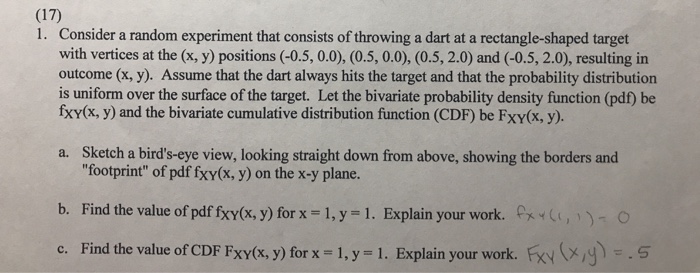
The figure below shows a rendering in two dimensions of a charged particle at the origin of an xyz coordinate system. Surrounding the particle is a spherical, mathematical surface, called a Gaussian surface. It is not a physical surface that you can touch. The intersection of the Gaussian surface with the xy plane is a circle, as the figure shows. Spherical Gaussian surface Particle of charge q Intersection of Gaussian surface with xy planeflux of a uniform electric field tillou (a) E = 4i N/C and (b) E = 4k N/C? 2 Figure 23-20 shows, in cross section, three solid cylinders, each of length L and uniform charge Q. Concentric with each cylinder is a cylindrical Gaussian surface, with all three surfaces having the same radius. Rank the Gaussian surfaces according to the electric field at any point on the surface, greatest first. Cylinder Gaussian OO surface (a) (b) (c) mooPal Fig. 23-20 Question 2. 5x5 16 wadmun off Figure 23-21 shows, in cross sec- 3R tion, a central metal ball, two spherishell cal metal shells, and three spherical Gaussian surfaces of radii R, 2R, and 3R, all with the same center. The uni- form charges on the three objects R are: ball, Q; smaller shell, 30; larger shell, 50. Rank the Gaussian sur- Gaussian faces according to the magnitude of 2R surface the electric field at any point on the surface, greatest first. Fig. 23-21 Question 3. 4 Figure 23-22 shows, in cross sec- tion, two Gaussian spheres and two Gaussian cubes that are centered on(17) 1. Consider a random experiment that consists of throwing a dart at a rectangle-shaped target with vertices at the (x, y) positions (-0.5, 0.0), (0.5, 0.0), (0.5, 2.0) and (-0.5, 2.0), resulting in outcome (x, y). Assume that the dart always hits the target and that the probability distribution is uniform over the surface of the target. Let the bivariate probability density function (pdf) be fxY(x, y) and the bivariate cumulative distribution function (CDF) be FxY(x, y). a. Sketch a bird's-eye view, looking straight down from above, showing the borders and "footprint" of pdf fxY(x, y) on the x-y plane. b. Find the value of pdf fxy(x, y) for x = 1, y = 1. Explain your work. fx * (, ) = 0 c. Find the value of CDF Fxy(x, y) for x = 1, y = 1. Explain your work. Fxy (x, 4) = . 5
Step by Step Solution
There are 3 Steps involved in it

Get step-by-step solutions from verified subject matter experts
 Study Help