







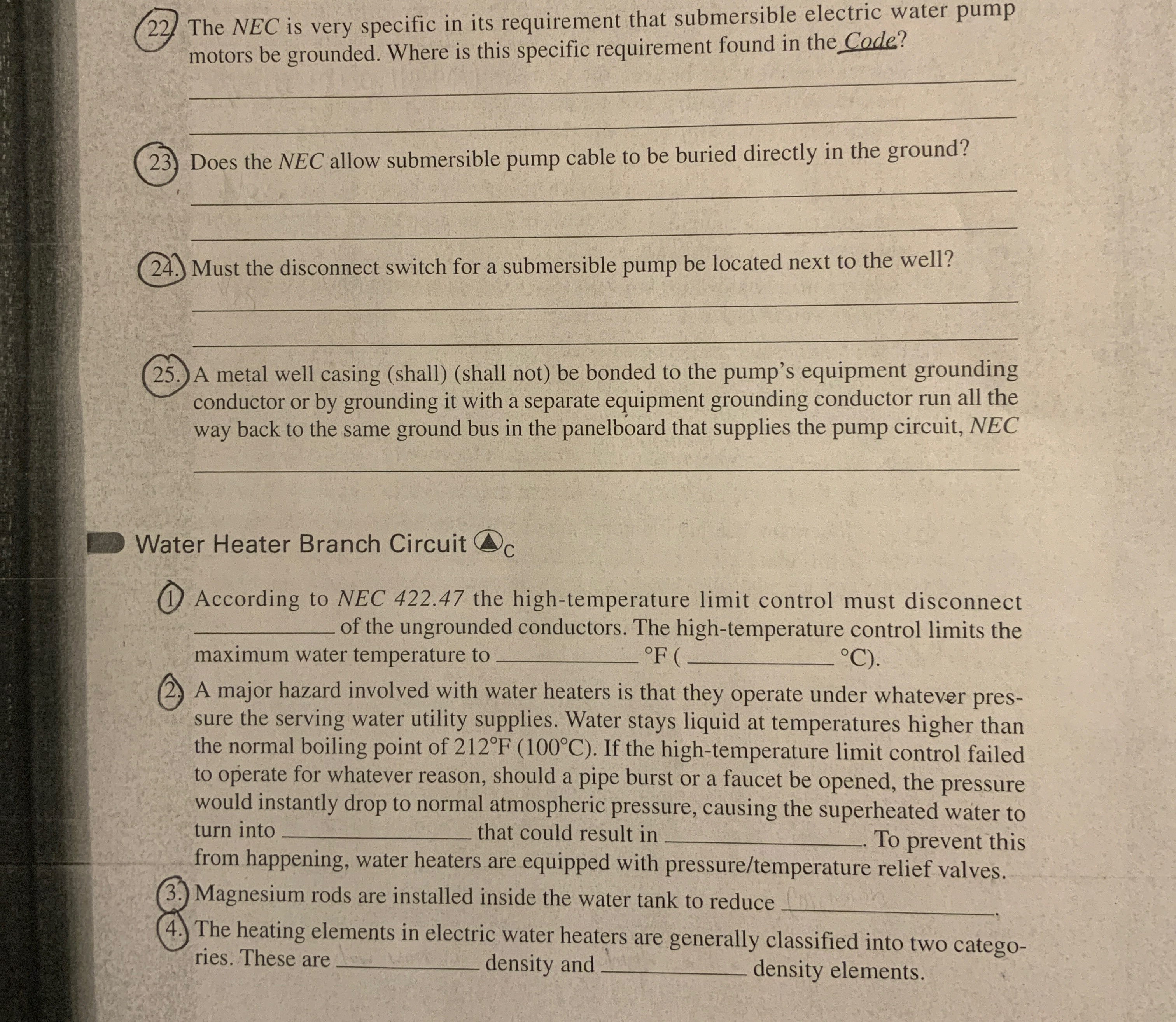
Question: 2 2 . The NEC is very specific in its requirement that submersible electric water pump motors be grounded. Where is this specific requirement found
The NEC is very specific in its requirement that submersible electric water pump motors be grounded. Where is this specific requirement found in the Code?
Does the NEC allow submersible pump cable to be buried directly in the ground?
Must the disconnect switch for a submersible pump be located next to the well?
A metal well casing shallshall not be bonded to the pump's equipment grounding conductor or by grounding it with a separate equipment grounding conductor run all the way back to the same ground bus in the panelboard that supplies the pump circuit, NEC
Water Heater Branch Circuit
According to NEC the hightemperature limit control must disconnect of the ungrounded conductors. The hightemperature control limits the maximum water temperature to
A major hazard involved with water heaters is that they operate under whatever pressure the serving water utility supplies. Water stays liquid at temperatures higher than the normal boiling point of If the hightemperature limit control failed to operate for whatever reason, should a pipe burst or a faucet be opened, the pressure would instantly drop to normal atmospheric pressure, causing the superheated water to turn into that could result in To prevent this from happening, water heaters are equipped with pressuretemperature relief valves.
Magnesium rods are installed inside the water tank to reduce
The heating elements in electric water heaters are generally classified into two categories. These art density and density elements.
Step by Step Solution
There are 3 Steps involved in it
1 Expert Approved Answer
Step: 1 Unlock

Question Has Been Solved by an Expert!
Get step-by-step solutions from verified subject matter experts
Step: 2 Unlock
Step: 3 Unlock
 Study Help