







Question: 2. (2D total points] Suppose there are two consumers= rk and Ei= and two goods= X and Y. The consumers have the following initial endowments
![2. (2D total points] Suppose there are two consumers= rk and](https://s3.amazonaws.com/si.experts.images/answers/2024/06/667e108517998_797667e1085032f7.jpg)
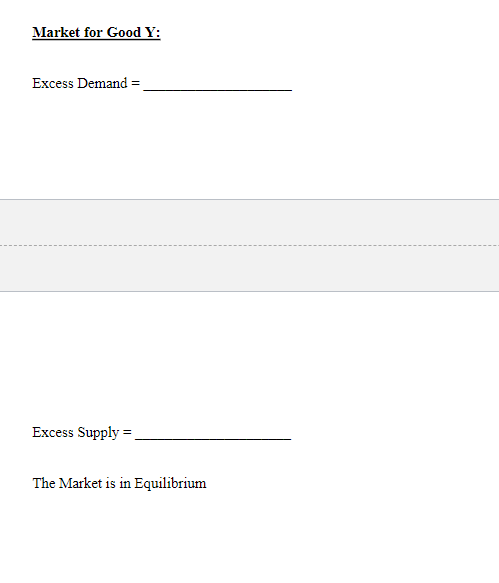
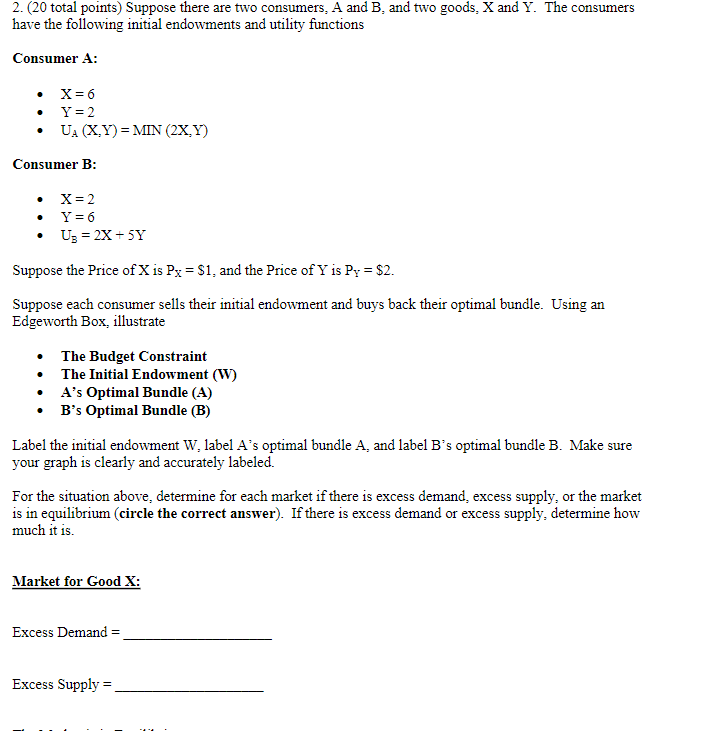
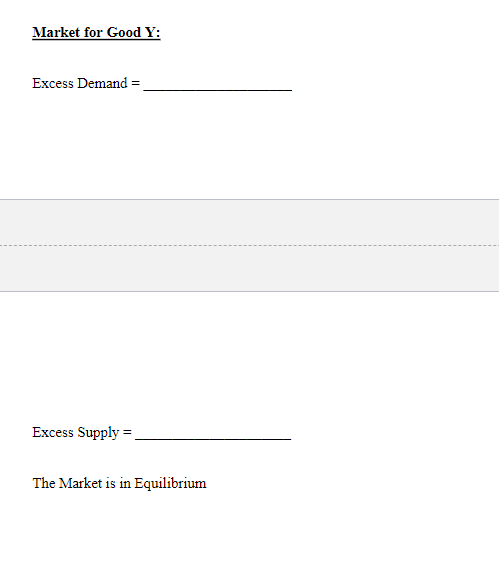
2. (2D total points] Suppose there are two consumers= rk and Ei= and two goods= X and Y. The consumers have the following initial endowments and utility functions Consumer A: I X l T L" ,r A {XI} = 1,-in {3:ij Consumer B: I X I Y L" H O". i'J 3 = 331 - 5"! Suppose the Price of X is P3- : 31= and the Price of Y is P1; = $2. Euppose each consumer sells their initial endowment and buys back their optimal bundle. Using an Edgeworth Box, illustrate I The Budget Constraint I The Initial Endowment (\"a I .'!.'s Optimal Bundle {.35.} I B's l[Ilptimal Bundle {B} Label the initial endowment W, label _-'i"s optimal bundle A, and label B's optimal bundle B. Make sure your graph is clearly and accurately labeled. For the situation abot'e, determine for each market if there is excess demand= excess supply, or the market is in equilibrium (circle the correct answer}. If there is excess demand or excess supply: determine how much it is. Market for Good 31: Excess Demand = Excess Suppl}: = Market for Good Y: Excess Demand = Excess Supply = The Market is in Equilibrium
Step by Step Solution
There are 3 Steps involved in it

Get step-by-step solutions from verified subject matter experts
 Study Help