Question: 2. 3 please answer the 16 55 all tge ielts questions asnwer 7 Attribution Theory There is a universal need to seek justifications and explanations
2.
3
please answer the 16 55 all tge ielts questions asnwer
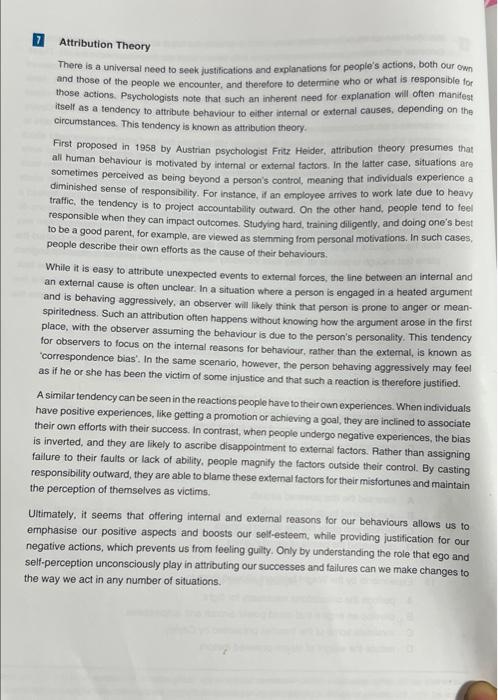
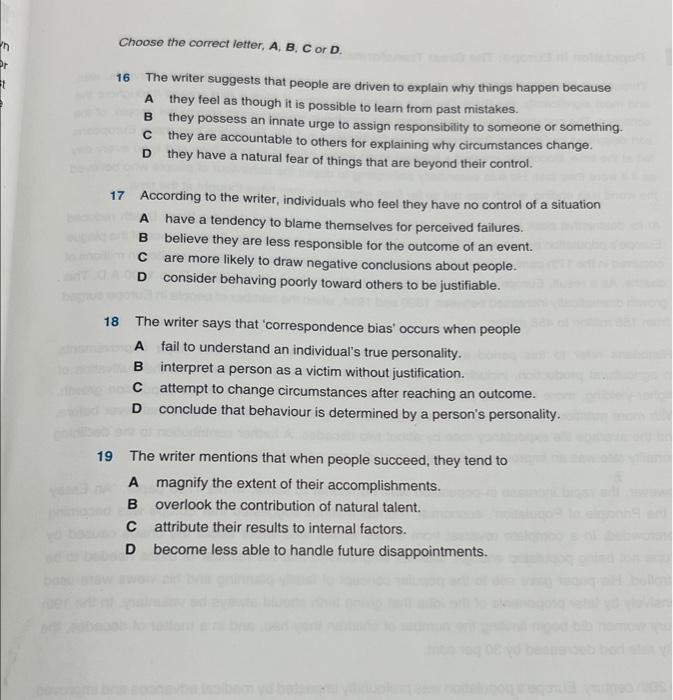
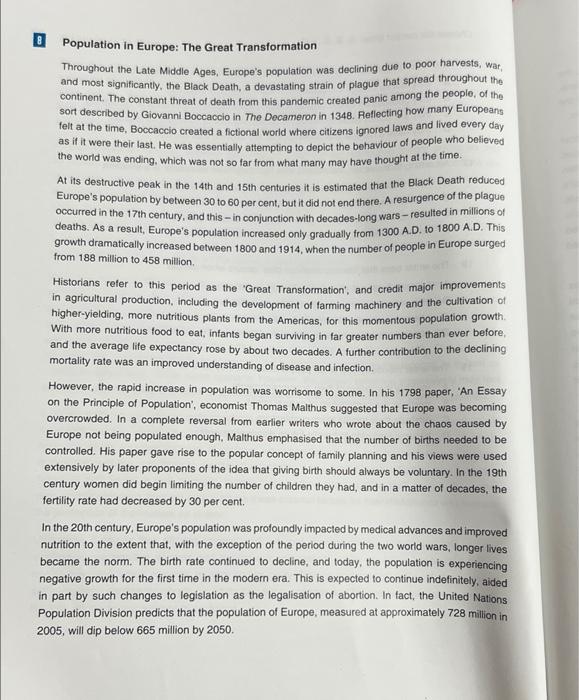
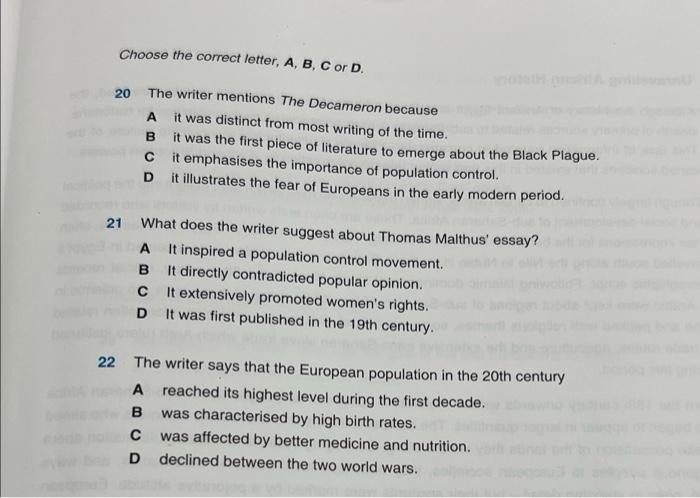
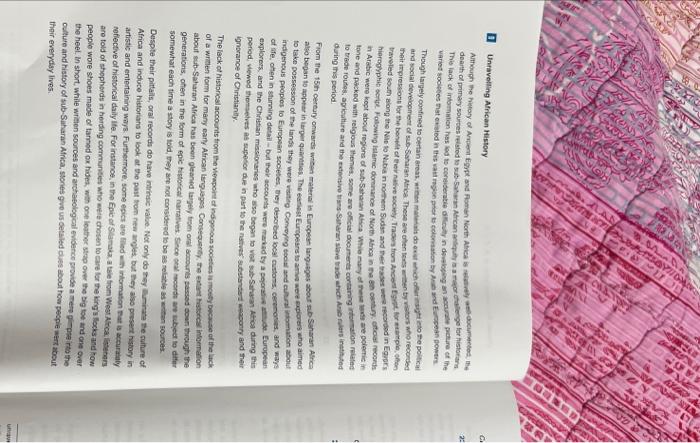
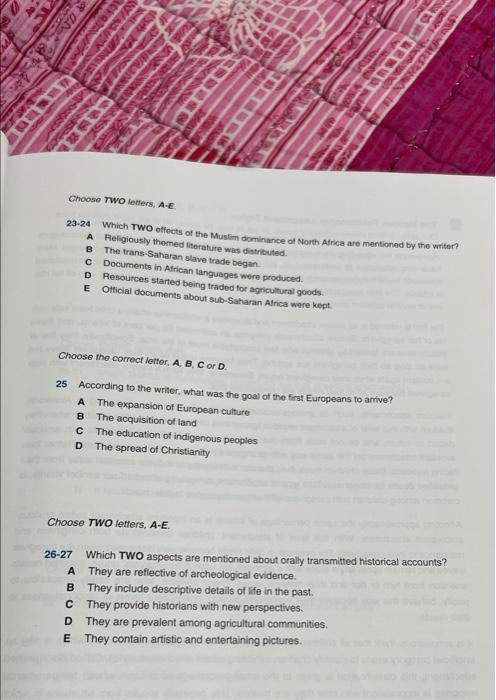
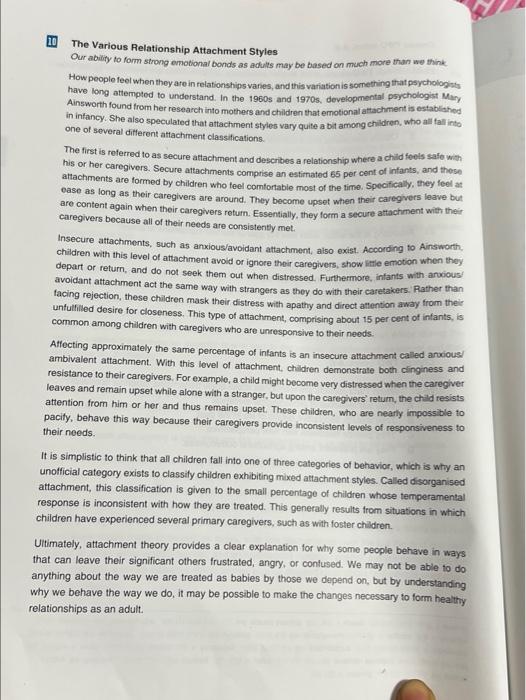
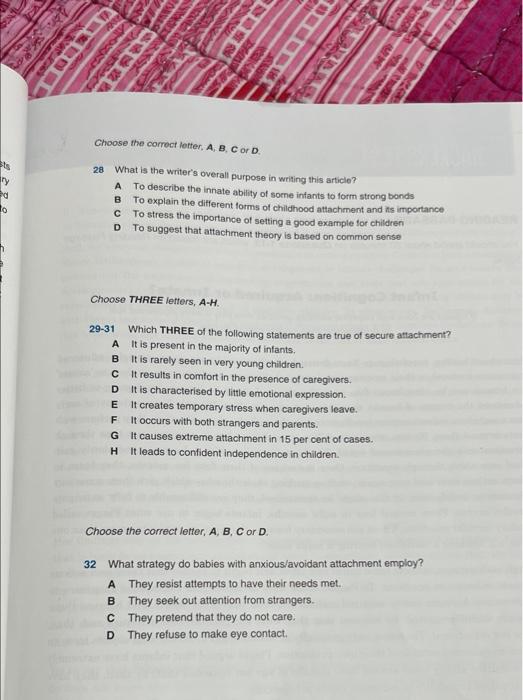
7 Attribution Theory There is a universal need to seek justifications and explanations for people's actions, both our own and those of the people we encounter, and therefore to determine who or what is responsible for those actions. Psychologists note that such an inherent need for explanation will often manifest itself as a tendency to attribute behaviour to either internal or external causes, depending on the circumstances. This tendency is known as attribution theory. First proposed in 1958 by Austrian psychologist Fritz Heider, attribution theory presumes that all human behaviour is motivated by internal or external factors. In the latter case, situations are sometimes perceived as being beyond a person's control, meaning that individuals experience a diminished sense of responsibility. For instance, if an employee arrives to work late due to heavy traffic, the tendency is to project accountability outward. On the other hand, people tend to feel responsible when they can impact outcomes. Studying hard, training diligently, and doing one's best to be a good parent, for example, are viewed as stemming from personal motivations. In such cases, people describe their own efforts as the cause of their behaviours While it is easy to attribute unexpected events to external forces, the line between an internal and an external cause is often unclear. In a situation where a person is engaged in a heated argument and is behaving aggressively, an observer will likely think that person is prone to anger or mean- spiritedness. Such an attribution often happens without knowing how the argument arose in the first place, with the observer assuming the behaviour is due to the person's personality. This tendency for observers to focus on the internal reasons for behaviour, rather than the external, is known as 'correspondence bias'. In the same scenario, however, the person behaving aggressively may feel as if he or she has been the victim of some injustice and that such a reaction is therefore justified. A similar tendency can be seen in the reactions people have to their own experiences. When individuals have positive experiences, like getting a promotion or achieving a goal, they are inclined to associate their own efforts with their success. In contrast, when people undergo negative experiences, the bias is inverted, and they are likely to ascribe disappointment to external factors. Rather than assigning failure to their faults or lack of ability, people magnify the factors outside their control. By casting responsibility outward, they are able to blame these external factors for their misfortunes and maintain the perception of themselves as victims. Ultimately, it seems that offering internal and external reasons for our behaviours allows us to emphasise our positive aspects and boosts our self-esteem, while providing justification for our negative actions, which prevents us from feeling guilty. Only by understanding the role that ego and self-perception unconsciously play in attributing our successes and failures can we make changes to the way we act in any number of situations. Choose the correct letter, A, B, C or D. 16 The writer suggests that people are driven to explain why things happen because they feel as though it is possible to learn from past mistakes. A B they possess an innate urge to assign responsibility to someone or something. they are accountable to others for explaining why circumstances change. D they have a natural fear of things that are beyond their control. A 17 According to the writer, individuals who feel they have no control of a situation have a tendency to blame themselves for perceived failures. believe they are less responsible for the outcome of an event. are more likely to draw negative conclusions about people. consider behaving poorly toward others to be justifiable. B D 18 The writer says that 'correspondence bias' occurs when people A fail to understand an individual's true personality. B interpret a person as a victim without justification. C attempt to change circumstances after reaching an outcome. conclude that behaviour is determined by a person's personality. D 19 The writer mentions that when people succeed, they tend to magnify the extent of their accomplishments. overlook the contribution of natural talent. A B C attribute their results to internal factors. D become less able to handle future disappointments. ups BPopulation in Europe: The Great Transformation Throughout the Late Middle Ages, Europe's population was declining due to poor harvests, war, and most significantly, the Black Death, a devastating strain of plague that spread throughout the continent. The constant threat of death from this pandemic created panic among the people, of the sort described by Giovanni Boccaccio in The Decameron in 1348. Reflecting how many Europeans felt at the time, Boccaccio created a fictional world where citizens ignored laws and lived every day as if it were their last. He was essentially attempting to depict the behaviour of people who believed the world was ending, which was not so far from what many may have thought at the time. At its destructive peak in the 14th and 15th centuries it is estimated that the Black Death reduced Europe's population by between 30 to 60 per cent, but it did not end there. A resurgence of the plague occurred in the 17th century, and this-in conjunction with decades-long wars-resulted in millions of deaths. As a result, Europe's population increased only gradually from 1300 A.D. to 1800 A.D. This growth dramatically increased between 1800 and 1914, when the number of people in Europe surged from 188 million to 458 million. Historians refer to this period as the 'Great Transformation, and credit major improvements in agricultural production, including the development of farming machinery and the cultivation of higher-yielding, more nutritious plants from the Americas, for this momentous population growth With more nutritious food to eat, infants began surviving in far greater numbers than ever before, and the average life expectancy rose by about two decades. A further contribution to the declining mortality rate was an improved understanding of disease and infection. However, the rapid increase in population was worrisome to some. In his 1798 paper, 'An Essay on the Principle of Population', economist Thomas Malthus suggested that Europe was becoming overcrowded. In a complete reversal from earlier writers who wrote about the chaos caused by Europe not being populated enough, Malthus emphasised that the number of births needed to be controlled. His paper gave rise to the popular concept of family planning and his views were used extensively by later proponents of the idea that giving birth should always be voluntary. In the 19th century women did begin limiting the number of children they had, and in a matter of decades, the fertility rate had decreased by 30 per cent. In the 20th century, Europe's population was profoundly impacted by medical advances and improved nutrition to the extent that, with the exception of the period during the two world wars, longer lives became the norm. The birth rate continued to decline, and today, the population is experiencing negative growth for the first time in the modern era. This is expected to continue indefinitely, aided in part by such changes to legislation as the legalisation of abortion. In fact, the United Nations Population Division predicts that the population of Europe, measured at approximately 728 million in 2005, will dip below 665 million by 2050. Choose the correct letter, A, B, C or D. 20 The writer mentions The Decameron because A it was distinct from most writing of the time. B it was the first piece of literature to emerge about the Black Plague. it emphasises the importance of population control. Dit illustrates the fear of Europeans in the early modern period. 21 What does the writer suggest about Thomas Malthus' essay? A It inspired a population control movement. B It directly contradicted popular opinion. C It extensively promoted women's rights. D It was first published in the 19th century. 22 The writer says that the European population in the 20th century A reached its highest level during the first decade. was characterised by high birth rates. B C was affected by better medicine and nutrition. D declined between the two world wars. AAN ROADSTAR SENERGET MOLTS SITE 1024 NO CHATOR NUF22 105 Unravelling African History Although the history of Ancient Egypt and Roman North Africa is relatively wel documented the dearth of primary sources related to sub-Saharan African antiquity is a major challenge for historias This lack of information has led to considerable difficulty in developing an accurate picture of the varied societies that existed in this vast region prior to colonisation by Ara and European powers Though largely confined to certain areas, written materials do exist which offer insight into the political and social development of sub-Saharan Africa. These are often texts written by visitors who recorded their impressions for the benefit of their native society. Traders from Ancient Egt for me, offen travelled south along the Nile to Nubia in northem Sudan and their trades were recorded in Egyors hieroglyphic script. Following Islamic dominance of North Africa in the 8th century, official records in Arabic were kept about regions of sub-Saharan Alica. While many of these texts are policin tone and packed with religious themes, some are official documents containing information related to trade routes, agriculture and the extensive trans-Saharan slave trade which Arab rulers instituted during this period. From the 15th century onwards writen material in European languages about sub-Saharan Africa also began to appear in larger quantities. The earliest Europeans to amive were explorers who aimed to take possession of the lands they were visiting Conveying social and cultural information abou indigenous peoples to European societies, they described local customs, ceremonies, and ways of life, often in stunning detail-but their accounts were marked by a pejorative attude European explorers, and the Christian missionaries who also began to visit sub-Saharan Atica during this period, viewed themselves as superior due in part to the natives substandard weaponry and their ignorance of Christianity. The lack of historical accounts from the viewpoint of indigenous societies is mostly because of the lack of a written form for many early African languages Consequently, the extant historical information about sub-Saharan Africa has been gleaned largely from oral accounts passed down through the generations, often in the form of epic historical narratives. Since oral records are subject to differ somewhat each time a story is told, they are not considered to be as reliable as written sources Despite their pittails, oral records do have intrinsic value. Not only do they luminate the culture of Africa and induce historians to look at the past trom new angles, but they also present history in artistic and entertaining ways. Furthermore, some epics are filled with information that is accurately reflective of historical daily life. For instance, in the Epic of Silamaka, a tale from West Africa listeners are told of shepherds in herding communities who were chosen to care for the king's flocks and how people wore shoes made of tanned ox hides, with one leather strap over the big toe and one over the heel. In short, while written sources and archaeological evidence provide a mere glimpse into the culture and history of sub-Saharan Africa, stories give us detailed clues about how people went about their everyday lives. G 2: ( : una Choose TWO letters, A-E 23-24 Which TWO effects of the Muslim dominance of North Africa are mentioned by the writer? A Religiously themed literature was distributed The trans-Saharan slave trade began B D Documents in African languages were produced. Resources started being traded for agricultural goods. Official documents about sub-Saharan Africa were kept E Choose the correct letter, A, B, C or D. 25 According to the writer, what was the goal of the first Europeans to arrive? A The expansion of European culture B The acquisition of land The education of indigenous peoples D The spread of Christianity Choose TWO letters, A-E 26-27 Which TWO aspects are mentioned about orally transmitted historical accounts? They are reflective of archeological evidence. A B They include descriptive details of life in the past. C They provide historians with new perspectives. D They are prevalent among agricultural communities. E They contain artistic and entertaining pictures. 10 The Various Relationship Attachment Styles Our ability to form strong emotional bonds as adults may be based on much more than we think How people feel when they are in relationships varies, and this variation is something that psychologists have long attempted to understand. In the 1960s and 1970s, developmental psychologist Mary Ainsworth found from her research into mothers and children that emotional attachment is established in infancy. She also speculated that attachment styles vary quite a bit among children, who all fall into one of several different attachment classifications. The first is referred to as secure attachment and describes a relationship where a child feels safe with his or her caregivers. Secure attachments comprise an estimated 65 per cent of infants, and these attachments are formed by children who feel comfortable most of the time. Specifically, they feel at ease as long as their caregivers are around. They become upset when their caregivers leave but are content again when their caregivers return. Essentially, they form a secure attachment with their caregivers because all of their needs are consistently met. Insecure attachments, such as anxious/avoidant attachment, also exist. According to Ainsworth children with this level of attachment avoid or ignore their caregivers, show little emotion when they depart or return, and do not seek them out when distressed. Furthermore, infants with anxious/ avoidant attachment act the same way with strangers as they do with their caretakers. Rather than facing rejection, these children mask their distress with apathy and direct attention away from their unfulfilled desire for closeness. This type of attachment, comprising about 15 per cent of infants, is common among children with caregivers who are unresponsive to their needs. Affecting approximately the same percentage of infants is an insecure attachment called anxious/ ambivalent attachment. With this level of attachment, children demonstrate both clinginess and resistance to their caregivers. For example, a child might become very distressed when the caregiver leaves and remain upset while alone with a stranger, but upon the caregivers' return, the child resists attention from him or her and thus remains upset. These children, who are nearly impossible to pacify, behave this way because their caregivers provide inconsistent levels of responsiveness to their needs. It is simplistic to think that all children fall into one of three categories of behavior, which is why an unofficial category exists to classify children exhibiting mixed attachment styles. Called disorganised attachment, this classification is given to the small percentage of children whose temperamental response is inconsistent with how they are treated. This generally results from situations in which children have experienced several primary caregivers, such as with foster children. Ultimately, attachment theory provides a clear explanation for why some people behave in ways that can leave their significant others frustrated, angry, or confused. We may not be able to do anything about the way we are treated as babies by those we depend on, but by understanding why we behave the way we do, it may be possible to make the changes necessary to form healthy relationships as an adult. ts ry d 0 Choose the correct letter, A, B, C or D. 28 What is the writer's overall purpose in writing this article? A To describe the innate ability of some infants to form strong bonds B To explain the different forms of childhood attachment and its importance C To stress the importance of setting a good example for children D To suggest that attachment theory is based on common sense Choose THREE letters, A-H. 29-31 Which THREE of the following statements are true of secure attachment? A It is present in the majority of infants. B It is rarely seen in very young children. It results in comfort in the presence of caregivers. D It is characterised by little emotional expression. E It creates temporary stress when caregivers leave. F It occurs with both strangers and parents. G It causes extreme attachment in 15 per cent of cases. H It leads to confident independence in children. Choose the correct letter, A, B, C or D. 32 What strategy do babies with anxious/avoidant attachment employ? A They resist attempts to have their needs met. They seek out attention from strangers. B C They pretend that they do not care. D They refuse to make eye contact









 Study Help