







Question: 2) A 920 N worker is climbing up a 4.6 m long ladder that weighs 85 N. The ladder is on an angle of
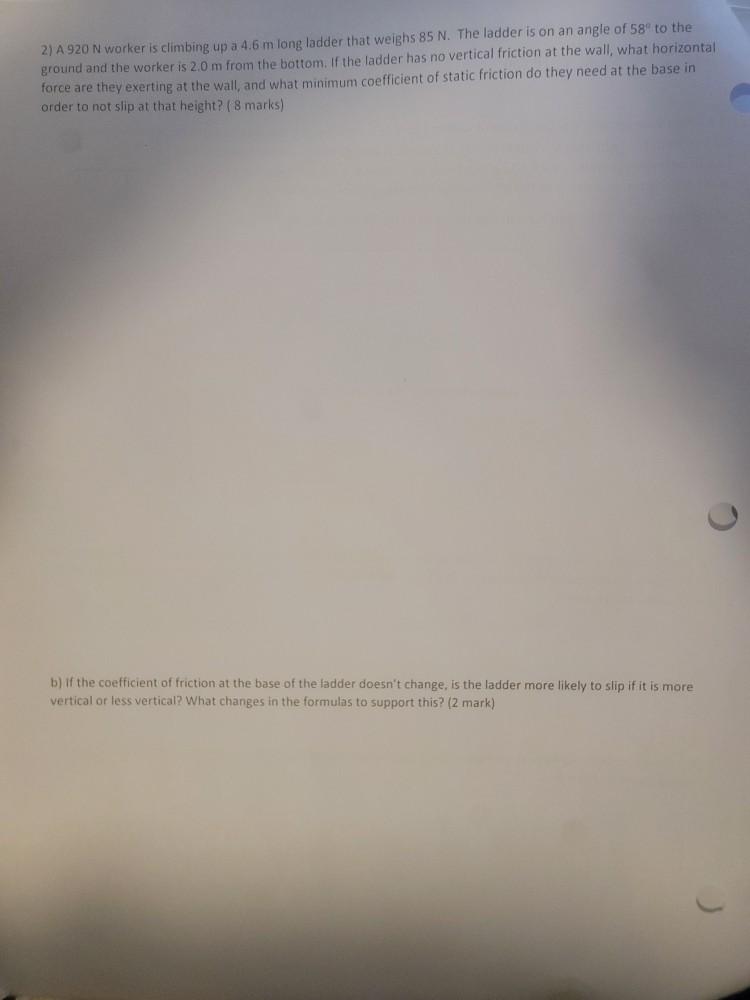
2) A 920 N worker is climbing up a 4.6 m long ladder that weighs 85 N. The ladder is on an angle of 58% to the ground and the worker is 2.0 m from the bottom. If the ladder has no vertical friction at the wall, what horizontal force are they exerting at the wall, and what minimum coefficient of static friction do they need at the base in order to not slip at that height? (8 marks) b) If the coefficient of friction at the base of the ladder doesn't change, is the ladder more likely to slip if it is more vertical or less vertical? What changes in the formulas to support this? (2 mark)
Step by Step Solution
There are 3 Steps involved in it
To solve this problem we first need to analyze the forces acting on the ladder and the worker 1 Determine the forces acting on the ladderworker system ... View full answer

Get step-by-step solutions from verified subject matter experts
 Study Help