







Question: 2. (a) This language also has boolean expressions. Boolean expressions can either be true or false, or they can be made up of two expressions
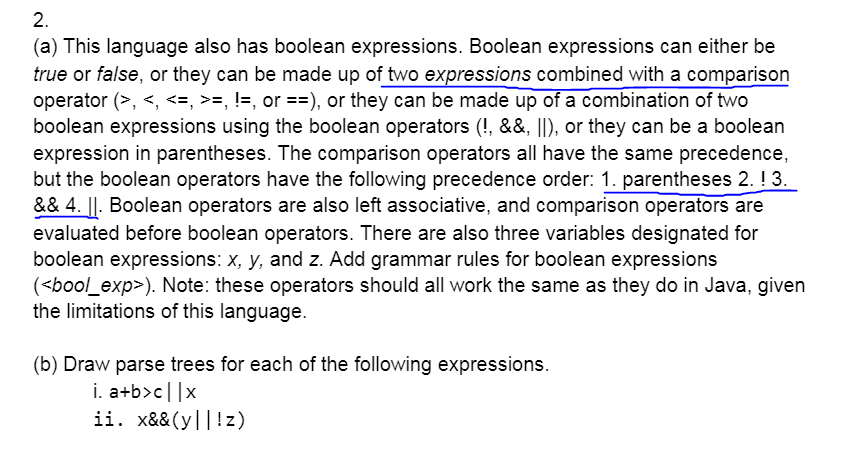
2. (a) This language also has boolean expressions. Boolean expressions can either be true or false, or they can be made up of two expressions combined with a comparison operator (>,=, !=, or ==), or they can be made up of a combination of two boolean expressions using the boolean operators (!, &&, ID), or they can be a boolean expression in parentheses. The comparison operators all have the same precedence, but the boolean operators have the following precedence order: 1. parentheses 2. !3. && 4. ]). Boolean operators are also left associative, and comparison operators are evaluated before boolean operators. There are also three variables designated for boolean expressions: x, y, and z. Add grammar rules for boolean expressions (
Step by Step Solution
There are 3 Steps involved in it

Get step-by-step solutions from verified subject matter experts
 Study Help