







Question: #2 a,b,c, and d. Please show all work and exaplin in detail when giving the answer. Thank you 2. On a bowed production possibilities frontier,
#2 a,b,c, and d. Please show all work and exaplin in detail when giving the answer. Thank you
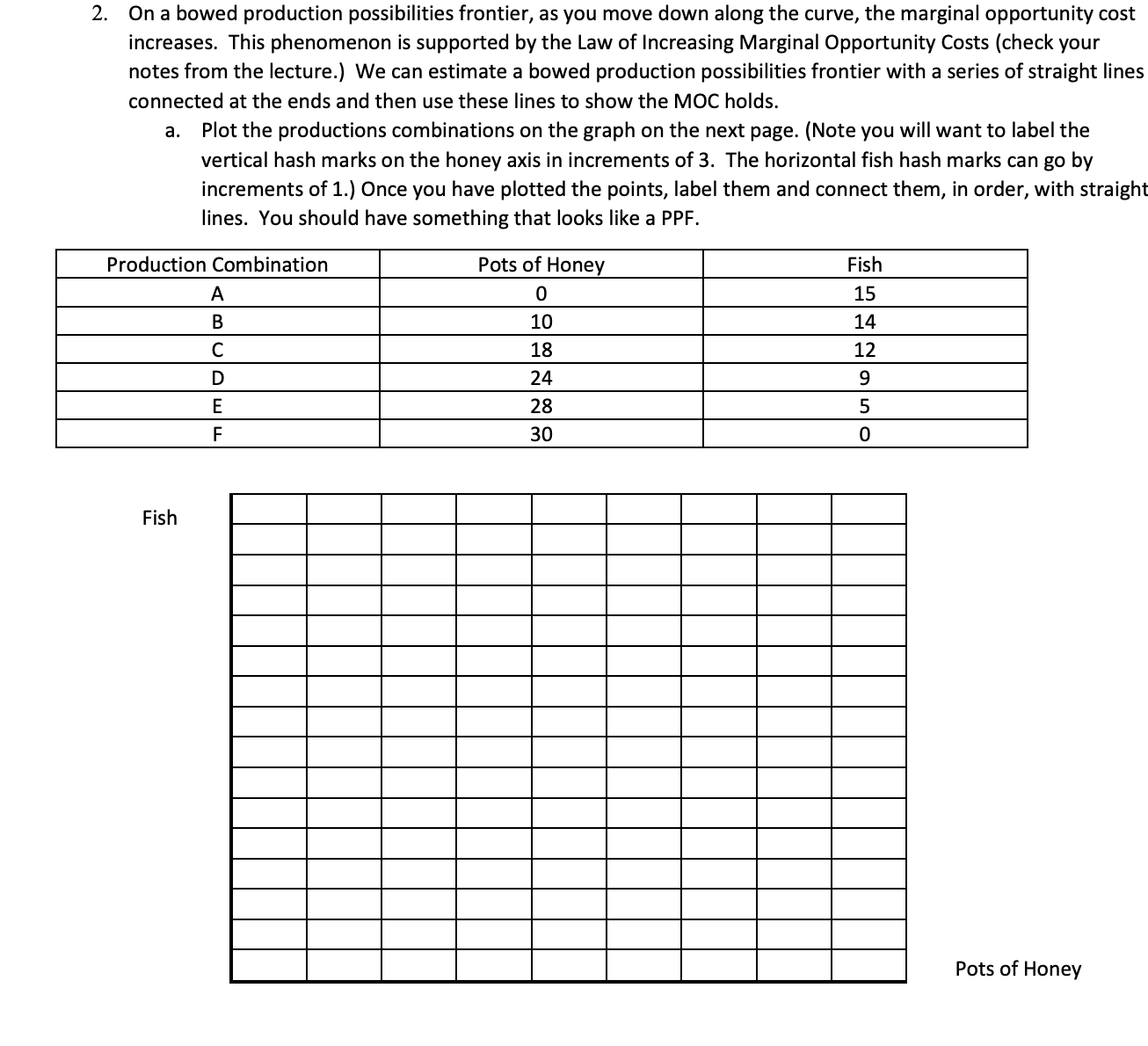
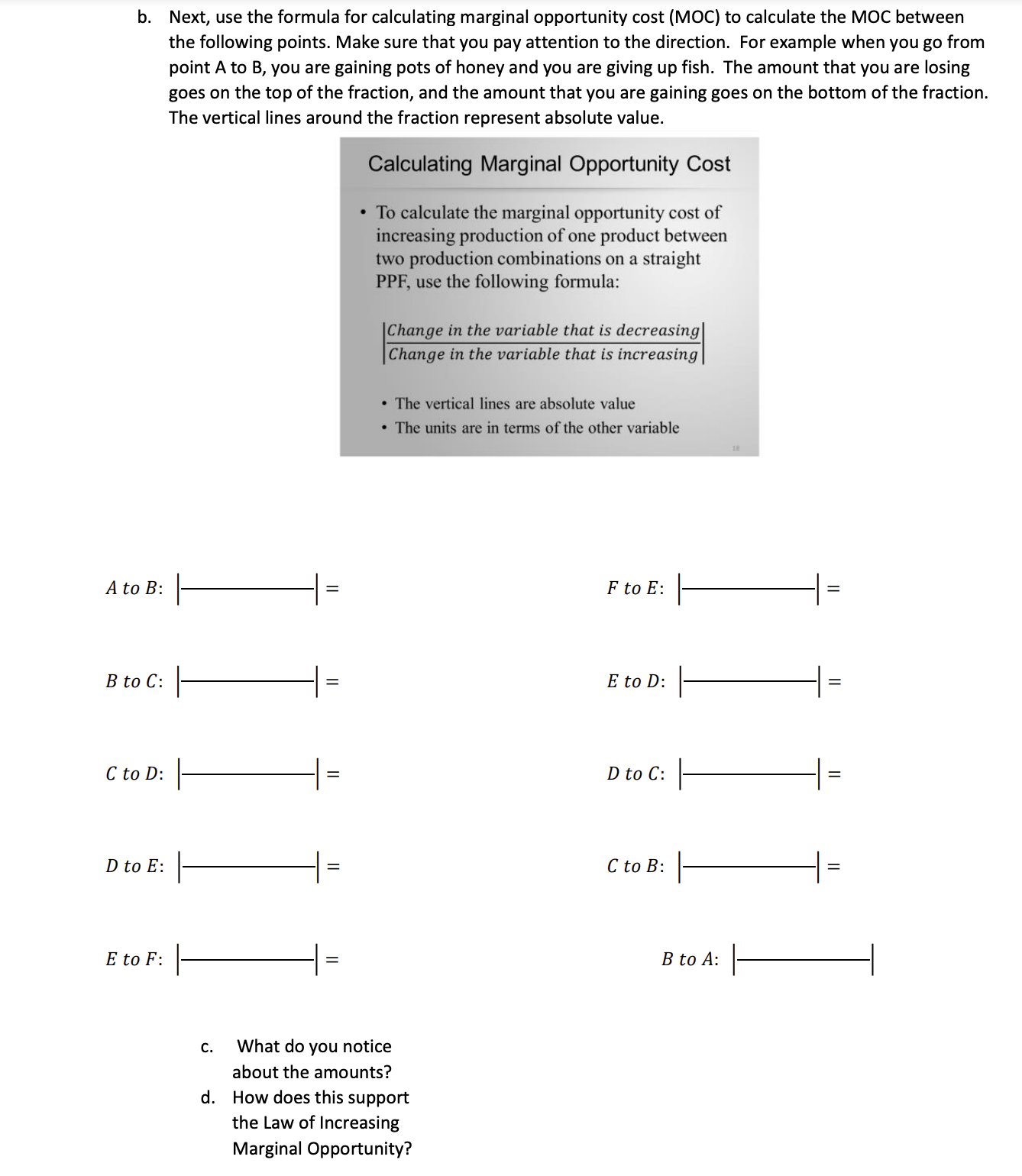
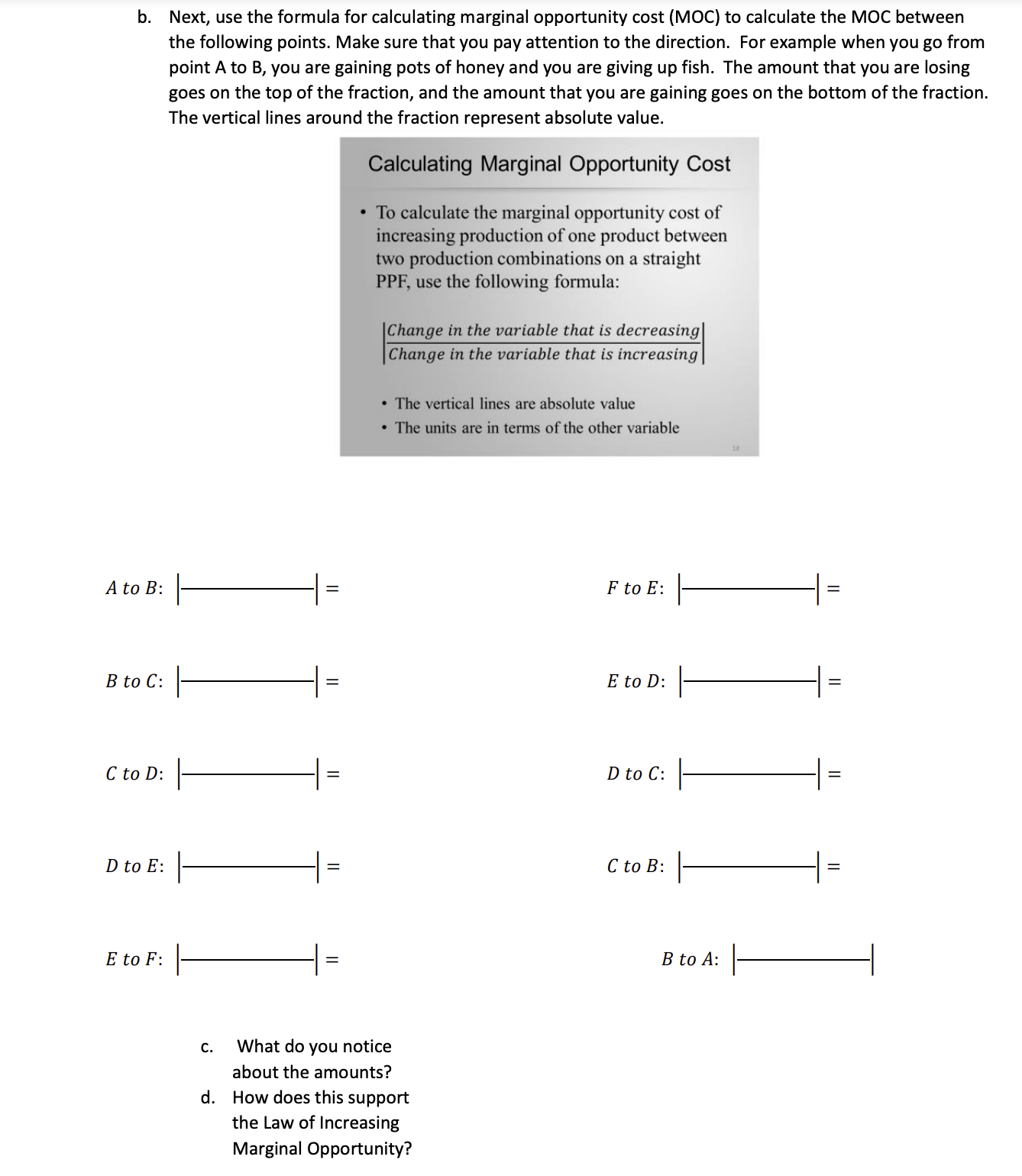
2. On a bowed production possibilities frontier, as you move down along the curve, the marginal opportunity cost increases. This phenomenon is supported by the Law of Increasing Marginal Opportunity Costs {check your notes from the lecture.) We can estimate a bowed production possibilities frontier with a series of straight lines connected at the ends and then use these lines to show the MOC holds. a. Plot the productions combinations on the graph on the next page. (Note you will want to label the vertical hash marks on the honey axis in increments of 3. The horizontal fish hash marks can go by increments of 1.) Once you have plotted the points, label them and connect them, in order, with straight lines. You should have something that looks like a PPF. Production Combination Pots of Honey --------- Pots of Honey b. Next, use the formula for calculating marginal opportunity cost (MOC) to calculate the MOC between the following points. Make sure that you pay attention to the direction. For example when you go from point A to B, you are gaining pots of honey and you are giving up fish. The amount that you are losing goes on the top of the fraction, and the amount that you are gaining goes on the bottom of the fraction. The vertical lines around the fraction represent absolute value. Calculating Marginal Opportunity Cost . To calculate the marginal opportunity cost of increasing production of one product between two production combinations on a straight PPF, use the following formula: Change in the variable that is decreasing Change in the variable that is increasing The vertical lines are absolute value . The units are in terms of the other variable A to B: E F to E: B to C: E to D: C to D: -= D to C: - -= D to E: C to B: - E to F: B to A: C. What do you notice about the amounts? d. How does this support the Law of Increasing Marginal Opportunity
Step by Step Solution
There are 3 Steps involved in it

Get step-by-step solutions from verified subject matter experts
 Study Help