







Question: 2 attachments. First the case study of Richard . Second, notes and questions Richard was given a six-year probation term after pleading guilty to several
2 attachments. First the case study of Richard . Second, notes and questions
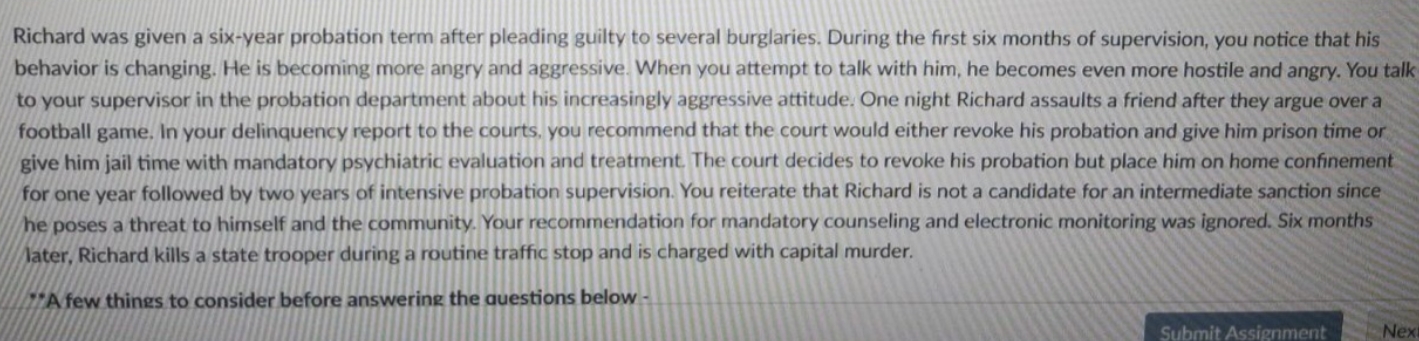
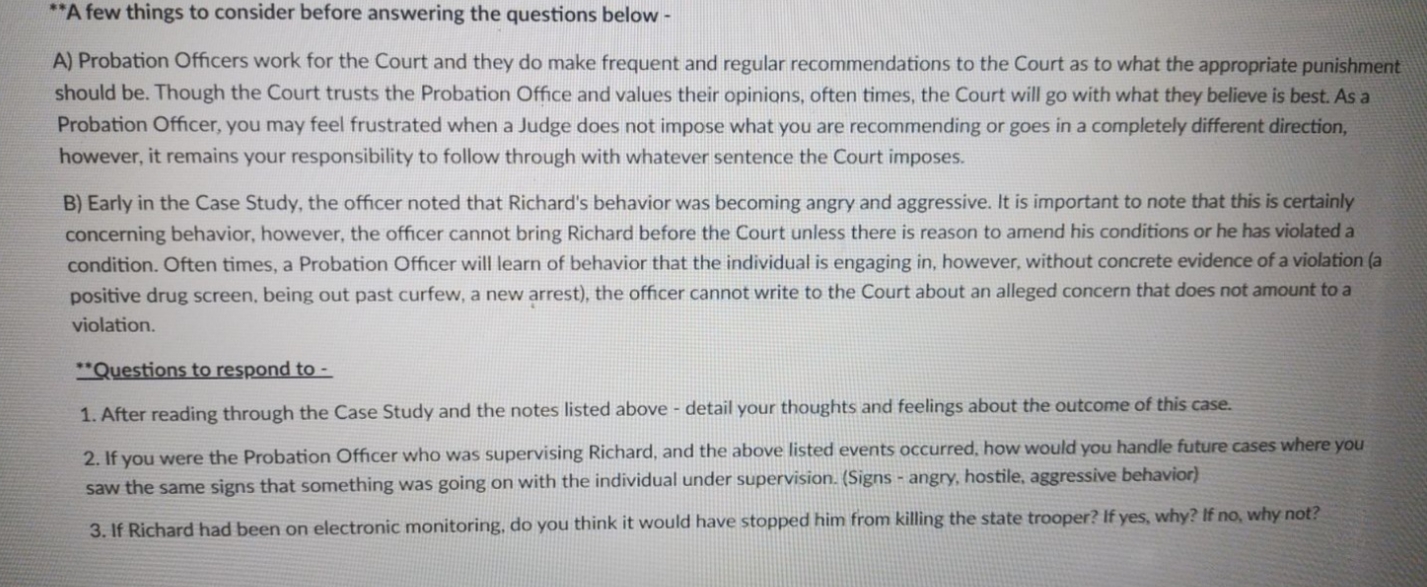 Richard was given a six-year probation term after pleading guilty to several burglaries. During the first six months of supervision, you notice that his behavior is changing. He is becoming more angry and aggressive. When you attempt to talk with him, he becomes even more hostile and angry. You talk to your supervisor in the probation department about his increasingly aggressive attitude. One night Richard assaults a friend after they argue over a football game. In your delinquency report to the courts, you recommend that the court would either revoke his probation and give him prison time or give him jail time with mandatory psychiatric evaluation and treatment. The court decides to revoke his probation but place him on home confinement for one year followed by two years of intensive probation supervision. You reiterate that Richard is not a candidate for an intermediate sanction since he poses a threat to himself and the community. Your recommendation for mandatory counseling and electronic monitoring was ignored. Six months later, Richard kills a state trooper during a routine traffic stop and is charged with capital murder. A few things to consider before answering the questions below Submit Assignment Nex"A few things to consider before answering the questions below - A) Probation Officers work for the Court and they do make frequent and regular recommendations to the Court as to what the appropriate punishment should be. Though the Court trusts the Probation Office and values their opinions, often times, the Court will go with what they believe is best. As a Probation Officer, you may feel frustrated when a Judge does not impose what you are recommending or goes in a completely different direction, however, it remains your responsibility to follow through with whatever sentence the Court imposes. B) Early in the Case Study, the officer noted that Richard's behavior was becoming angry and aggressive. It is important to note that this is certainly concerning behavior, however, the officer cannot bring Richard before the Court unless there is reason to amend his conditions or he has violated a condition. Often times, a Probation Officer will learn of behavior that the individual is engaging in, however, without concrete evidence of a violation (a positive drug screen. being out past curfew, a new arrest), the officer cannot write to the Court about an alleged concern that does not amount to a violation. "Questions to respond to - 1. After reading through the Case Study and the notes listed above - detail your thoughts and feelings about the outcome of this case. 2. If you were the Probation Officer who was supervising Richard, and the above listed events occurred, how would you handle future cases where you saw the same signs that something was going on with the individual under supervision. (Signs - angry, hostile, aggressive behavior) 3. If Richard had been on electronic monitoring, do you think it would have stopped him from killing the state trooper? If yes, why? If no, why not
Step by Step Solution
There are 3 Steps involved in it
1 Expert Approved Answer
Step: 1 Unlock

Question Has Been Solved by an Expert!
Get step-by-step solutions from verified subject matter experts
Step: 2 Unlock
Step: 3 Unlock
 Study Help