







Question: 2. Ch 5, Q1 A (17 points), B (17 points) For A and B only do parts 1 (9 points), 2 (6 points), and 3
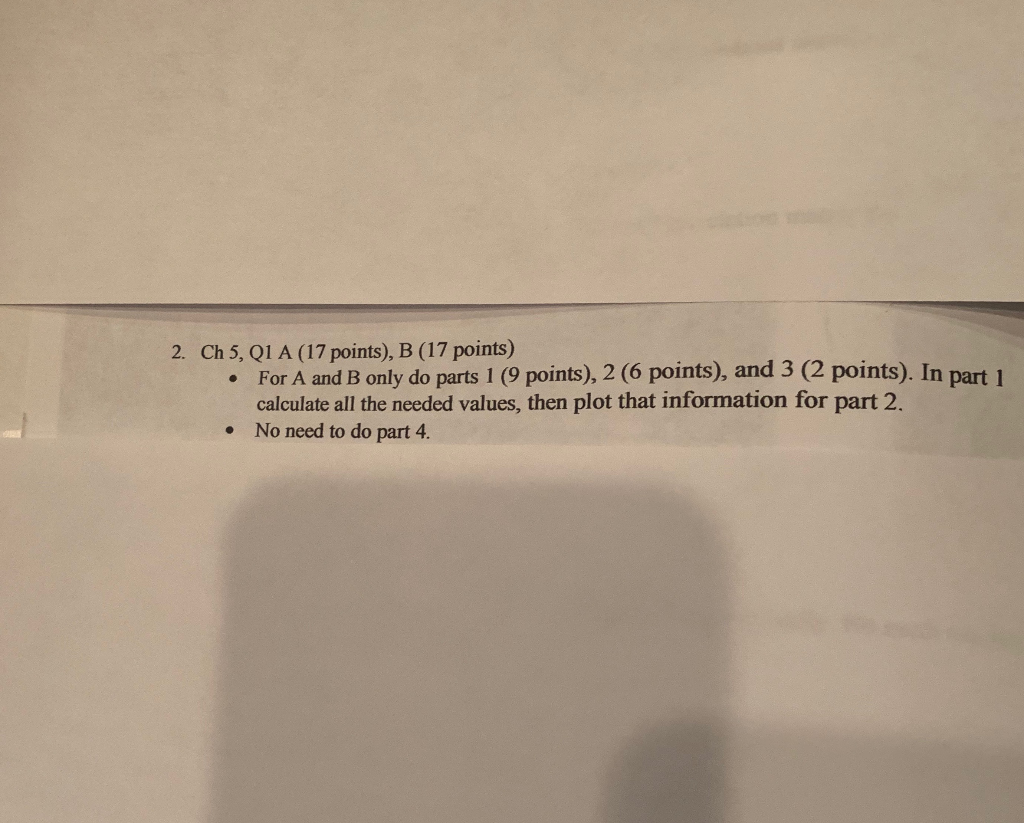
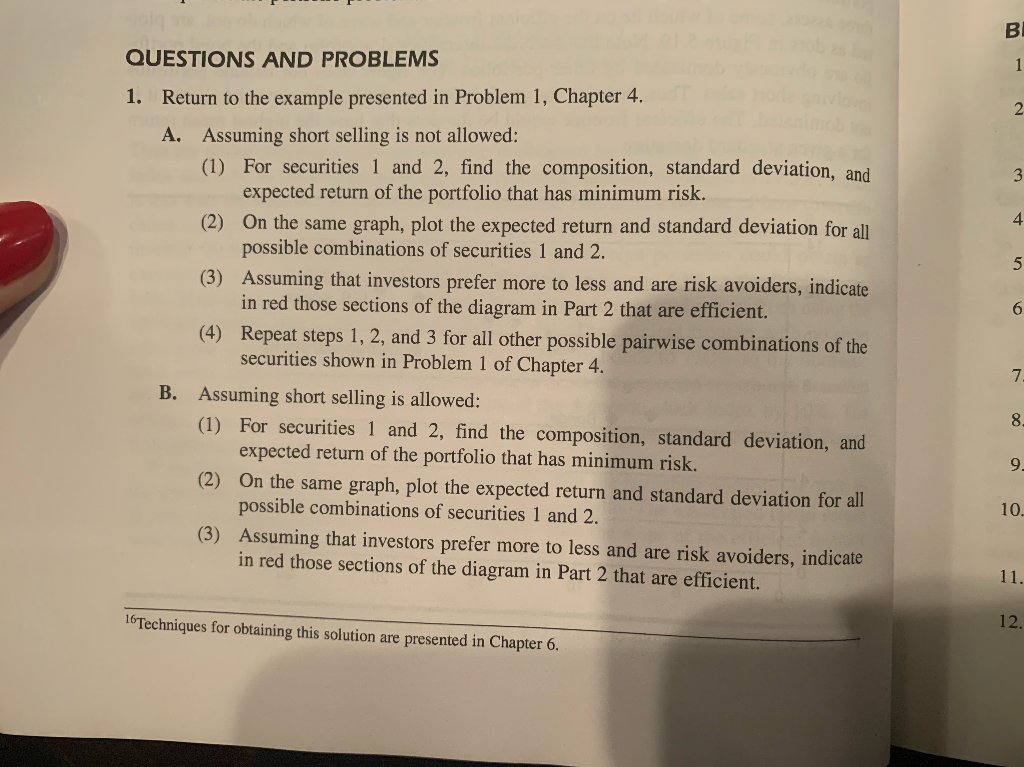
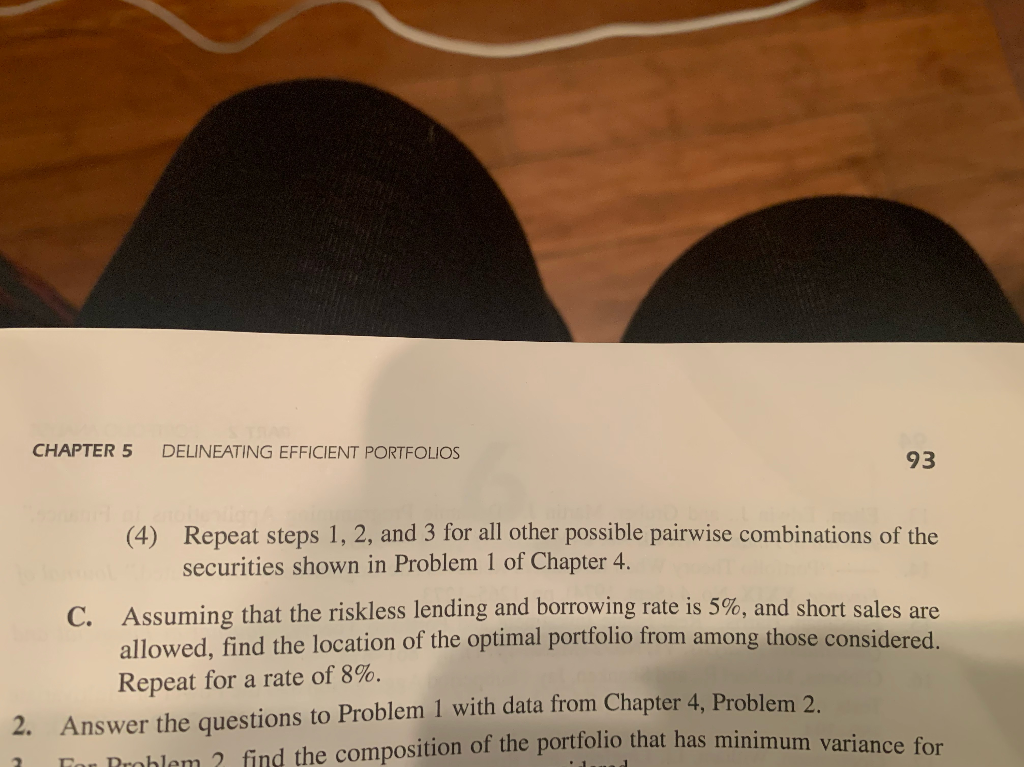
2. Ch 5, Q1 A (17 points), B (17 points) For A and B only do parts 1 (9 points), 2 (6 points), and 3 (2 points). In part 1 calculate all the needed values, then plot that information for part 2 No need to do part 4. QUESTIONS AND PROBLEMS 1. Return to the example presented in Problem 1, Chapter 4. A. Assuming short selling is not allowed: (1) For securities 1 and 2, find the composition, standard deviation, and expected return of the portfolio that has minimum risk. (2) On the same graph, plot the expected return and standard deviation for all possible combinations of securities 1 and 2. (3) Assuming that investors prefer more to less and are risk avoiders, indicate in red those sections of the diagram in Part 2 that are efficient. (4) Repeat steps 1, 2, and 3 for all other possible pairwise combinations of the securities shown in Problem 1 of Chapter 4. B. Assuming short selling is allowed: (1) For securities 1 and 2, find the composition, standard deviation, and expected return of the portfolio that has minimum risk. I (2) On the same graph, plot the expected return and standard deviation for all possible combinations of securities 1 and 2. (3) Assuming that investors prefer more to less and are risk avoiders, indicate in red those sections of the diagram in Part 2 that are efficient. 16 Techniques for obtaining this solution are presented in Chapter 6. CHAPTER 5 DELINEATING EFFICIENT PORTFOLIOS 93 (4) Repeat steps 1, 2, and 3 for all other possible pairwise combinations of the securities shown in Problem 1 of Chapter 4. C. Assuming that the riskless lending and borrowing rate is 5%, and short sales are allowed, find the location of the optimal portfolio from among those considered. Repeat for a rate of 8%. 2. Answer the questions to Problem 1 with data from Chapter 4, Problem ion of the portfolio that has minimum variance for 2. Ch 5, Q1 A (17 points), B (17 points) For A and B only do parts 1 (9 points), 2 (6 points), and 3 (2 points). In part 1 calculate all the needed values, then plot that information for part 2 No need to do part 4. QUESTIONS AND PROBLEMS 1. Return to the example presented in Problem 1, Chapter 4. A. Assuming short selling is not allowed: (1) For securities 1 and 2, find the composition, standard deviation, and expected return of the portfolio that has minimum risk. (2) On the same graph, plot the expected return and standard deviation for all possible combinations of securities 1 and 2. (3) Assuming that investors prefer more to less and are risk avoiders, indicate in red those sections of the diagram in Part 2 that are efficient. (4) Repeat steps 1, 2, and 3 for all other possible pairwise combinations of the securities shown in Problem 1 of Chapter 4. B. Assuming short selling is allowed: (1) For securities 1 and 2, find the composition, standard deviation, and expected return of the portfolio that has minimum risk. I (2) On the same graph, plot the expected return and standard deviation for all possible combinations of securities 1 and 2. (3) Assuming that investors prefer more to less and are risk avoiders, indicate in red those sections of the diagram in Part 2 that are efficient. 16 Techniques for obtaining this solution are presented in Chapter 6. CHAPTER 5 DELINEATING EFFICIENT PORTFOLIOS 93 (4) Repeat steps 1, 2, and 3 for all other possible pairwise combinations of the securities shown in Problem 1 of Chapter 4. C. Assuming that the riskless lending and borrowing rate is 5%, and short sales are allowed, find the location of the optimal portfolio from among those considered. Repeat for a rate of 8%. 2. Answer the questions to Problem 1 with data from Chapter 4, Problem ion of the portfolio that has minimum variance for
Step by Step Solution
There are 3 Steps involved in it

Get step-by-step solutions from verified subject matter experts
 Study Help