







Question: 2. Follow the same rare disease example in our lecture. 1:1000 is the prior of having the disease for the general population. However, typically a
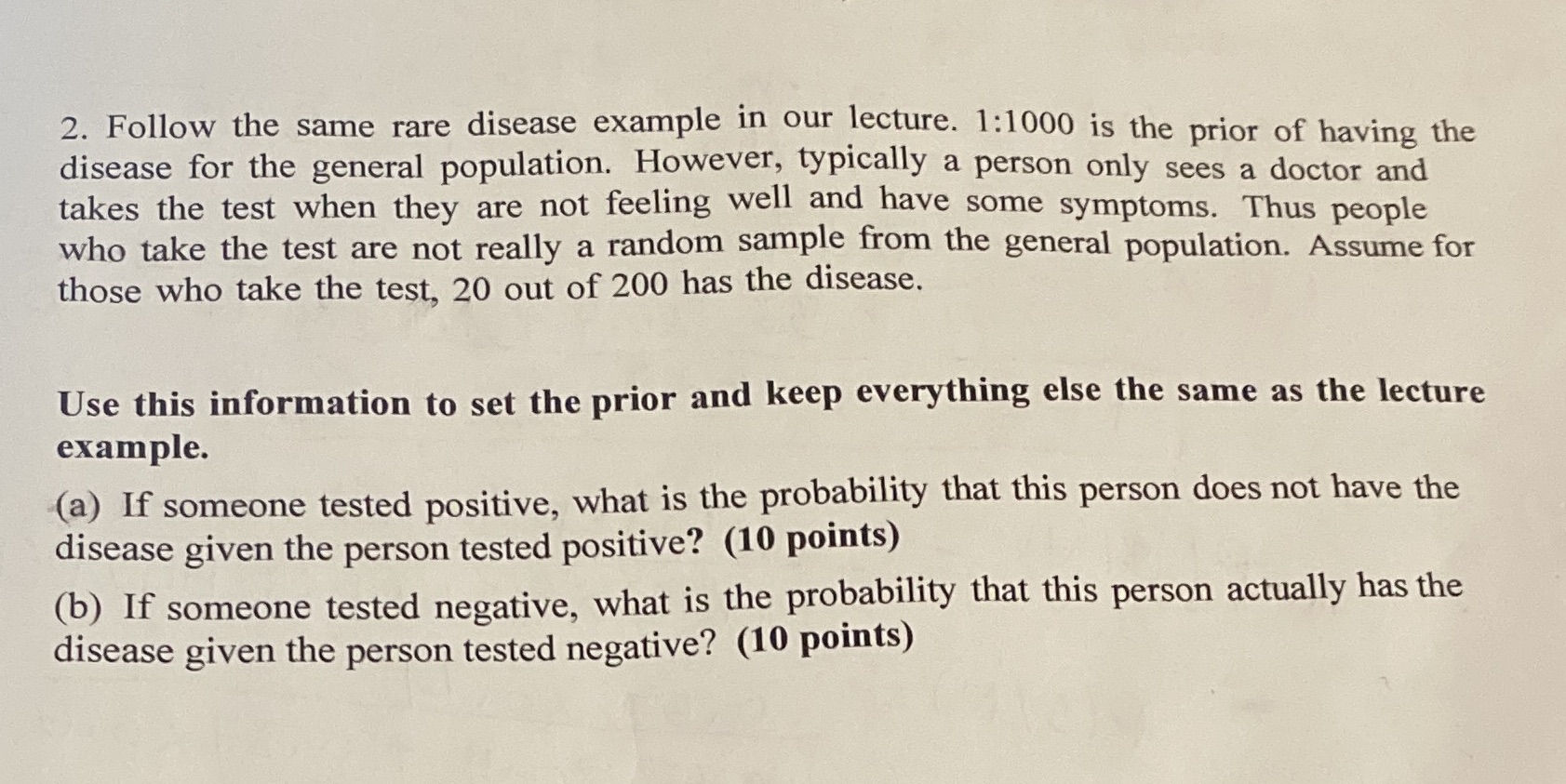
2. Follow the same rare disease example in our lecture. 1:1000 is the prior of having the disease for the general population. However, typically a person only sees a doctor and takes the test when they are not feeling well and have some symptoms. Thus people who take the test are not really a random sample from the general population. Assume for those who take the test, 20 out of 200 has the disease. Use this information to set the prior and keep everything else the same as the lecture example. (a) If someone tested positive, what is the probability that this person does not have the disease given the person tested positive? (10 points) (b) If someone tested negative, what is the probability that this person actually has the disease given the person tested negative? (10 points)
Step by Step Solution
There are 3 Steps involved in it

Get step-by-step solutions from verified subject matter experts
 Study Help