







Question: 2. MLFQ Multilevel Feedback Queue (preemptiveabsolute priority in higherqueues) Queue 1 uses RR scheduling with Tq =4 Queue 2 uses RR scheduling with Tq =9

2. MLFQ Multilevel Feedback Queue (preemptiveabsolute priority in higherqueues)
Queue 1 uses RR scheduling with Tq =4
Queue 2 uses RR scheduling with Tq =9
Queue 3 uses FCFS
All processes enter first queue 1. If time quantum (Tq) expires before CPU burst is complete, the process is downgraded to next lower priority queue. Processes are not downgraded when preempted by a higher queue level process. Once a process has been downgraded, it will not be upgraded.
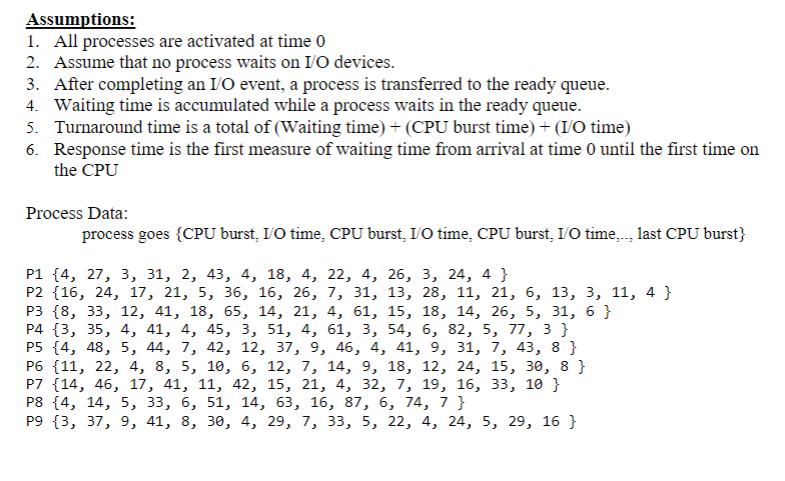
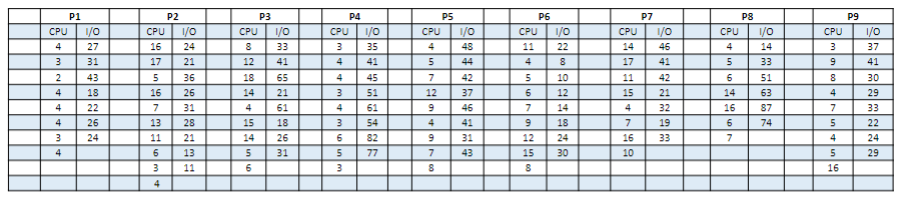
5. Partial Gantt chart for MLFQ 147 a. MLFQ video to help you get started: https://youtu.be/aclTbxTyMWk e the PARTIALresultsforgetsstanseTimeunoutubeacITbRTVMwk 6. Calculate the PARTIAL results for Response Time (RT), Waiting Time (WT), Turnaround Time (TT) PER PROCESS and Averages as of time 147 for MLFQ Assumptions: 1. All processes are activated at time 0 2. Assume that no process waits on IO devices. 3. After completing an IO event, a process is transferred to the ready queue. 4. Waiting time is accumulated while a process waits in the ready queue. 5. Turnaround time is a total of (Waiting time) + (CPU burst time) (IO time) 6. Response time is the first measure of waiting time from arival at time 0 until the first time on the CPU Process Data process goes (CPU burst, IO time, CPU burst, IO time, CPU burst, IO time,., last CPU burst) P1 14, 27, 3, 31, 2, 43, 4, 18, 4, 22, 4, 26, 3, 24, 4 P2 116, 24, 17, 21, 5, 36, 16, 26, 7, 31, 13, 28, 11, 21, 6, 13, 3, 11, 4 P3 (8, 33, 12, 41, 18, 65, 14, 21, 4, 61, 15, 18, 14, 26, 5, 31, 6 ) P4 13, 35, 4, 41, 4, 45, 3, 51, 4, 61, 3, 54, 6, 82, 5, 77, 3 P5 14, 48, 5, 44, 7, 42, 12, 37, 9, 46, 4, 41, 9, 31, 7, 43, 8 } P6 111, 22, 4, 8, 5, 10, 6, 12, 7, 14, 9, 18, 12, 24, 15, 30, 8 P7 114, 46, 17, 41, 11, 42, 15, 21, 4, 32, 7, 19, 16, 33, 10 P8 f4, 14, 5, 33, 6, 51, 14, 63, 16, 87, 6, 74, 7 ) P9 (3, 37, 9, 41, 8, 30, 4, 29, 7, 33, 5, 22, 4, 24, 5, 29, 16 ) P1 P2 P3 P7 CPU /O 27 31 43 18 CPU CPU 14 51 63 87 74 14 16 26 24 15 18 16 5. Partial Gantt chart for MLFQ 147 a. MLFQ video to help you get started: https://youtu.be/aclTbxTyMWk e the PARTIALresultsforgetsstanseTimeunoutubeacITbRTVMwk 6. Calculate the PARTIAL results for Response Time (RT), Waiting Time (WT), Turnaround Time (TT) PER PROCESS and Averages as of time 147 for MLFQ Assumptions: 1. All processes are activated at time 0 2. Assume that no process waits on IO devices. 3. After completing an IO event, a process is transferred to the ready queue. 4. Waiting time is accumulated while a process waits in the ready queue. 5. Turnaround time is a total of (Waiting time) + (CPU burst time) (IO time) 6. Response time is the first measure of waiting time from arival at time 0 until the first time on the CPU Process Data process goes (CPU burst, IO time, CPU burst, IO time, CPU burst, IO time,., last CPU burst) P1 14, 27, 3, 31, 2, 43, 4, 18, 4, 22, 4, 26, 3, 24, 4 P2 116, 24, 17, 21, 5, 36, 16, 26, 7, 31, 13, 28, 11, 21, 6, 13, 3, 11, 4 P3 (8, 33, 12, 41, 18, 65, 14, 21, 4, 61, 15, 18, 14, 26, 5, 31, 6 ) P4 13, 35, 4, 41, 4, 45, 3, 51, 4, 61, 3, 54, 6, 82, 5, 77, 3 P5 14, 48, 5, 44, 7, 42, 12, 37, 9, 46, 4, 41, 9, 31, 7, 43, 8 } P6 111, 22, 4, 8, 5, 10, 6, 12, 7, 14, 9, 18, 12, 24, 15, 30, 8 P7 114, 46, 17, 41, 11, 42, 15, 21, 4, 32, 7, 19, 16, 33, 10 P8 f4, 14, 5, 33, 6, 51, 14, 63, 16, 87, 6, 74, 7 ) P9 (3, 37, 9, 41, 8, 30, 4, 29, 7, 33, 5, 22, 4, 24, 5, 29, 16 ) P1 P2 P3 P7 CPU /O 27 31 43 18 CPU CPU 14 51 63 87 74 14 16 26 24 15 18 16
Step by Step Solution
There are 3 Steps involved in it

Get step-by-step solutions from verified subject matter experts
 Study Help