







Question: 2 more question-B2: What is the new equilibrium quantity? ... bags B3: If the new equilibrium quantity is the optimal quantity, by how many bags
2 more question-B2: What is the new equilibrium quantity? ... bags B3: If the new equilibrium quantity is the optimal quantity, by how many bags were oranges being overproduced before?... bags
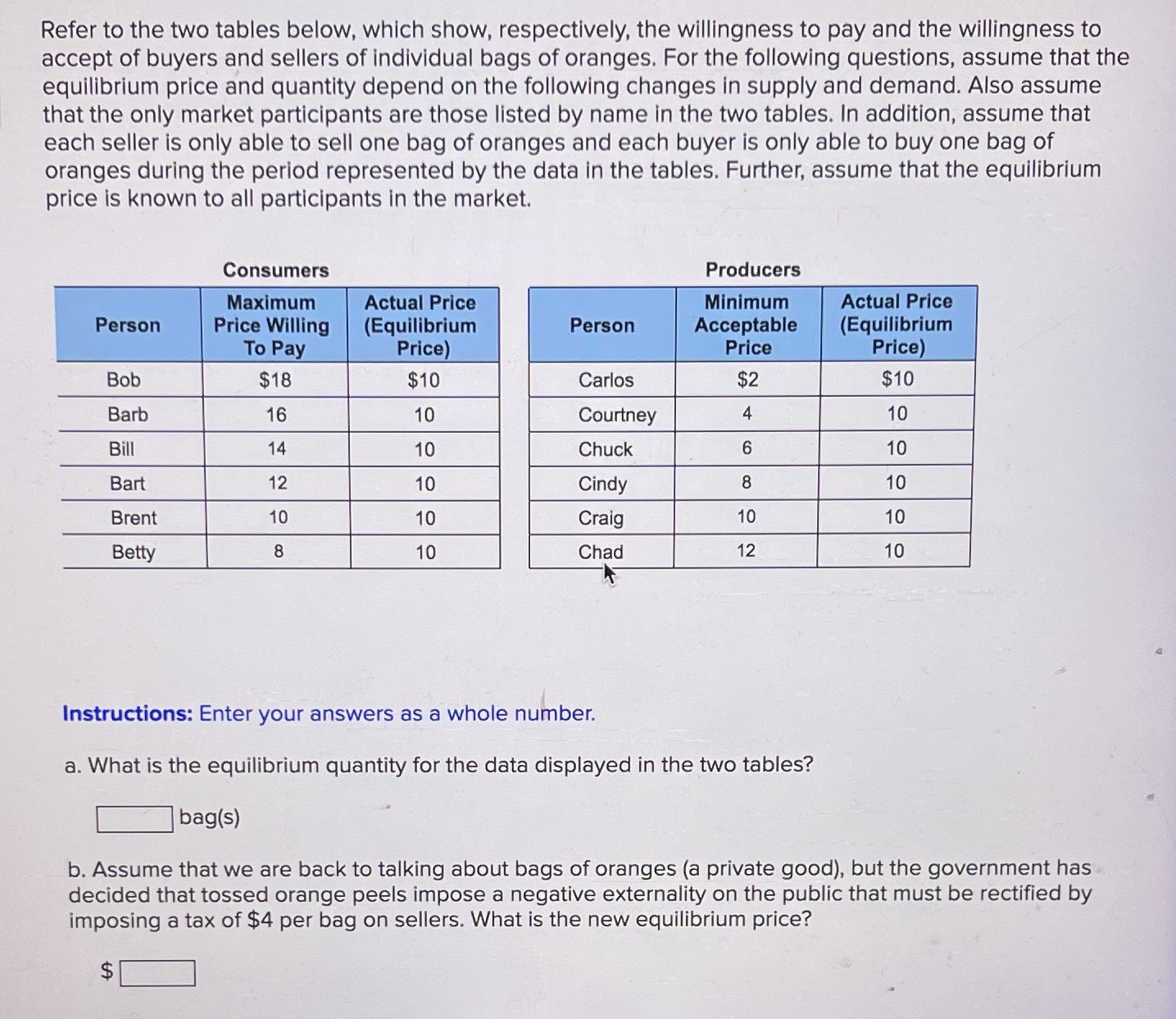
Refer to the two tables below, which show, respectively, the willingness to pay and the willingness to accept of buyers and sellers of individual bags of oranges. For the following questions, assume that the equilibrium price and quantity depend on the following changes in supply and demand. Also assume that the only market participants are those listed by name in the two tables. In addition, assume that each seller is only able to sell one bag of oranges and each buyer is only able to buy one bag of oranges during the period represented by the data in the tables. Further, assume that the equilibrium price is known to all participants in the market. Consumers Producers Maximum Actual Price Minimum Actual Price Person Price Willing (Equilibrium Person Acceptable (Equilibrium To Pay Price) Price Price) Bob $18 $10 Carlos $2 $10 Barb 16 10 Courtney 4 10 Bill 14 10 Chuck 6 10 Bart 12 10 Cindy 8 10 Brent 10 10 Craig 10 10 Betty 8 10 Chad 12 10 Instructions: Enter your answers as a whole number. a. What is the equilibrium quantity for the data displayed in the two tables? bag(s) b. Assume that we are back to talking about bags of oranges (a private good), but the government has decided that tossed orange peels impose a negative externality on the public that must be rectified by imposing a tax of $4 per bag on sellers. What is the new equilibrium price? $
Step by Step Solution
There are 3 Steps involved in it

Get step-by-step solutions from verified subject matter experts
 Study Help