Question: 2. PQ Problem: Notation note - Here the products are D and S (not P, Q); resources are X, Y, Z. Product D Step 1
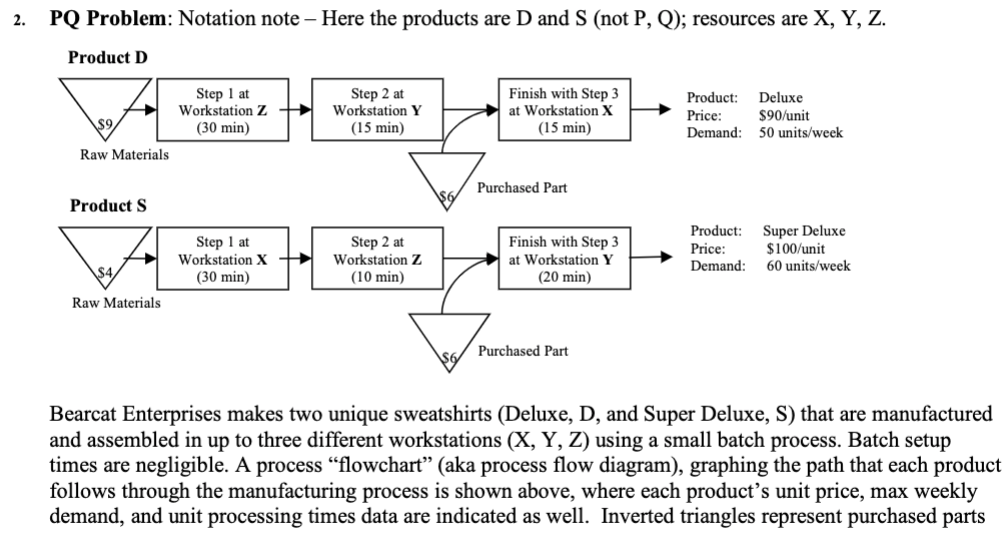
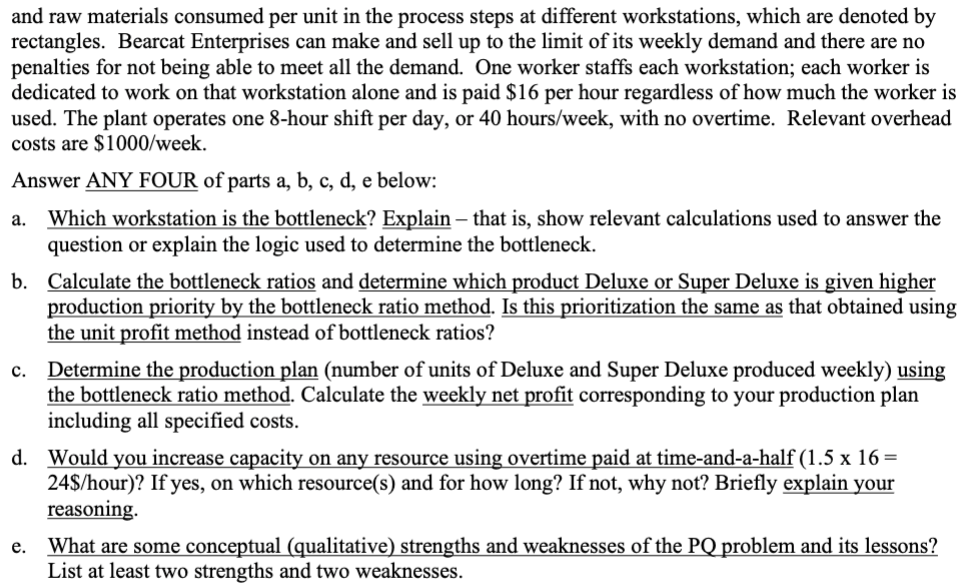
2. PQ Problem: Notation note - Here the products are D and S (not P, Q); resources are X, Y, Z. Product D Step 1 at Step 2 at Workstation Y (15 min) Workstation Z (30 min) Finish with Step 3 at Workstation X (15 min) Product: Deluxe Price: $90/unit Demand: 50 units/week $9 Raw Materials Purchased Part Products Step 1 at Workstation X (30 min) Step 2 at Workstation 2 (10 min) Finish with Step 3 at Workstation Y (20 min) Product: Price: Demand: Super Deluxe $100/unit 60 units/week Raw Materials Purchased Part Bearcat Enterprises makes two unique sweatshirts (Deluxe, D, and Super Deluxe, S) that are manufactured and assembled in up to three different workstations (X, Y, Z) using a small batch process. Batch setup times are negligible. A process flowchart (aka process flow diagram), graphing the path that each product follows through the manufacturing process is shown above, where each product's unit price, max weekly demand, and unit processing times data are indicated as well. Inverted triangles represent purchased parts a. and raw materials consumed per unit in the process steps at different workstations, which are denoted by rectangles. Bearcat Enterprises can make and sell up to the limit of its weekly demand and there are no penalties for not being able to meet all the demand. One worker staffs each workstation; each worker is dedicated to work on that workstation alone and is paid $16 per hour regardless of how much the worker is used. The plant operates one 8-hour shift per day, or 40 hours/week, with no overtime. Relevant overhead costs are $ 1000/week. Answer ANY FOUR of parts a, b, c, d, e below: Which workstation is the bottleneck? Explain that is, show relevant calculations used to answer the question or explain the logic used to determine the bottleneck. b. Calculate the bottleneck ratios and determine which product Deluxe or Super Deluxe is given higher production priority by the bottleneck ratio method. Is this prioritization the same as that obtained using the unit profit method instead of bottleneck ratios? c. Determine the production plan (number of units of Deluxe and Super Deluxe produced weekly) using the bottleneck ratio method. Calculate the weekly net profit corresponding to your production plan including all specified costs. d. Would you increase capacity on any resource using overtime paid at time-and-a-half (1.5 x 16 = 24$/hour)? If yes, on which resource(s) and for how long? If not, why not? Briefly explain your reasoning e. What are some conceptual (qualitative) strengths and weaknesses of the PQ problem and its lessons? List at least two strengths and two weaknesses









 Study Help