Question: 2. Run the serial program ten times to obtain base program times. 3. Run the OpenMP executable ten time for 1, 2, 4, 8, and
2. Run the serial program ten times to obtain base program times.
3. Run the OpenMP executable ten time for 1, 2, 4, 8, and 12 threads.
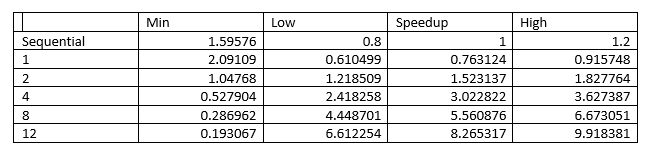
4. Use the minimum execution times for each configuration run to ascertain the speedups attained.
5. Include a table of all execution times and speedups in the report.
6. Include report, SLURM script, and modified code. Any speedups exceeding HIGH must be properly documented and explained in the report otherwise a penalty of 20 points will be accessed.
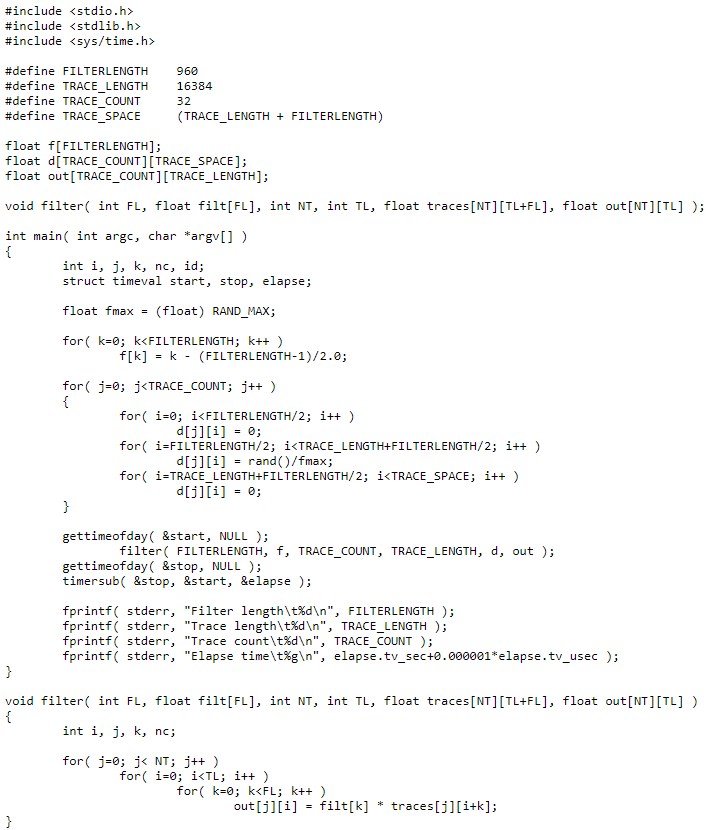
#include #include #include #define FILTERLENGTH #define TRACE_LENGTH #define TRACE_COUNT #define TRACE_SPACE 960 16384 32 (TRACE_LENGTH + FILTERLENGTH) float f[FILTERLENGTH]; float d[ TRACE_COUNT][TRACE_SPACE]; float out[TRACE_COUNT][TRACE_LENGTH]; void filter( int FL, float filt[FL], int NT, int TL, float traces[NT][TL+FL], float out[NT][TL] ); int main( int args, char *argv[] ) { int i, j, k, nc, id; struct timeval start, stop, elapse; float Fmax = (float) RAND_MAX; for k=0; k #include #include #define FILTERLENGTH #define TRACE_LENGTH #define TRACE_COUNT #define TRACE_SPACE 960 16384 32 (TRACE_LENGTH + FILTERLENGTH) float f[FILTERLENGTH]; float d[ TRACE_COUNT][TRACE_SPACE]; float out[TRACE_COUNT][TRACE_LENGTH]; void filter( int FL, float filt[FL], int NT, int TL, float traces[NT][TL+FL], float out[NT][TL] ); int main( int args, char *argv[] ) { int i, j, k, nc, id; struct timeval start, stop, elapse; float Fmax = (float) RAND_MAX; for k=0; k









 Study Help