







Question: # 2 ) Study algorithm 8 . 3 . 1 & Figure 8 . 3 . 2 , illustrate execution of the inPlacePartition Algorighm on
# Study algorithm & Figure illustrate execution of the
inPlacePartition Algorighm on the list:
Algorithm : Inplace randomized quicksort for an array, S
Algorithm inPlacePartition :
Input: An array, of distinct elements; integers a and such that
Output: An integer, such that the subarray is partitioned into and so that every element in is less than each element in
Let be a random integer in the range
Swap and
plarrS the pivot
llarra will scan rightward
rlarrb will scan leftward
while do find an element larger than the pivot
while and do
llarrl
while and do find an element smaller than the pivot rlarrr
if bllarr then
Swap and
Swap and put the pivot into its final place return
Algorithm inPlaceQuickSort :
Input: array, distinct elements; integers a and
Output: The subarray arranged nondecreasing order
then returnubrange with elements
llarr inPlacePartition
inPlaceQuickSort
inPlaceQuickSort
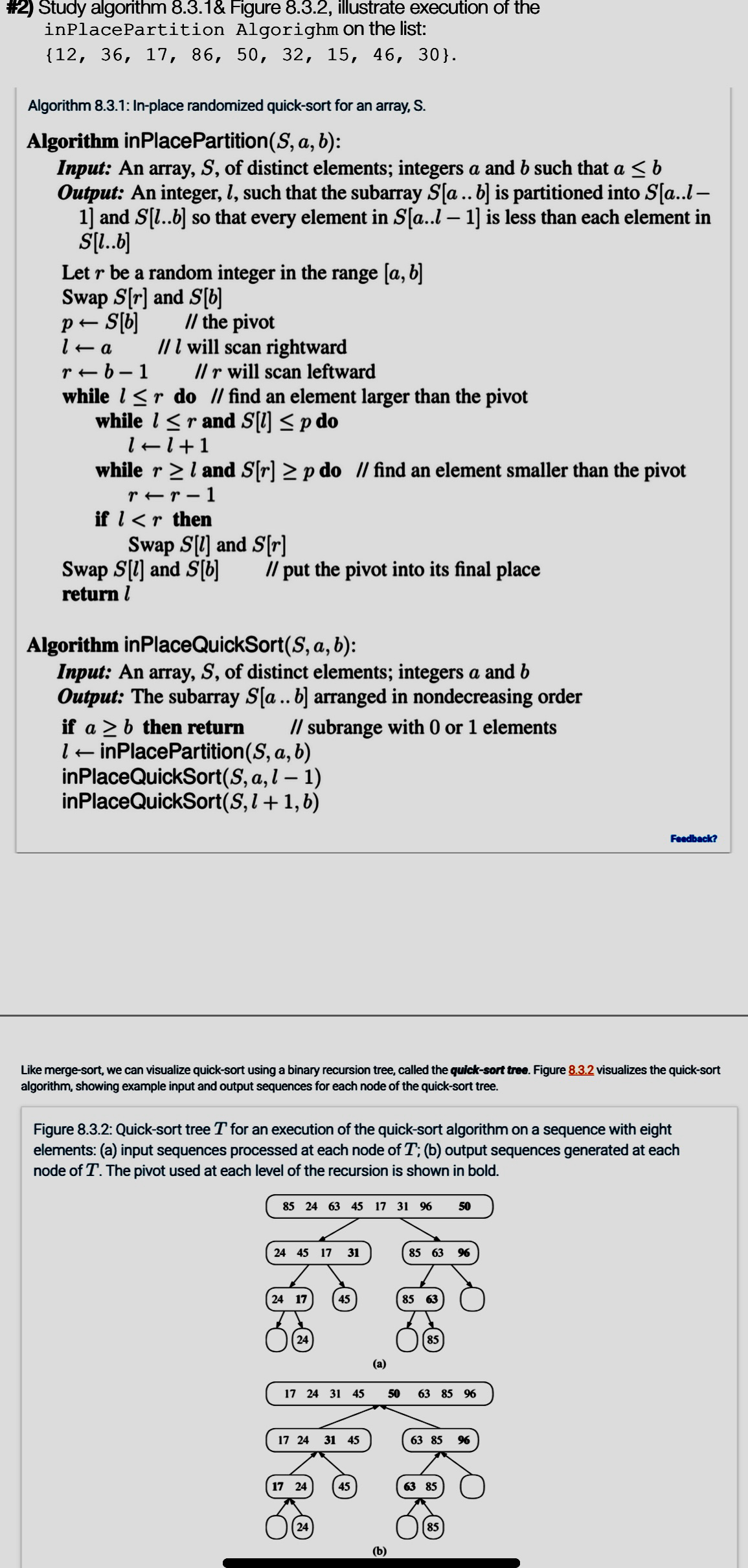
Like mergesort, can visualize quicksort using a binary recursion tree, called the quicksort tree. Figure visualizes the quicksort algorithm, showing example input and output sequences for each node the quicksort tree.
Figure : Quicksort tree for execution the quicksort algorithm a sequence with eight elements: input sequences processed each node ; output sequences generated each node The pivot used each level the recursion shown bold.
Step by Step Solution
There are 3 Steps involved in it
1 Expert Approved Answer
Step: 1 Unlock

Question Has Been Solved by an Expert!
Get step-by-step solutions from verified subject matter experts
Step: 2 Unlock
Step: 3 Unlock
 Study Help