







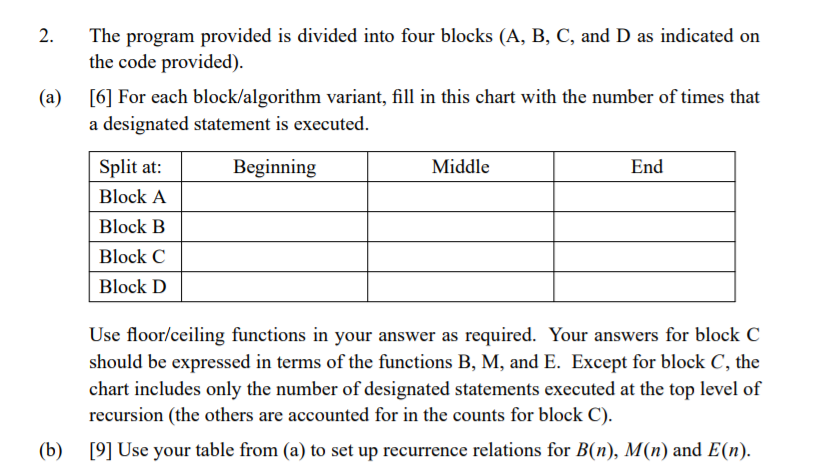
Question: 2. The program provided is divided into four blocks (A, B, C, and D as indicated on the code provided). [6] For each block/algorithm variant,
![C, and D as indicated on the code provided). [6] For each](https://dsd5zvtm8ll6.cloudfront.net/si.experts.images/questions/2024/09/66f516867a443_11766f51685f1189.jpg)
2. The program provided is divided into four blocks (A, B, C, and D as indicated on the code provided). [6] For each block/algorithm variant, fill in this chart with the number of times that a designated statement is executed. (a) Middle Split at: Block A Block B Block C Block D Beginning End Use floor/ceiling functions in your answer as required. Your answers for block C should be expressed in terms of the functions B, M, and E. Except for block C, the chart includes only the number of designated statements executed at the top level of recursion (the others are accounted for in the counts for block C). [9] Use your table from (a) to set up recurrence relations for B(n), M(n) and E(n). (b) 2. The program provided is divided into four blocks (A, B, C, and D as indicated on the code provided). [6] For each block/algorithm variant, fill in this chart with the number of times that a designated statement is executed. (a) Middle Split at: Block A Block B Block C Block D Beginning End Use floor/ceiling functions in your answer as required. Your answers for block C should be expressed in terms of the functions B, M, and E. Except for block C, the chart includes only the number of designated statements executed at the top level of recursion (the others are accounted for in the counts for block C). [9] Use your table from (a) to set up recurrence relations for B(n), M(n) and E(n). (b)
Step by Step Solution
There are 3 Steps involved in it

Get step-by-step solutions from verified subject matter experts
 Study Help