







Question: 20:09 Wed Sep 14 0 L 57% Module 4 | Lesson 1.1 - Computation for Ratio Biostatistics-HAROTA Lesson 1.1 - Computation for Ratio Formula for
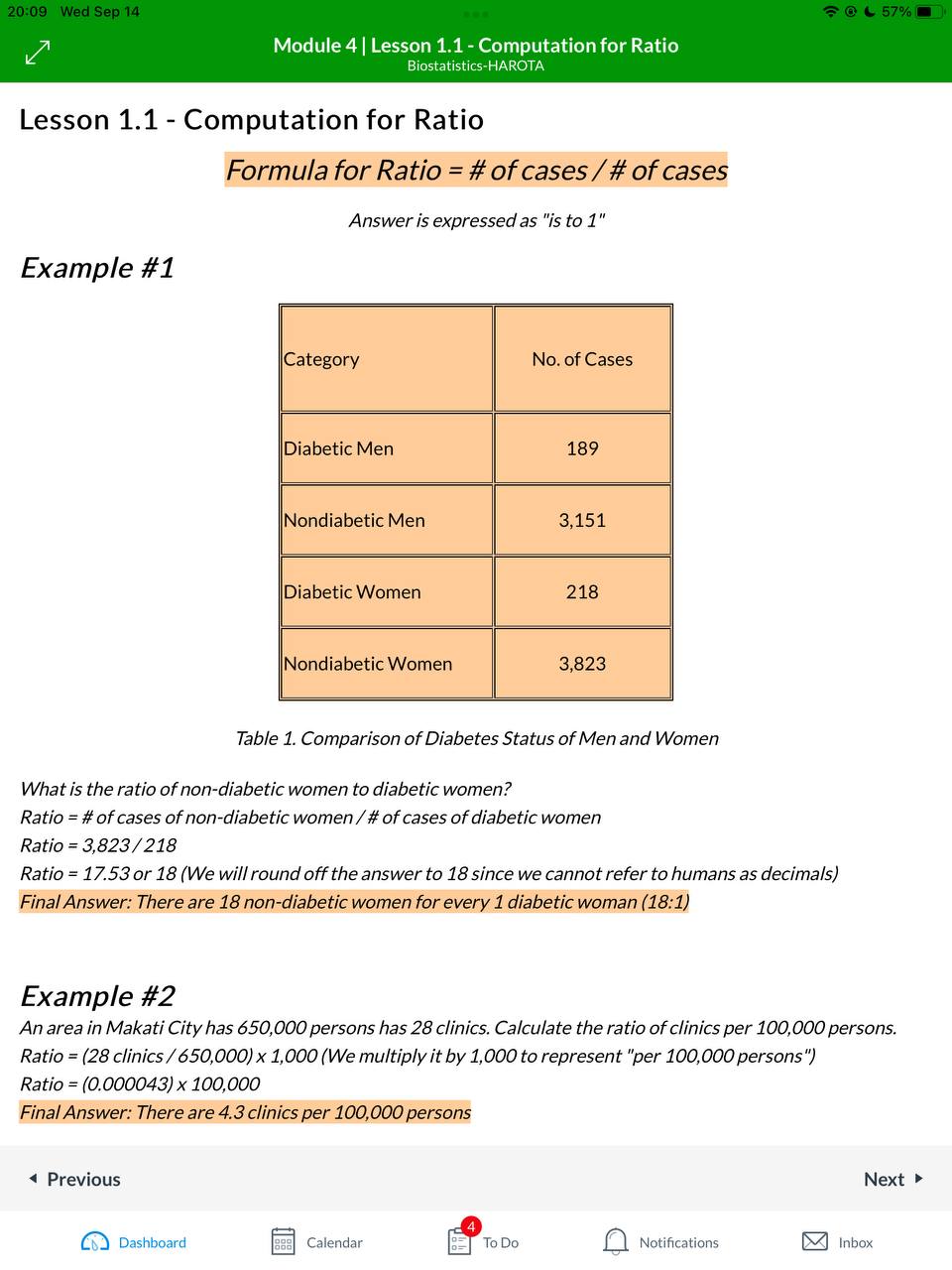
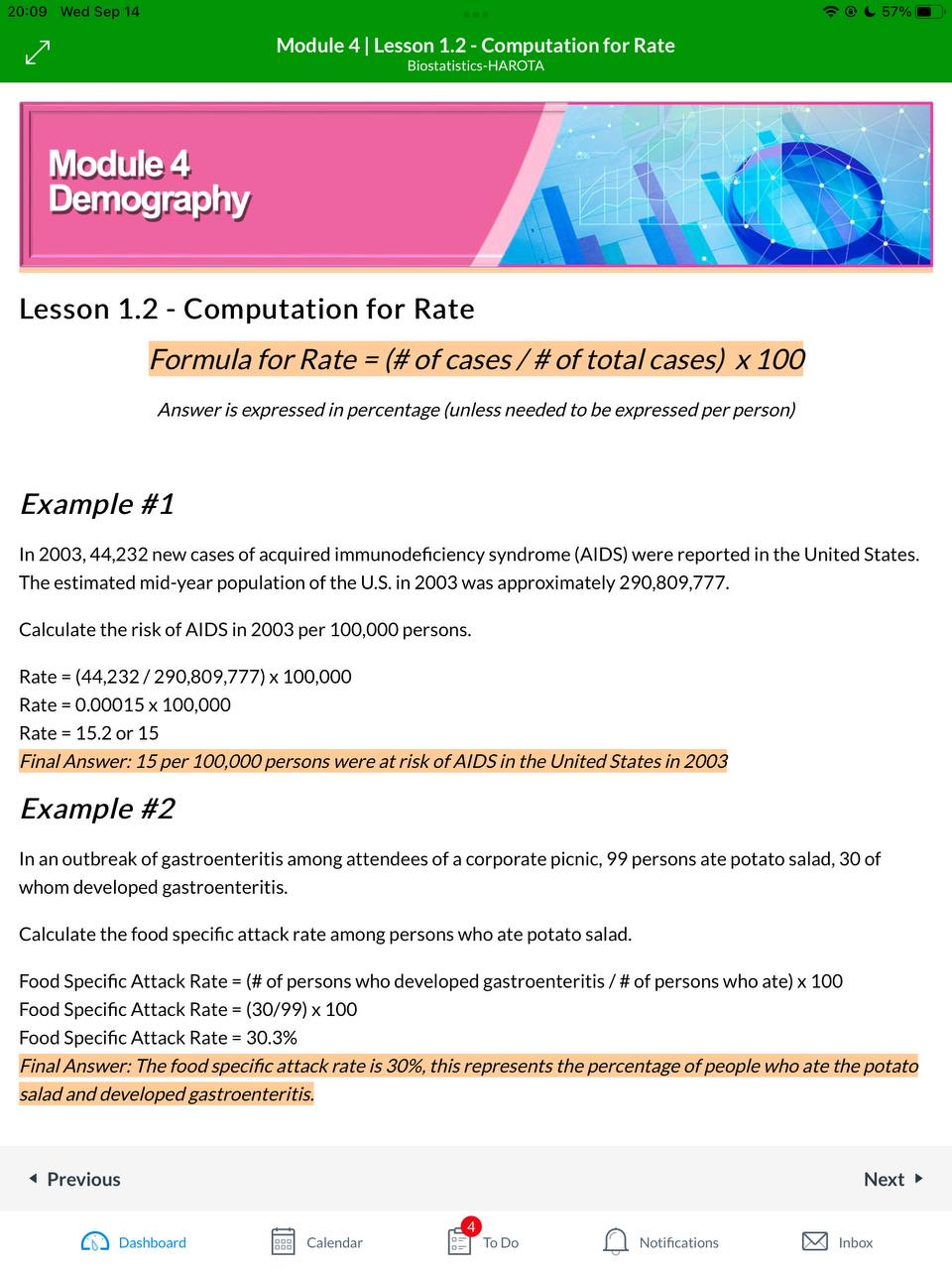
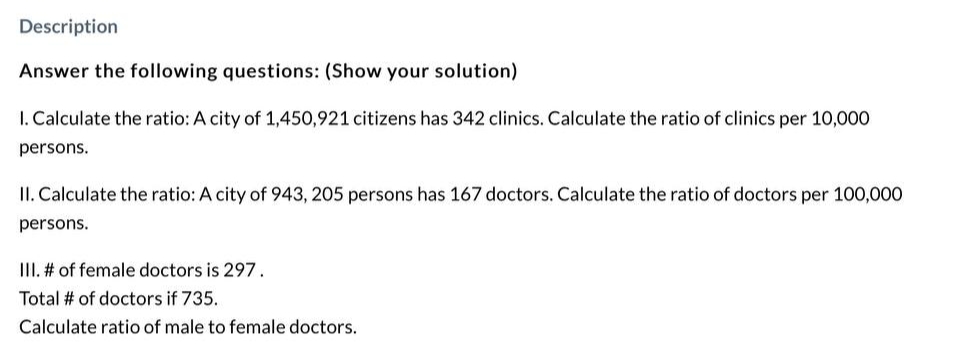
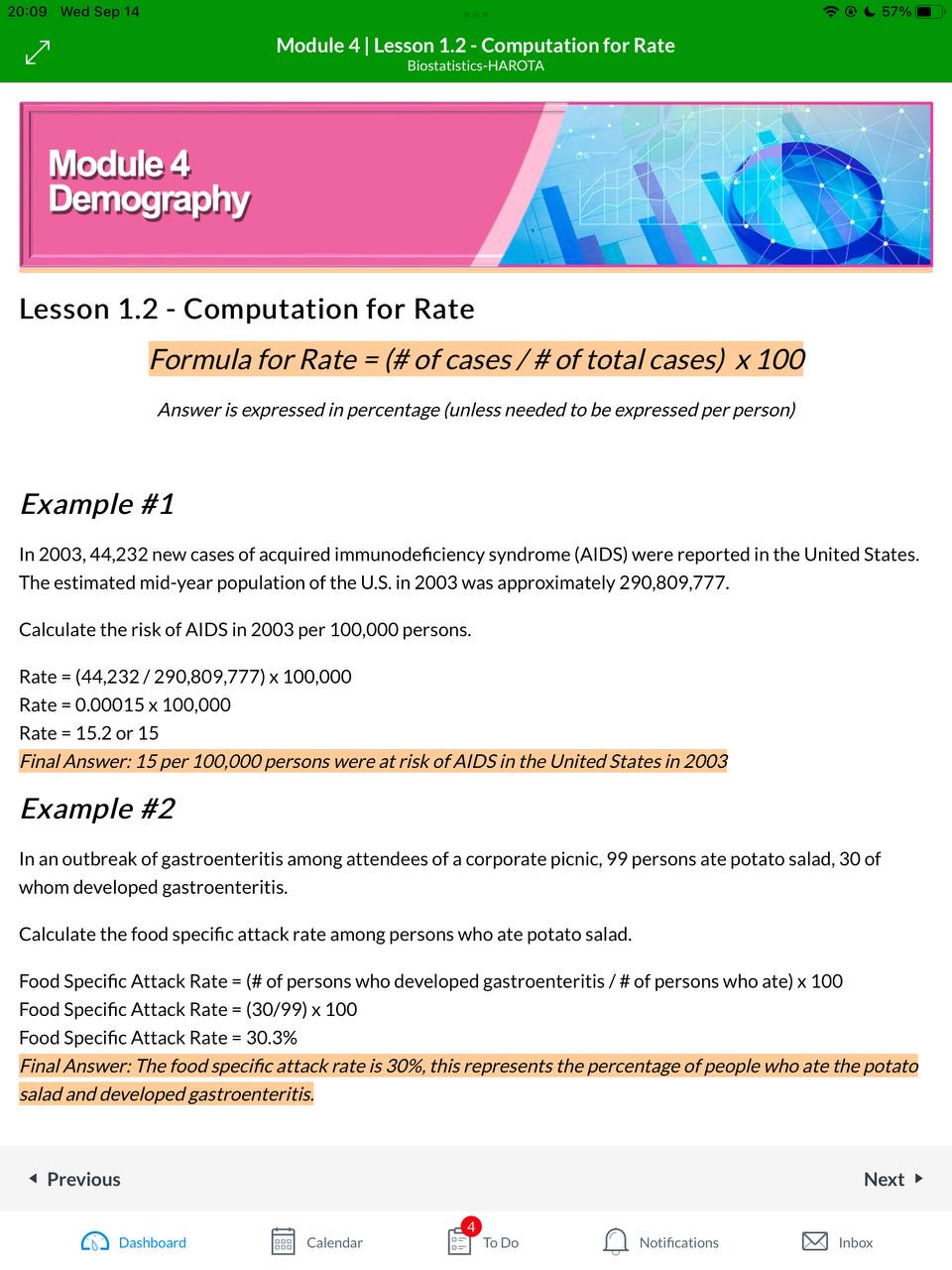
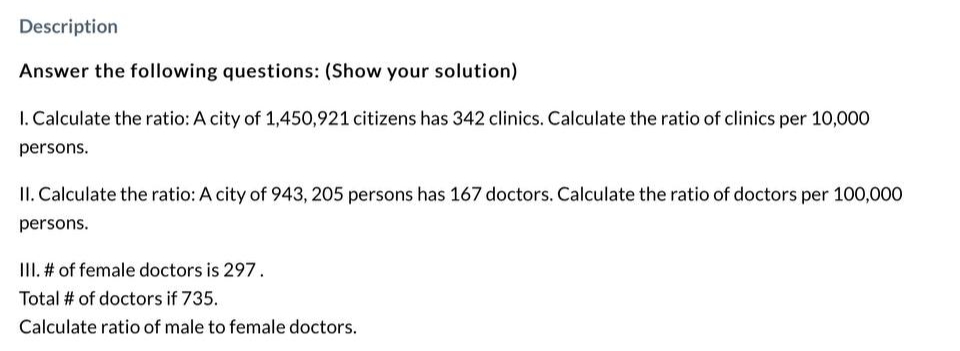
20:09 Wed Sep 14 0 L 57% Module 4 | Lesson 1.1 - Computation for Ratio Biostatistics-HAROTA Lesson 1.1 - Computation for Ratio Formula for Ratio = # of cases / # of cases Answer is expressed as "is to 1" Example #1 Category No. of Cases Diabetic Men 189 Nondiabetic Men 3,151 Diabetic Women 218 Nondiabetic Women 3,823 Table 1. Comparison of Diabetes Status of Men and Women What is the ratio of non-diabetic women to diabetic women? Ratio = # of cases of non-diabetic women / # of cases of diabetic women Ratio = 3,823/218 Ratio = 17.53 or 18 (We will round off the answer to 18 since we cannot refer to humans as decimals) Final Answer: There are 18 non-diabetic women for every 1 diabetic woman (18:1) Example #2 An area in Makati City has 650,000 persons has 28 clinics. Calculate the ratio of clinics per 100,000 persons. Ratio = (28 clinics / 650,000) x 1,000 (We multiply it by 1,000 to represent "per 100,000 persons") Ratio = (0.000043) x 100,000 Final Answer: There are 4.3 clinics per 100,000 persons Previous Next 4 CO Dashboard 888 Calendar To Do Notifications Inbox20:09 Wed Sep 14 0 L57% Module 4 | Lesson 1.2 - Computation for Rate Biostatistics-HAROTA Module 4 Demography Lesson 1.2 - Computation for Rate Formula for Rate = (# of cases / # of total cases) x 100 Answer is expressed in percentage (unless needed to be expressed per person) Example #1 In 2003, 44,232 new cases of acquired immunodeficiency syndrome (AIDS) were reported in the United States. The estimated mid-year population of the U.S. in 2003 was approximately 290,809,777. Calculate the risk of AIDS in 2003 per 100,000 persons. Rate = (44,232 / 290,809,777) x 100,000 Rate = 0.00015 x 100,000 Rate = 15.2 or 15 Final Answer: 15 per 100,000 persons were at risk of AIDS in the United States in 2003 Example #2 In an outbreak of gastroenteritis among attendees of a corporate picnic, 99 persons ate potato salad, 30 of whom developed gastroenteritis. Calculate the food specific attack rate among persons who ate potato salad. Food Specific Attack Rate = (# of persons who developed gastroenteritis / # of persons who ate) x 100 Food Specific Attack Rate = (30/99) x 100 Food Specific Attack Rate = 30.3% Final Answer: The food specific attack rate is 30%, this represents the percentage of people who ate the potato salad and developed gastroenteritis. Previous Next 4 CO Dashboard 888 Calendar To Do Notifications InboxDescription Answer the following questions: (Show your solution) I. Calculate the ratio: A city of 1.450.921 citizens has 342 clinics. Calculate the ratio of clinics per 10.000 persons. II. Calculate the ratio: A city of 943. 205 persons has 16?' doctors. Calculate the ratio of doctors per 100.000 persons. III. # of female doctors is 297. Total # of doctors if 735. Calculate ratio of male to female doctors
Step by Step Solution
There are 3 Steps involved in it

Get step-by-step solutions from verified subject matter experts
 Study Help