







Question: 21. Self-control is the theory that when people predict a correct outcome, they wrongly believe that they knew it all along. 22. The prevalence of
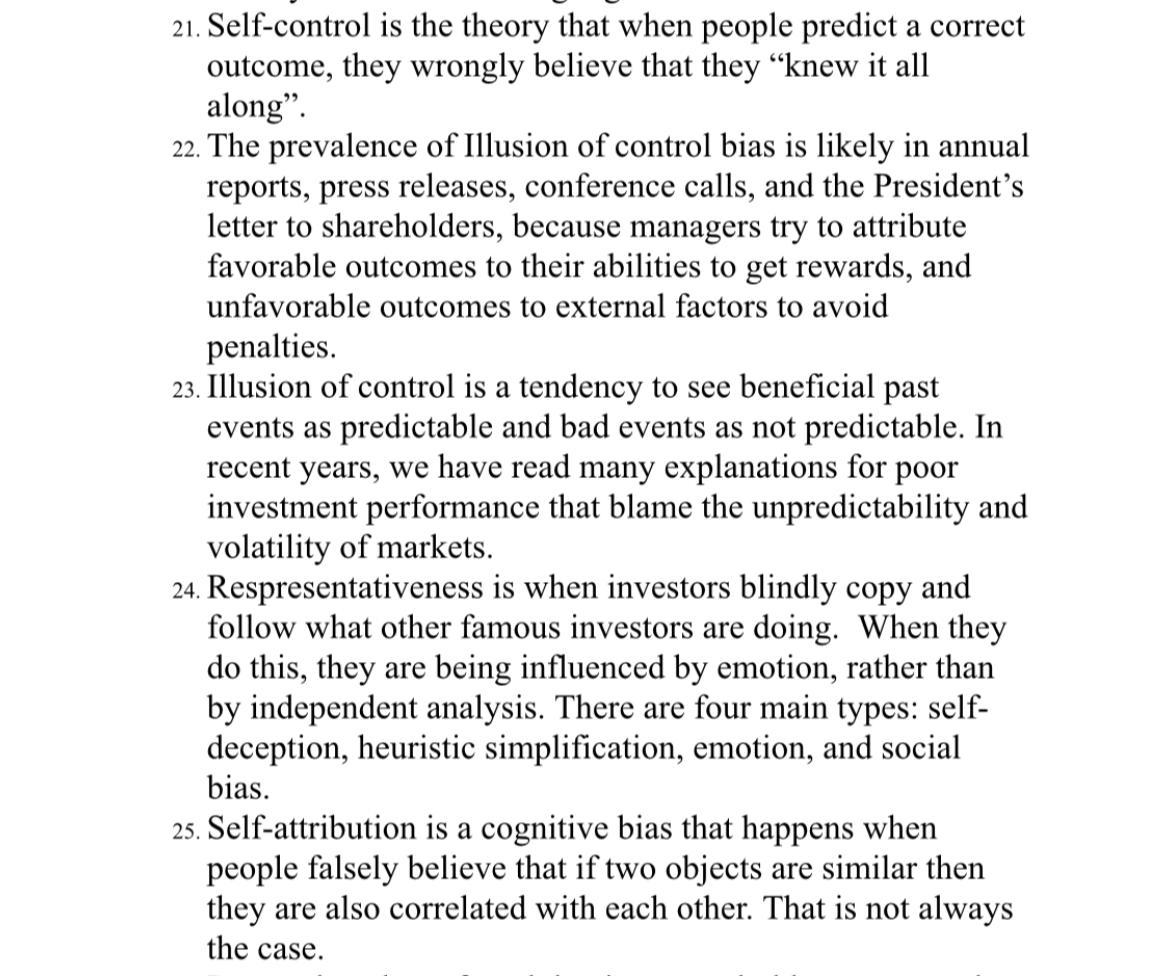
21. Self-control is the theory that when people predict a correct outcome, they wrongly believe that they knew it all along. 22. The prevalence of Illusion of control bias is likely in annual reports, press releases, conference calls, and the President's letter to shareholders, because managers try to attribute favorable outcomes to their abilities to get rewards, and unfavorable outcomes to external factors to avoid penalties. 23. Illusion of control is a tendency to see beneficial past events as predictable and bad events as not predictable. In recent years, we have read many explanations for poor investment performance that blame the unpredictability and volatility of markets. 24. Respresentativeness is when investors blindly copy and follow what other famous investors are doing. When they do this, they are being influenced by emotion, rather than by independent analysis. There are four main types: self- deception, heuristic simplification, emotion, and social bias. 25. Self-attribution is a cognitive bias that happens when people falsely believe that if two objects are similar then they are also correlated with each other. That is not always the case. 21. Self-control is the theory that when people predict a correct outcome, they wrongly believe that they knew it all along. 22. The prevalence of Illusion of control bias is likely in annual reports, press releases, conference calls, and the President's letter to shareholders, because managers try to attribute favorable outcomes to their abilities to get rewards, and unfavorable outcomes to external factors to avoid penalties. 23. Illusion of control is a tendency to see beneficial past events as predictable and bad events as not predictable. In recent years, we have read many explanations for poor investment performance that blame the unpredictability and volatility of markets. 24. Respresentativeness is when investors blindly copy and follow what other famous investors are doing. When they do this, they are being influenced by emotion, rather than by independent analysis. There are four main types: self- deception, heuristic simplification, emotion, and social bias. 25. Self-attribution is a cognitive bias that happens when people falsely believe that if two objects are similar then they are also correlated with each other. That is not always the case
Step by Step Solution
There are 3 Steps involved in it

Get step-by-step solutions from verified subject matter experts
 Study Help