







Question: 2.19.2: Random numbers. Given integer variables seedVal, lowestFruitBin, and highestFruitBin, seed the pseudorandom number generator with seedVal. Then, output three random bin sizes in the
2.19.2: Random numbers.
Given integer variables seedVal, lowestFruitBin, and highestFruitBin, seed the pseudorandom number generator with seedVal. Then, output three random bin sizes in the range lowestFruitBin to highestFruitBin inclusive. Lastly, given a total of 100 grapes, output the number of grapes that are not in a bin. End each output with a newline.
Ex: If lowestFruitBin is 7 and highestFruitBin is 15, then a possible output is:
(How do I get the correct input?)
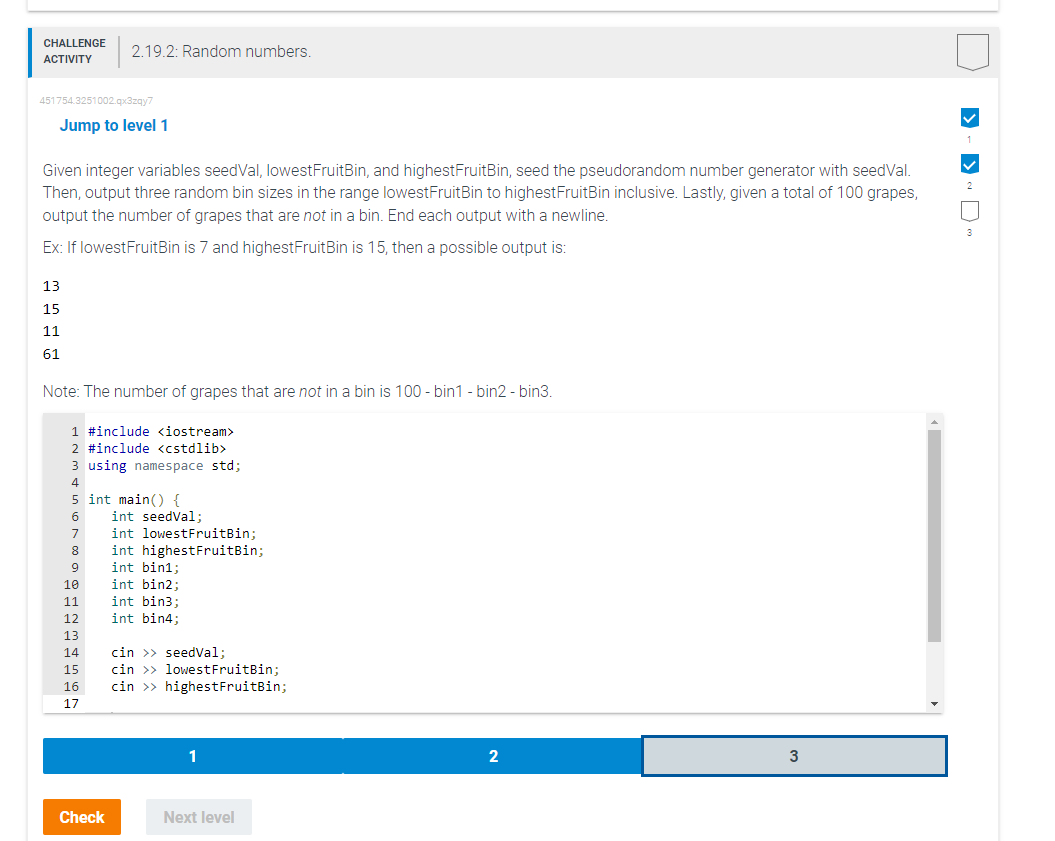
451754.3251002.q3zqy7 Jump to level 1 Given integer variables seedVal, lowestFruitBin, and highestFruitBin, seed the pseudorandom number generator with seedVal. Then, output three random bin sizes in the range lowestFruitBin to highestFruitBin inclusive. Lastly, given a total of 100 grapes, output the number of grapes that are not in a bin. End each output with a newline. Ex: If lowestFruitBin is 7 and highestFruitBin is 15 , then a possible output is: 13 15 11 61 Note: The number of grapes that are not in a bin is 100 - bin 1 - bin2 - bin3
Step by Step Solution
There are 3 Steps involved in it

Get step-by-step solutions from verified subject matter experts
 Study Help