







Question: - . 25% Part (a) Suppose you are using a camera and wish to have a iarger image of a distant object than you are
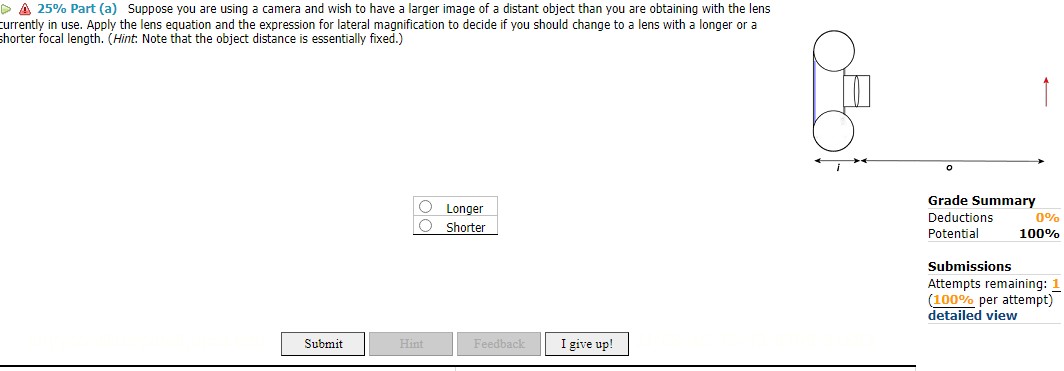
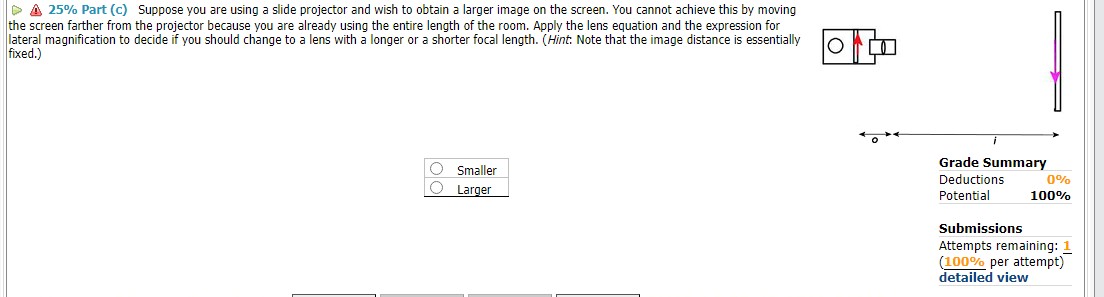
- . 25% Part (a) Suppose you are using a camera and wish to have a iarger image of a distant object than you are obtaining with the lens :urrently in use. Apply the lens equation and the expression for lateral magnification to decide if you should change to a lens with a longer or a ;horter focal length. [Hrht Note diat the object distance is essentially xed.) Grade Summary Deductions - Potential lDlu Submissions Attempts remaining: _ [ per attempt] detailed view Submit [give up! i; & 25% Part {in} Draw a geometrical diagram of the situation from part (a). If the diagram agrees with your resultsr explain lhe underlying reasoning behind why your egualjon and diagram produce the results that they do. If they are in disagreement, explain whether the diagram or the equation is correct and why the other is wrong. -Too| Selection-til Clear Canvas Grade Summary Deductions -_i--.- Potential 1009? Submissions Attempts remaining: 2 (5' ' per attempt] detailed View if: Q 25% Part (c) Suppose you are using a slide projector and I.'.'is|1 to obtain a larger image on the screen. You cannot achieve this by moving d1e screen farther from the projector because you are already using the enijre length of me room. Apply the lens equation and the expression for lateral magnification to decide if you should change to a lens with a longer or a shorter focal length. (Hint. Note that the image distance is essentially xed.) 4ydh-_ O I Grade Summary :5 Small er Deductions -.': Larger Potential 100% Submissions Attempts remaining: ; ' per attempt] detailed View 25% Part (d) Draw a geometrical diagram of the situation from part (c). If the diagram agrees with your results, explain the underlying reasoning behind why your equation and diagram produce the results that they do. If they are in disagreement, explain whether the diagram or the equation is correct and why the other is wrong. --Tool Selection-- Clear Canvas Grade Summary Deductions 0% Potential 100% Submissions Attempts remaining: 3 (0% per attempt) detailed view Submit Hint Feedback I give up
Step by Step Solution
There are 3 Steps involved in it

Get step-by-step solutions from verified subject matter experts
 Study Help