Question: 2.6 Communication The talk emphasized the project's initial communication challenges, arising from an absence of coordinated and structured collaboration channels. The lack of explicit protocols
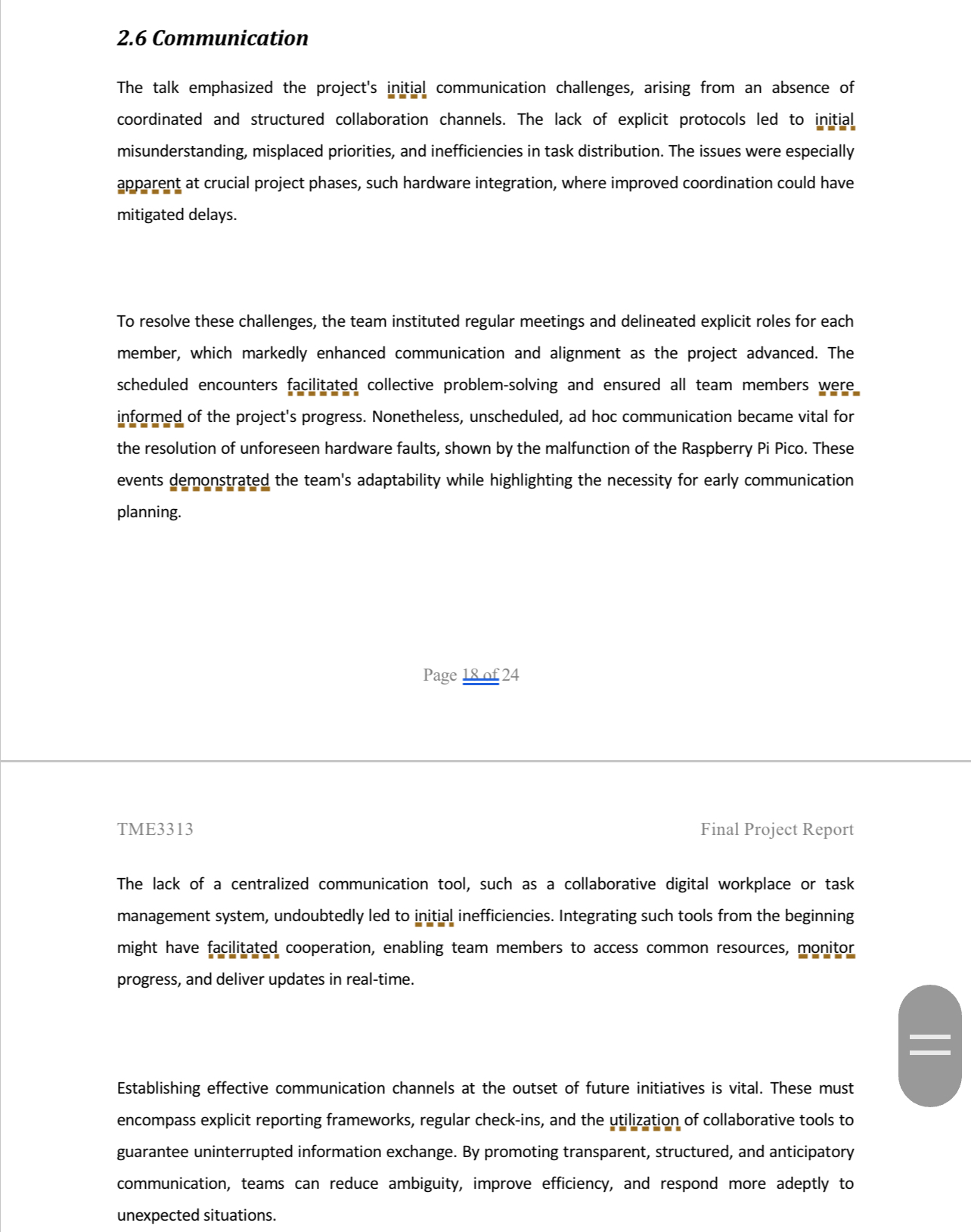
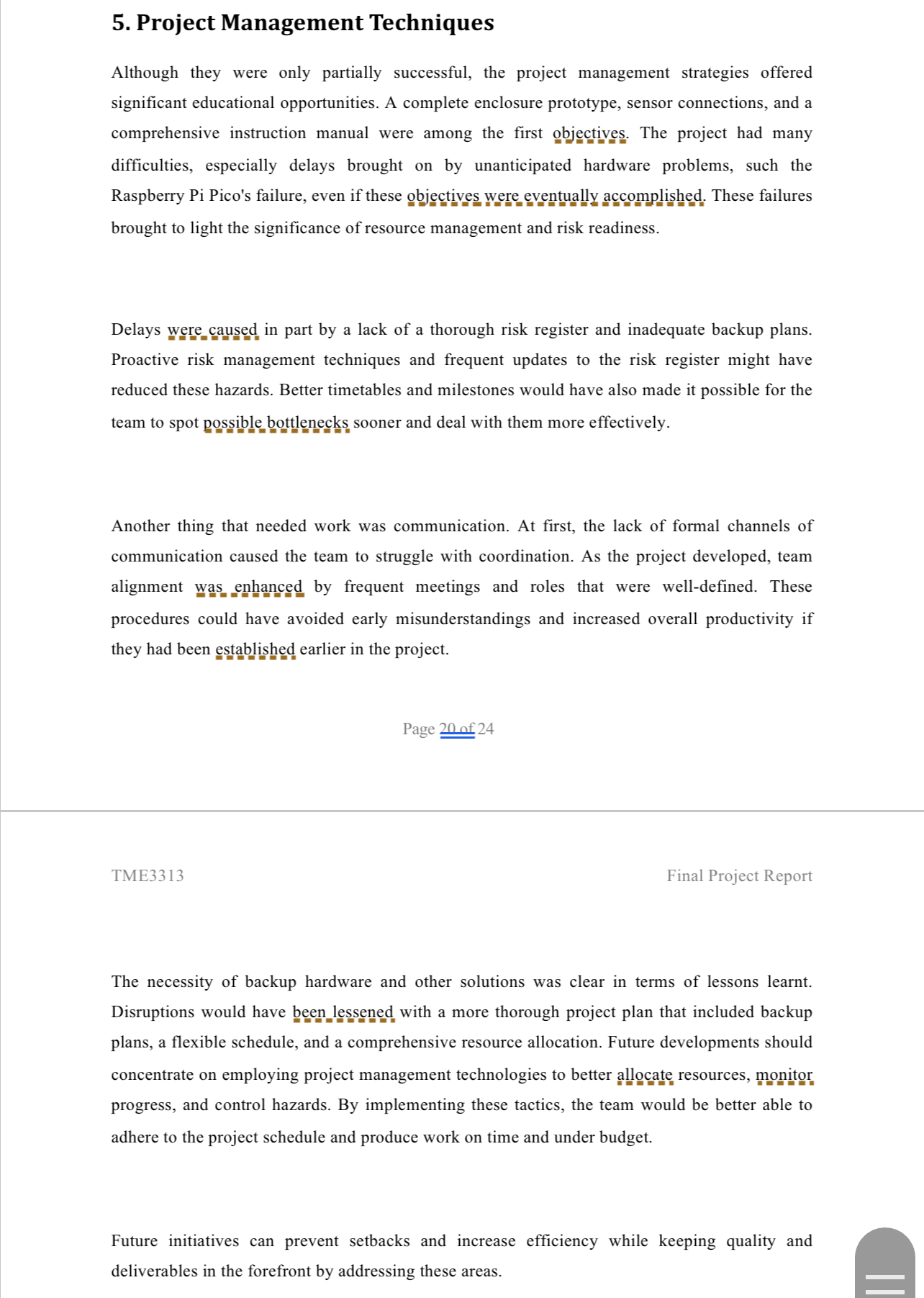
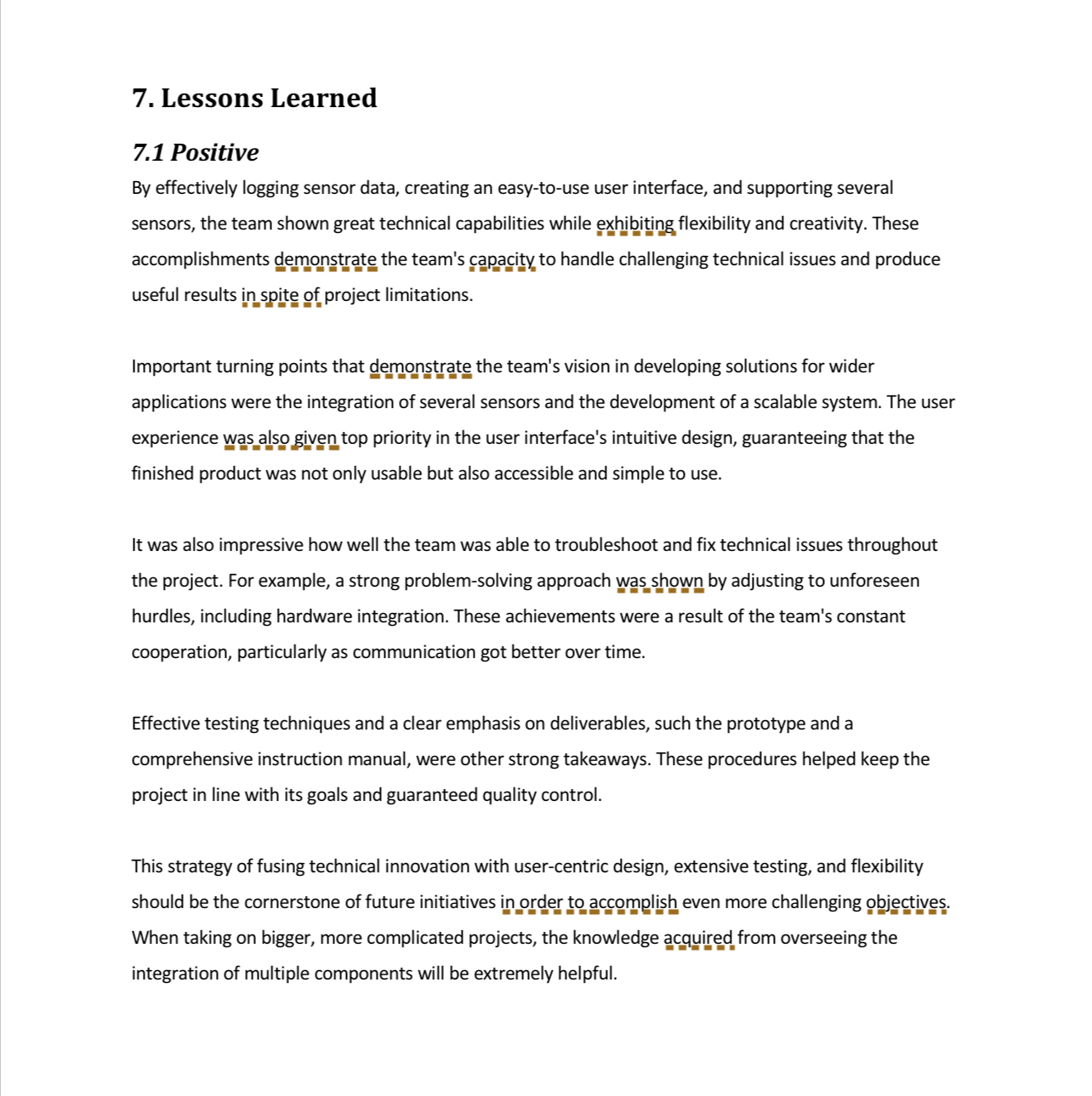
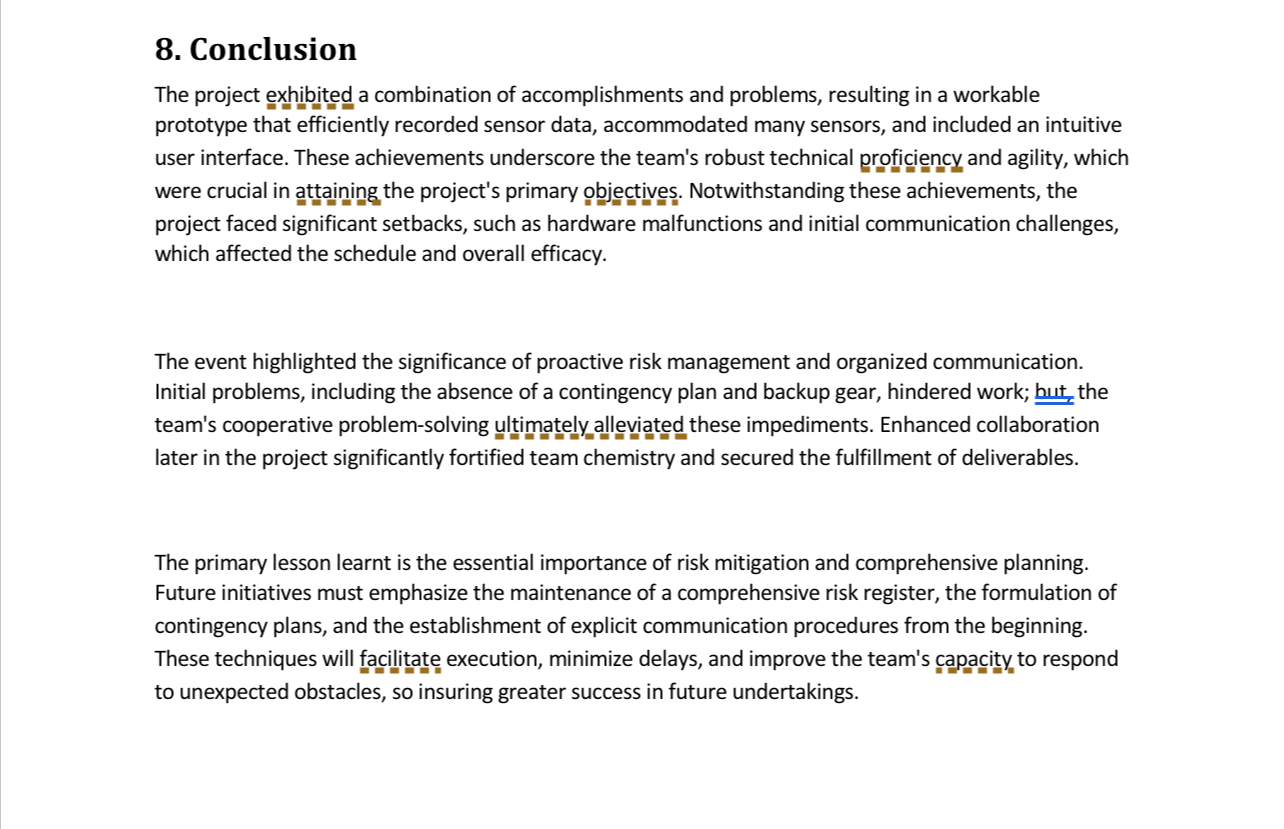
2.6 Communication The talk emphasized the project's initial communication challenges, arising from an absence of coordinated and structured collaboration channels. The lack of explicit protocols led to initial misunderstanding, misplaced priorities, and inefficiencies in task distribution. The issues were especially apparent at crucial project phases, such hardware integration, where improved coordination could have mitigated delays. To resolve these challenges, the team instituted regular meetings and delineated explicit roles for each member, which markedly enhanced communication and alignment as the project advanced. The scheduled encounters facilitated collective problem-solving and ensured all team members were_ informed of the project's progress. Nonetheless, unscheduled, ad hoc communication became vital for the resolution of unforeseen hardware faults, shown by the malfunction of the Raspberry Pi Pico. These events demonstrated the team's adaptability while highlighting the necessity for early communication planning. Page L80f24 TME3313 Final Project Report The lack of a centralized communication tool, such as a collaborative digital workplace or task management system, undoubtedly led to injtial inefficiencies. Integrating such tools from the beginning might have facilitated cooperation, enabling team members to access common resources, monito Ee ke as progress, and deliver updates in real-time. Establishing effective communication channels at the outset of future initiatives is vital. These must encompass explicit reporting frameworks, regular check-ins, and the utilization of collaborative toals to guarantee uninterrupted information exchange. By promoting transparent, structured, and anticipatory communication, teams can reduce ambiguity, improve efficiency, and respond more adeptly to unexpected situations. 5. Project Management Techniques Although they were only partially successful, the project management strategies offered significant educational opportunities. A complete enclosure prototype, sensor connections, and a comprehensive instruction manual were among the first objectives. The project had many difficulties, especially delays brought on by unanticipated hardware problems, such the Raspberry Pi Pico's failure, even if these objectives were eventually accomplished. These failures brought to light the significance of resource management and risk readiness. Delays were_caused in part by a lack of a thorough risk register and inadequate backup plans. Proactive risk management techniques and frequent updates to the risk register might have reduced these hazards. Better timetables and milestones would have also made it possible for the team to spot possible bottlenecks sooner and deal with them more effectively. Another thing that needed work was communication. At first, the lack of formal channels of communication caused the team to struggle with coordination. As the project developed, team alignment was enhanced by frequent meetings and roles that were well-defined. These procedures could have avoided early misunderstandings and increased overall productivity if they had been gstablished earlier in the project. Page 200f 24 TME3313 Final Project Report The necessity of backup hardware and other solutions was clear in terms of lessons learnt. Disruptions would have been_lessened with a more thorough project plan that included backup plans, a flexible schedule, and a comprehensive resource allocation. Future developments should concentrate on employing project management technologies to better allocate resources, monitor progress, and control hazards. By implementing these tactics, the team would be better able to adhere to the project schedule and produce work on time and under budget. Future initiatives can prevent setbacks and increase efficiency while keeping quality and deliverables in the forefront by addressing these areas. 7. Lessons Learned 7.1 Positive By effectively logging sensor data, creating an easy-to-use user interface, and supporting several sensors, the team shown great technical capabilities while exhibiting flexibility and creativity. These accomplishments demonstrate the team's capacity to handle challenging technical issues and produce useful results in spite of project limitations. nstrate the team's vision in developing solutions for wider Important turning points that d applications were the integration of several sensors and the development of a scalable system. The user experience was also given top priority in the user interface's intuitive design, guaranteeing that the finished product was not only usable but also accessible and simple to use. It was also impressive how well the team was able to troubleshoot and fix technical issues throughout the project. For example, a strong problem-solving approach was shown by adjusting to unforeseen hurdles, including hardware integration. These achievements were a result of the team's constant cooperation, particularly as communication got better over time. Effective testing techniques and a clear emphasis on deliverables, such the prototype and a comprehensive instruction manual, were other strong takeaways. These procedures helped keep the project in line with its goals and guaranteed quality control. This strategy of fusing technical innovation with user-centric design, extensive testing, and flexibility should be the cornerstone of future initiatives in order to accomplish even more challenging objectives. When taking on bigger, more complicated projects, the knowledge acquired from overseeing the integration of multiple components will be extremely helpful. 8. Conclusion The project exhibited a combination of accomplishments and problems, resulting in a workable prototype that efficiently recorded sensor data, accommodated many sensors, and included an intuitive user interface. These achievements underscore the team''s robust technical proficiency and agility, which were crucial in attaining the project's primary objectives. Notwithstanding these achievements, the project faced significant setbacks, such as hardware malfunctions and initial communication challenges, which affected the schedule and overall efficacy. The event highlighted the significance of proactive risk management and organized communication. Initial problems, including the absence of a contingency plan and backup gear, hindered work; but, the team''s cooperative problem-solving ultimately alleviated these impediments. Enhanced collaboration later in the project significantly fortified team chemistry and secured the fulfillment of deliverables. The primary lesson learnt is the essential importance of risk mitigation and comprehensive planning. Future initiatives must emphasize the maintenance of a comprehensive risk register, the formulation of contingency plans, and the establishment of explicit communication procedures from the beginning. These techniques will facilitate execution, minimize delays, and improve the team's capacity to respond to unexpected obstacles, so insuring greater success in future undertakings
Step by Step Solution
There are 3 Steps involved in it
1 Expert Approved Answer
Step: 1 Unlock
Question Has Been Solved by an Expert!
Get step-by-step solutions from verified subject matter experts
Step: 2 Unlock
Step: 3 Unlock
Students Have Also Explored These Related Law Questions!









 Study Help