







Question: 26. Is an auction socially inefficient, efficient, equitable or inequitable? a. Inefficient, because goods go to those with the most money rather than to those
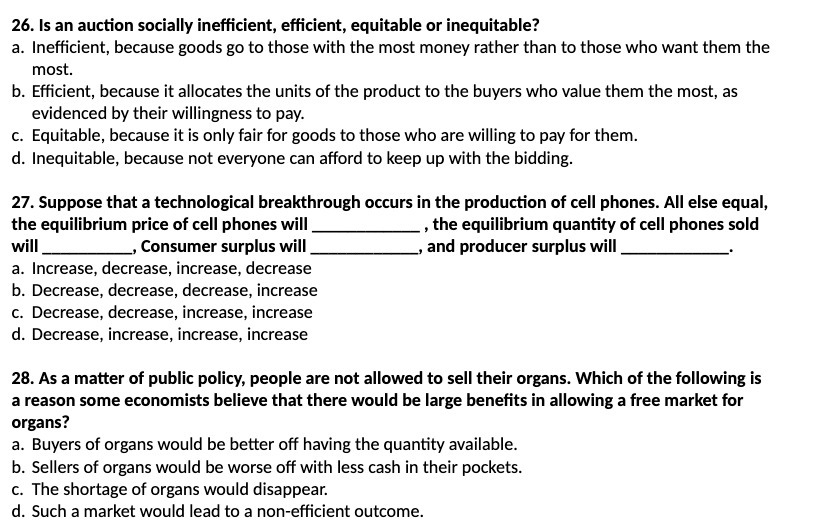
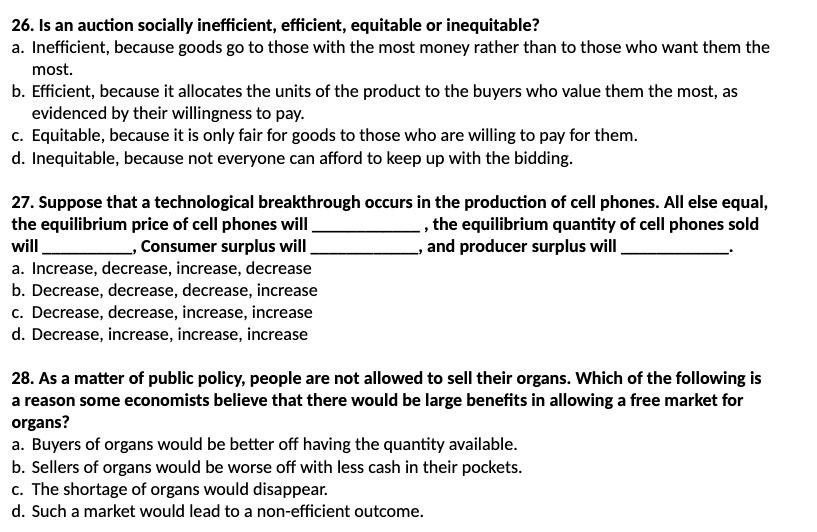
26. Is an auction socially inefficient, efficient, equitable or inequitable? a. Inefficient, because goods go to those with the most money rather than to those who want them the most. b. Efficient, because it allocates the units of the product to the buyers who value them the most, as evidenced by their willingness to pay c. Equitable, because it is only fair for goods to those who are willing to pay for them. d. Inequitable, because not everyone can afford to keep up with the bidding. 27. Suppose that a technological breakthrough occurs in the production of cell phones. All else equal, the equilibrium price of cell phones will the equilibrium quantity of cell phones sold will , Consumer surplus will and producer surplus will a. Increase, decrease, increase, decrease b. Decrease, decrease, decrease, increase c. Decrease, decrease, increase, increase d. Decrease, increase, increase, increase 28. As a matter of public policy, people are not allowed to sell their organs. Which of the following is a reason some economists believe that there would be large benefits in allowing a free market for organs? a. Buyers of organs would be better off having the quantity available. b. Sellers of organs would be worse off with less cash in their pockets. c. The shortage of organs would disappear. d. Such a market would lead to a non-efficient outcome
Step by Step Solution
There are 3 Steps involved in it

Get step-by-step solutions from verified subject matter experts
 Study Help