







Question: ( 3 0 points ) Problem 5 . Flooding threat using the coin toss model. Let's define a parameter, ( theta )
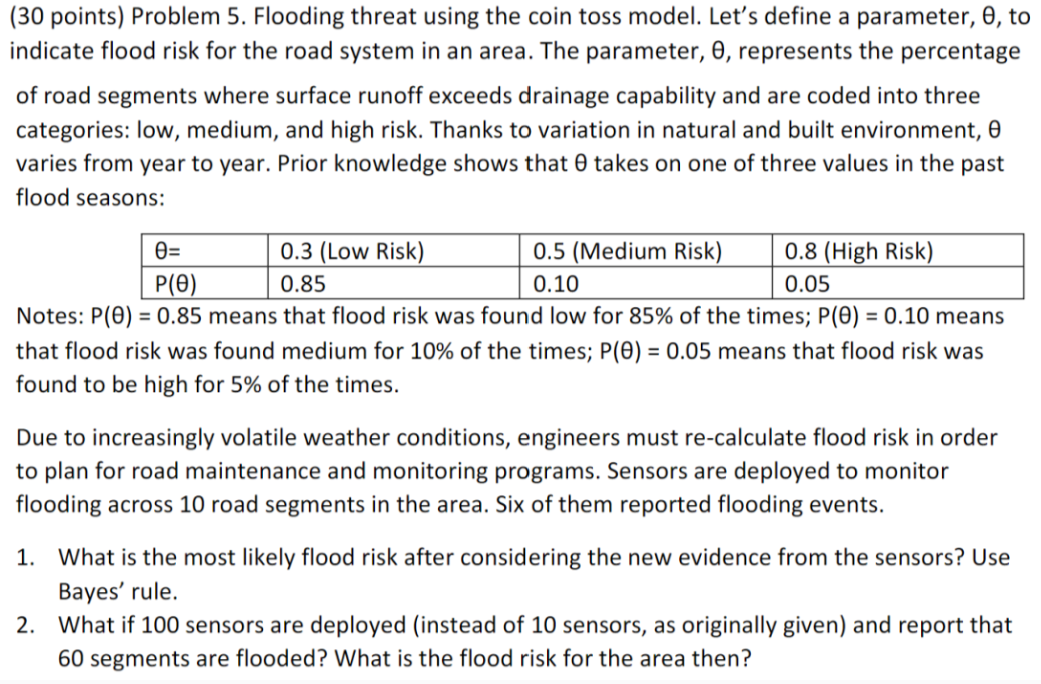
points Problem Flooding threat using the coin toss model. Let's define a parameter, theta to indicate flood risk for the road system in an area. The parameter, theta represents the percentage of road segments where surface runoff exceeds drainage capability and are coded into three categories: low, medium, and high risk. Thanks to variation in natural and built environment, theta varies from year to year. Prior knowledge shows that theta takes on one of three values in the past flood seasons:
Notes: Ptheta means that flood risk was found low for of the times; Ptheta means that flood risk was found medium for of the times; Ptheta means that flood risk was found to be high for of the times.
Due to increasingly volatile weather conditions, engineers must recalculate flood risk in order to plan for road maintenance and monitoring programs. Sensors are deployed to monitor flooding across road segments in the area. Six of them reported flooding events.
What is the most likely flood risk after considering the new evidence from the sensors Use Bayes' rule.
What if sensors are deployed instead of sensors as originally given and report that segments are flooded? What is the flood risk for the area then?
Step by Step Solution
There are 3 Steps involved in it
1 Expert Approved Answer
Step: 1 Unlock

Question Has Been Solved by an Expert!
Get step-by-step solutions from verified subject matter experts
Step: 2 Unlock
Step: 3 Unlock
 Study Help