







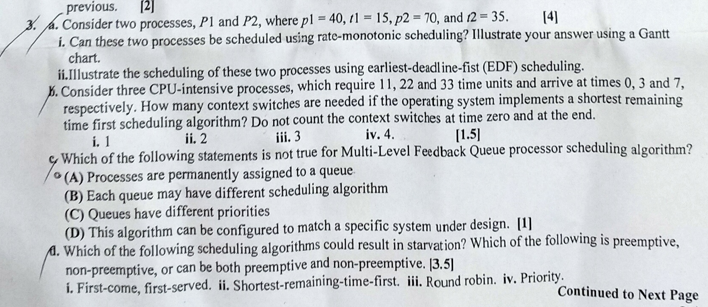
Question: 3 . a . Consider two processes, ( P 1 ) and ( P 2 ) , where ( p
a Consider two processes, P and P where p t p and R
i Can these two processes be scheduled using ratemonotonic scheduling? Illustrate your answer using a Gantt chart.
iiIllustrate the scheduling of these two processes using earliestdeadlinefist EDF scheduling.
Consider three CPUintensive processes, which require and time units and arrive at times and respectively. How many context switches are needed if the operating system implements a shortest remaining time first scheduling algorithm? Do not count the context switches at time zero and at the end.
i
ii
iii.
iv
c Which of the following statements is not true for MultiLevel Feedback Queue processor scheduling algorithm?
A Processes are permanently assigned to a queue
B Each queue may have different scheduling algorithm
C Queues have different priorities
D This algorithm can be configured to match a specific system under design.
A Which of the following scheduling algorithms could result in starvation? Which of the following is preemptive, nonpreemptive, or can be both preemptive and nonpreemptive.
i Firstcome, firstserved. ii Shortestremainingtimefirst. iii. Round robin. iv Priority.
Show all steps and workings with explanations
Continued to Next Page
Step by Step Solution
There are 3 Steps involved in it
1 Expert Approved Answer
Step: 1 Unlock

Question Has Been Solved by an Expert!
Get step-by-step solutions from verified subject matter experts
Step: 2 Unlock
Step: 3 Unlock
 Study Help