







Question: 3. a-b ribution into 3. (Dataset: gss. Variables: grass, wtss.) The gss dataset contains the factor grass, which taps respondent int the frequency table. opinions
3. a-b
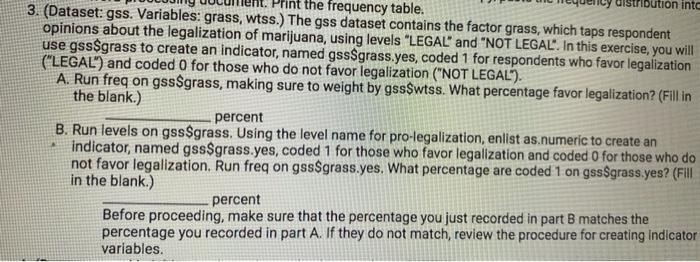
ribution into 3. (Dataset: gss. Variables: grass, wtss.) The gss dataset contains the factor grass, which taps respondent int the frequency table. opinions about the legalization of marijuana, using levels "LEGAL" and "NOT LEGAL". In this exercise, you will use gss$grass to create an indicator, named gssSgrass.yes, coded 1 for respondents who favor legalization ("LEGAL') and coded 0 for those who do not favor legalization ("NOT LEGAL). A. Run freq on gss Sgrass, making sure to weight by gss$wtss. What percentage favor legalization? (Fill in the blank.) percent B. Run levels on gssSgrass. Using the level name for pro-legalization, enlist as.numeric to create an Indicator, named gss$grass.yes, coded 1 for those who favor legalization and coded 0 for those who do not favor legalization. Run freq on gss grass.yes. What percentage are coded 1 on gssSgrass.yes? (Fill in the blank.) Before proceeding, make sure that the percentage you just recorded in part B matches the percentage you recorded in part A. If they do not match review the procedure for creating indicator variables. percent
Step by Step Solution
There are 3 Steps involved in it

Get step-by-step solutions from verified subject matter experts
 Study Help