







Question: 3. Chapter 14 - Sustaining Change, Evaluating, and Ending an Engagement: Developing and Using a Dashboard to Monitor and Lead Change and answer the following
3. Chapter 14 - Sustaining Change, Evaluating, and Ending an Engagement: Developing and Using a Dashboard to Monitor and Lead Change and answer the following questions:
? Who would you include in the small team of managers to work on the dashboard? In addition to them, would you interview other plant employees? Why? And which ones?
? Which (main) indicators would you include in the dashboard?
? What, in your opinion, would distinguish this dashboard from other monitoring tools (such as the scorecard, project management tools, and others)?
? In your opinion, who will be the main user(s) of the dashboard in the plant?
? Would you recommend that the plant director share the main results of the dashboard with the workforce, and if so, how often?
Please include references. Thank you.
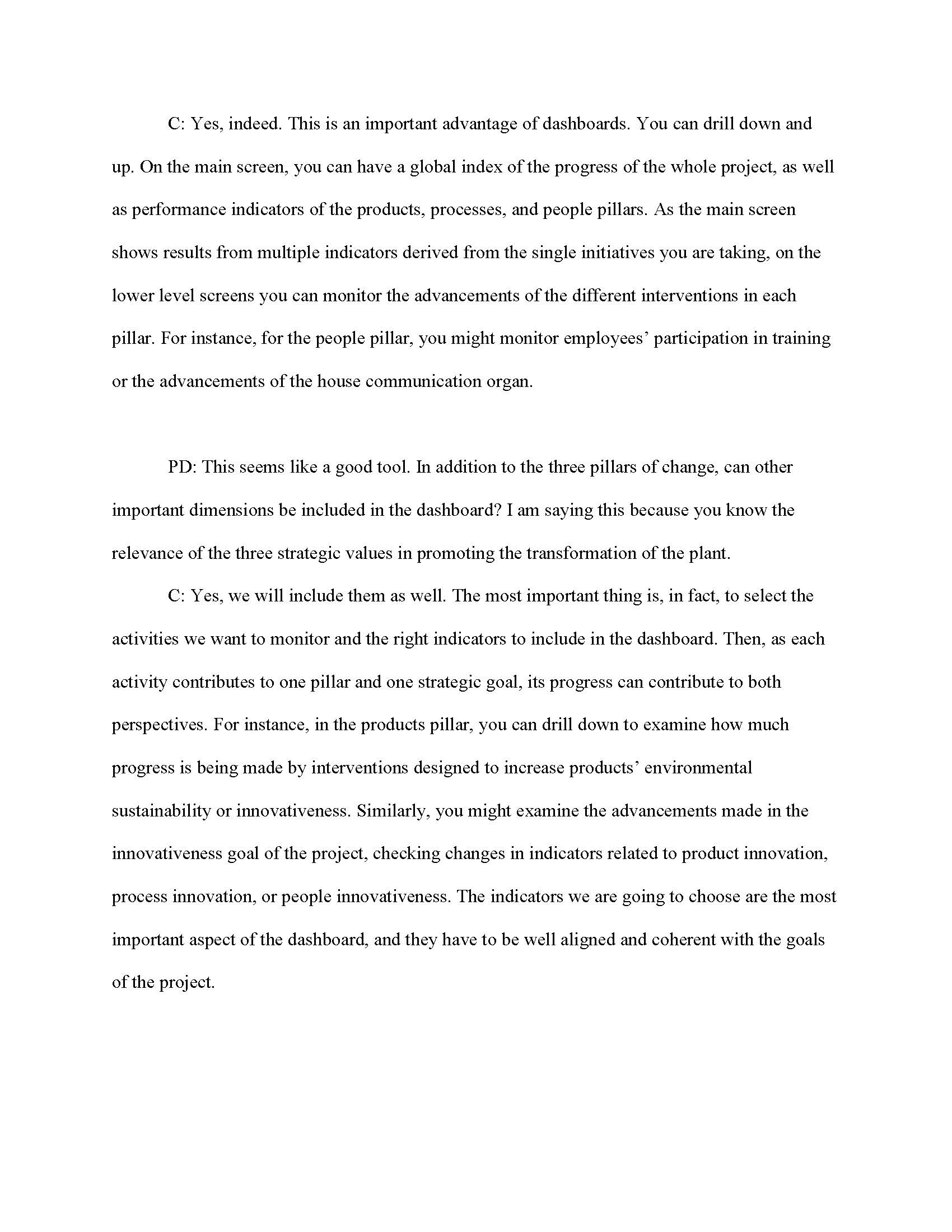
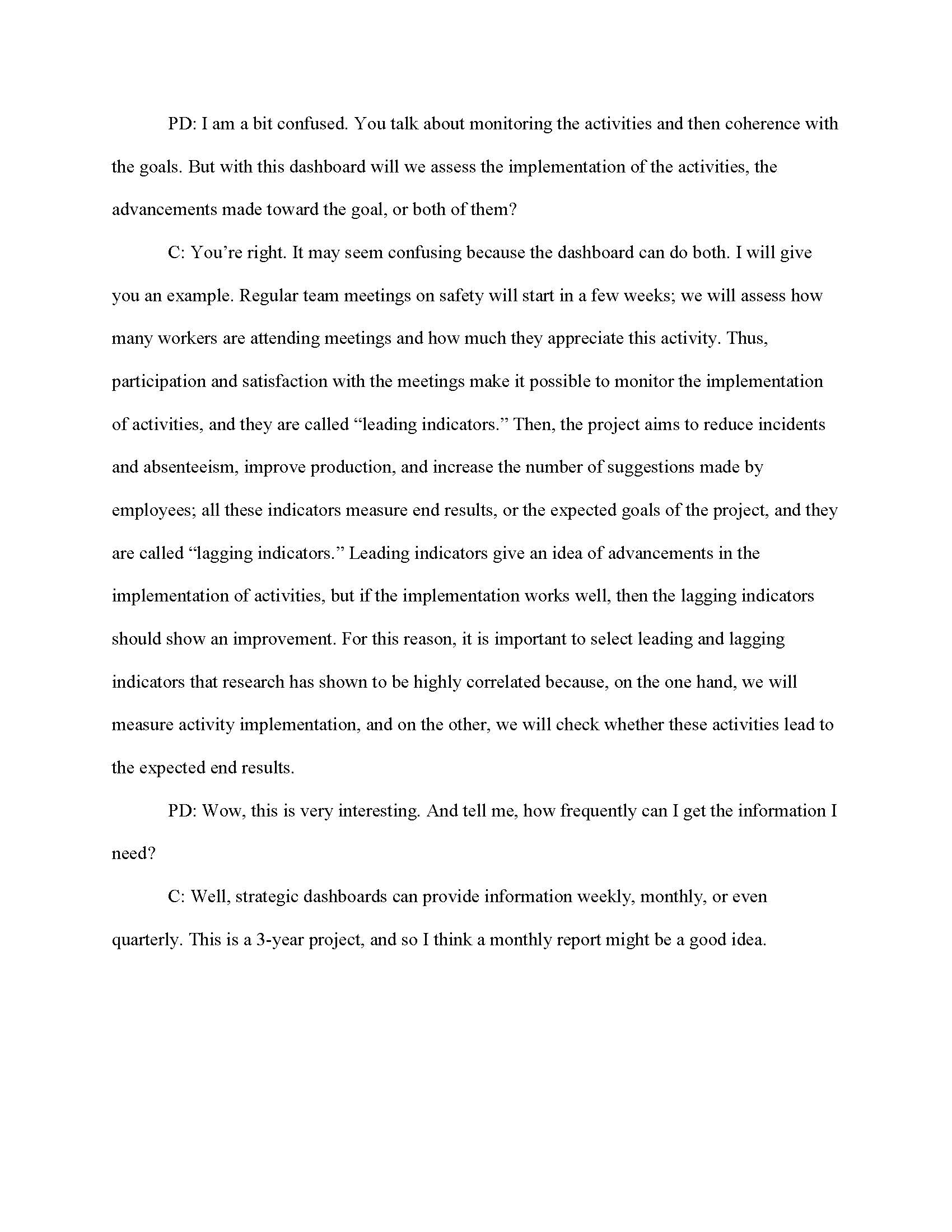
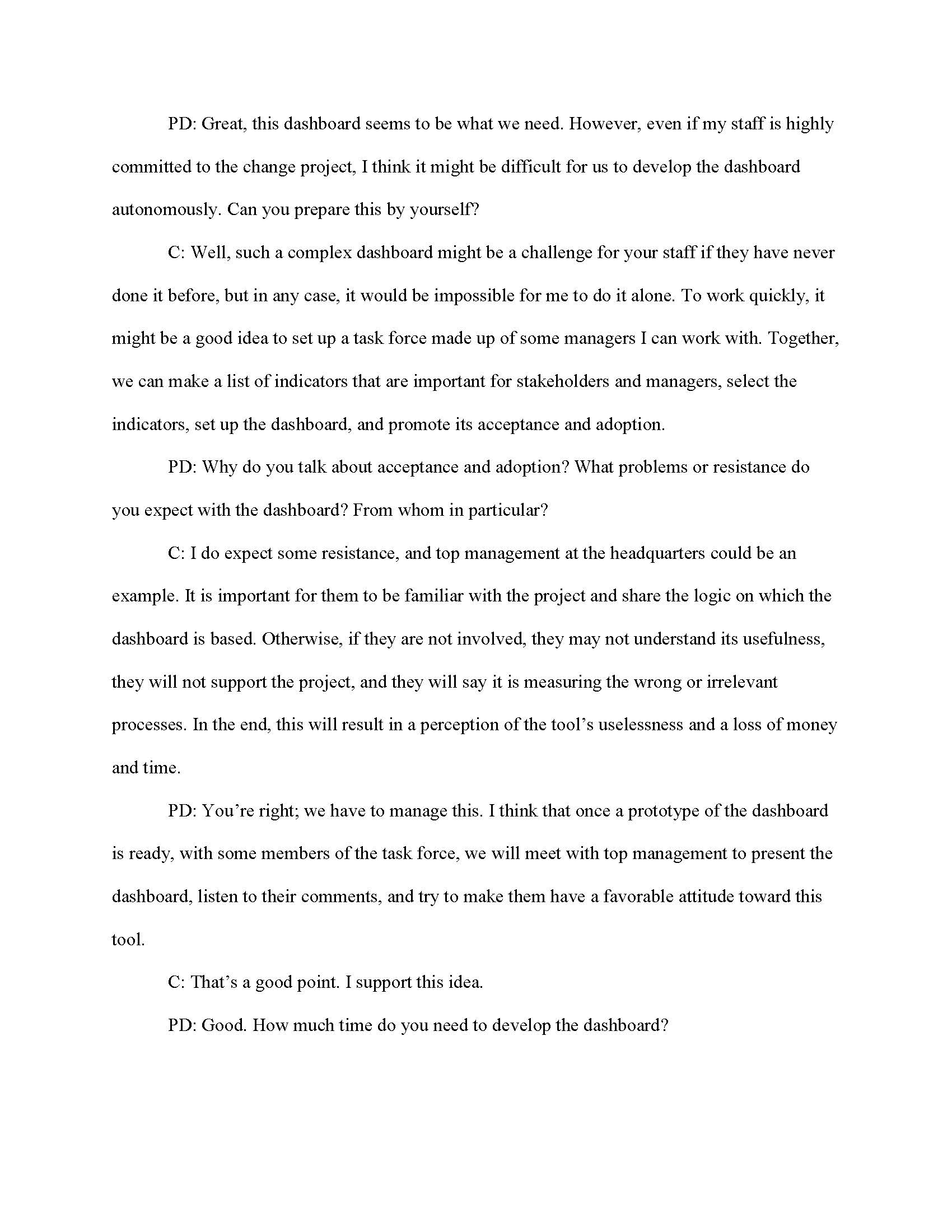
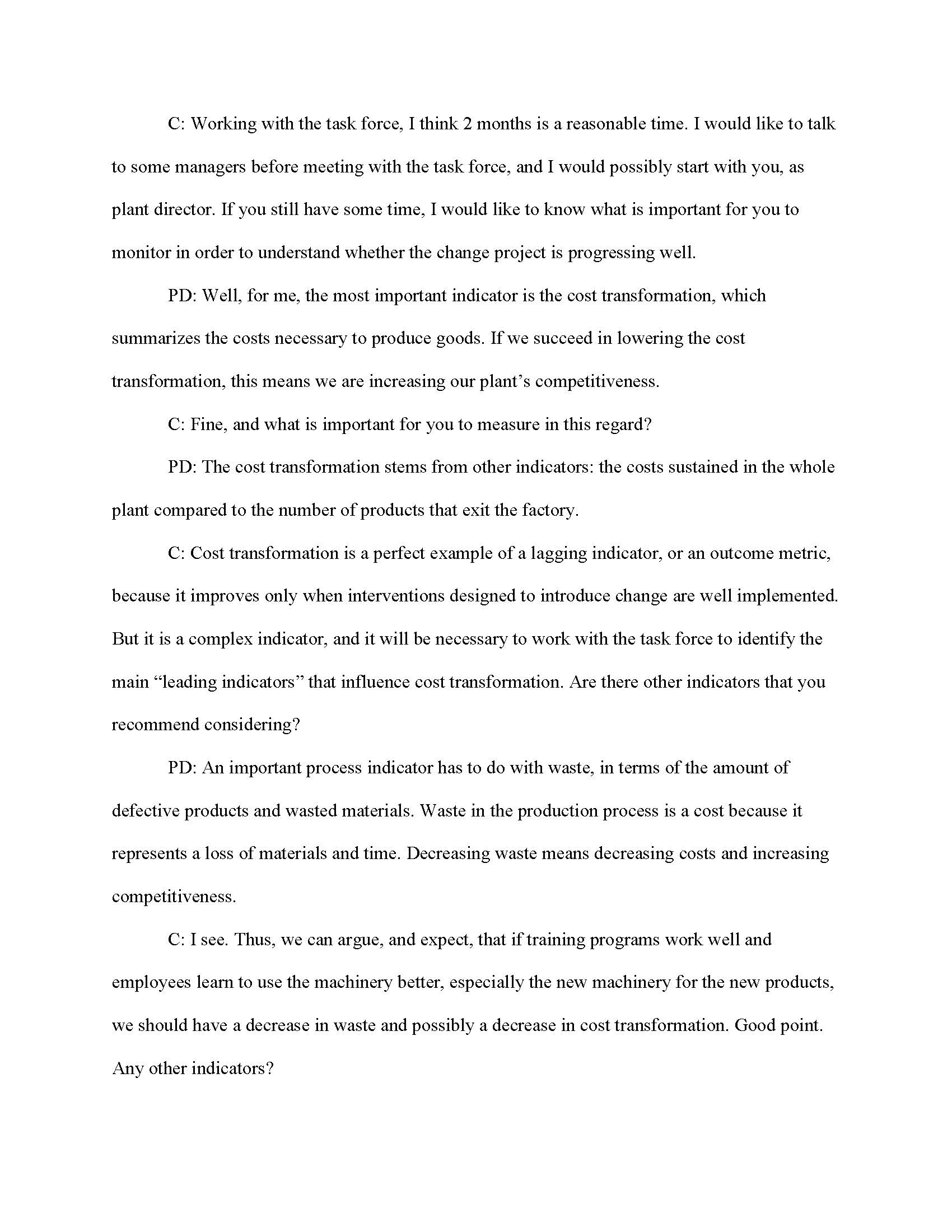
In the current globalized market, European and American companies compete with rms that have lower production costs, making it necessary to change the competitiveness paradigm and move from cost-based competitiveness to competitiveness based on product value, innovation, quality, and technology. TEZZ is a multinational company operating in the automotive industry. Its headquarters are in Italy, and it has 14 plants in 10 countries. To cope with international competitiveness, TEZZ has decided to invest in one of its two Italian plants, aiming to make this plant the most successful, innovative, and sustainable plant of the company. This plant is in an old factory built in 1950, and it consists of two buildings that produce tires for cars and trucks. The company's top management has decided to launch a 3-year project to renovate buildings and improve products, production processes, and workforce competences and skills. Two buildings will be modernized, and another one will be built from scratch. This latter building will be a modern and functional space housing the offices, research and development, multimedia rooms, a new cafeteria, and other services for workers. This new building will be located half way between the two production buildings, guaranteeing functional connections between the two production buildings. In addition, to produce high-quality tires using the most efficient processes, the plant will be equipped with advanced machinery and technology. Moreover, it will be necessary to better engage the almost 3,000 employees working there, training them to work on the new machines and improving their attitudes and behaviors to increase their t to the plant's new philosophy. The change the company is facing can be summarized in three strategic pillars: innovate products, modernize processes, and engage people, or put more simply: product, process, and people. Developing new and innovative high-quality tires for luxury cars and high-tech automobiles and increasing production from 4 to 5 million car tires per year are examples of product changes. Changes in production processes are related to improving production efciency by increasing the use of robotic processes and installing new advanced machinery (a specic goal is to change at least 30% of the machines in the 3 years). As for the people change, the program proposes training sessions for all the employees at each organizational level to increase both technical and behavioral skills. Regarding the technical skills, shop oor employees (workers) will be expected to be able to operate the new machines, monitoring and adjusting their functioning and overcoming any difculties that may arise. In the case of the behavioral skills, the proposal is that employees will understand the reasons for change, become more actively engaged with the company, respect production standards, adopt safer behaviors, and so on. In other words, employees will know and feel that their active participation is relevant to the company's development. For Matthew, a senior external consultant hired to lead the people change, these goals signify, for instance, a lower level of absenteeism and an increase in production, employees\" active participation in training sessions, and/ or their willingness to support technicians and engineers by anticipating problems and proposing solutions in order to continuously improve production processes and end products. Attention to people is an extremely important topic for top management, and for Matthew, because they are aware that investments in machines will be less effective if they are not supported by an outcome-oriented workforce that fully shares and actively contributes to the change. Setting up cross-functional teams composed of managers, middle managers, and workers. These groups are expected to function as quality circles, contributing to the change project by nding and analyzing problems and proposing solutions to improve not only tire production but also other daily plant processes. An external and internal communication plan. This plan involves carrying out internal communication events (such as conventions, roadshows, or workshops), external events (such as exhibitions or promotion of social activities in nearby towns), and some publications (which means setting up an internal house organism). The communication plan aims to (1) provide information about the new organizational culture and inform employees about the change project and its advancements and (2) address institutions, external local associations, employees' families, suppliers, and clients, so that they can support and facilitate the change project. Interventions in the people pillar will be implemented at the same time as the other interventions in the production and process pillars. Matthew knows that it is not only important to implement the planned activities in the best possible way but also to provide the company with a tool to monitor all the ongoing activities. He thinks a dashboard could be a useful tool for this purpose. A dashboard is a visual and interactive performance management tool that displays, on one or more screens, the most important information related to one or several organizational objectives. It allows the monitoring of both advancements on ongoing activities and expected outcomes of activities. Matthew is going to meet the plant director to propose the dashboard project to him. Consultan(C):t Hi, Manuel. My staff is finalizing the communication strategy plan and the first-year plan for employees' training. As you know, other activities in the product and process pillars are almost ready to start. Thus, to lead the change more effectively and coordinate all the activities that develop sequentially, it is very important to monitor the progress of all these activities. Plant director (PD): You're right. I am well aware that the change project includes so many activities that we cannot afford not to monitor the interventions and their outcomes. You have some ideas about this, don't you? C: Yes, I do. I would like to talk to you about dashboards. A dashboard is a visual and interactive performance management tool that displays on a main screen the most important and useful information to achieve one or various organizational objectives. It allows users to identify, explore, and communicate about areas that need corrective actions. It is mainly used to monitor critical business processes, analyze the reasons for problems by exploring relevant information, and manage people and processes to optimize performance and steer the organization in the right direction. Dashboards have a well-organized and functional layout that makes it possible to visualize selected relevant indicators very easily. These indicators are reported using tables, charts, or a speedometer, and colors and traffic lights are used to show how well or how badly things are going. In our case, we can use the dashboard to monitor progress with the three pillars, products, processes, and people, and with the three strategic or value goals, environmental sustainability, innovation, and safety. We can evaluate how well we are moving toward the expected goals and identify critical areas that need corrective or integrative actions. PD: It seems very interesting. Controlling the advancements in the main areas of the change project on a single computer screen seems very cool. But does the dashboard provide more detailed and analytic information in each of the main areas? C: Yes, indeed. This is an important advantage of dashboards. You can drill down and up. On the main screen, you can have a global index of the progress of the whole project, as well as performance indicators of the products, processes, and people pillars. As the main screen shows results from multiple indicators derived from the single initiatives you are taking, on the lower level screens you can monitor the advancements of the different interventions in each pillar. For instance, for the people pillar, you might monitor employees' participation in training or the advancements of the house communication organ. PD: This seems like a good tool. In addition to the three pillars of change, can other important dimensions be included in the dashboard? I am saying this because you know the relevance of the three strategic values in promoting the transformation of the plant. C: Yes, we will include them as well. The most important thing is, in fact, to select the activities we want to monitor and the right indicators to include in the dashboard. Then, as each activity contributes to one pillar and one strategic goal, its progress can contribute to both perspectives. For instance, in the products pillar, you can drill down to examine how much progress is being made by interventions designed to increase products' environmental sustainability or innovativeness. Similarly, you might examine the advancements made in the innovativeness goal of the project, checking changes in indicators related to product innovation, process innovation, or people innovativeness. The indicators we are going to choose are the most important aspect of the dashboard, and they have to be well aligned and coherent with the goals of the project. PD: I am a bit confused. You talk about monitoring the activities and then coherence with the goals. But with this dashboard will we assess the implementation of the activities, the advancements made toward the goal, or both of them? C: You're right. It may seem confusing because the dashboard can do both. I will give you an example. Regular team meetings on safety will start in a few weeks; we will assess how many workers are attending meetings and how much they appreciate this activity. Thus, participation and satisfaction with the meetings make it possible to monitor the implementation of activities, and they are called \"leading indicators.\" Then, the project aims to reduce incidents and absenteeism, improve production, and increase the number of suggestions made by employees; all these indicators measure end results, or the expected goals of the project, and they are called \"lagging indicators.\" Leading indicators give an idea of advancements in the implementation of activities, but if the implementation works well, then the lagging indicators should show an improvement. For this reason, it is important to select leading and lagging indicators that research has shown to be highly correlated because, on the one hand, we will measure activity implementation, and on the other, we will check whether these activities lead to the expected end results. PD: Wow, this is very interesting. And tell me, how frequently can I get the information I need? C: Well, strategic dashboards can provide information weekly, monthly, or even quarterly. This is a 3-year project, and so I think a monthly report might be a good idea. PD: Great, this dashboard seems to be what we need. However, even if my staff is highly committed to the change project, I think it might be difcult for us to develop the dashboard autonomously. Can you prepare this by yourself? C: Well, such a complex dashboard might be a challenge for your staff if they have never done it before, but in any case, it would be impossible for me to do it alone. To work quickly, it might be a good idea to set up a task force made up of some managers I can work with. Together, we can make a list of indicators that are important for stakeholders and managers, select the indicators, set up the dashboard, and promote its acceptance and adoption. PD: Why do you talk about acceptance and adoption? What problems or resistance do you expect with the dashboard? From whom in particular? C: I do expect some resistance, and top management at the headquarters could be an example. It is important for them to be familiar with the project and share the logic on which the dashboard is based. Otherwise, if they are not involved, they may not understand its usefulness, they will not support the project, and they will say it is measuring the wrong or irrelevant processes. In the end, this will result in a perception of the tool's uselessness and a loss of money and time. PD: You're right; we have to manage this. Ithink that once a prototype of the dashboard is ready, with some members of the task force, we will meet with top management to present the dashboard, listen to their comments, and try to make them have a favorable attitude toward this tool. C: That's a good point. I support this idea. PD: Good. How much time do you need to develop the dashboard? C: Working with the task force, I think 2 months is a reasonable time. I would like to talk to some managers before meeting with the task force, and I would possibly start with you, as plant director. If you still have some time, I would like to know what is important for you to monitor in order to understand whether the change project is progressing well. PD: Well, for me, the most important indicator is the cost transformation, which summarizes the costs necessary to produce goods. If we succeed in lowering the cost transformation, this means we are increasing our plant's competitiveness. C: Fine, and what is important for you to measure in this regard? PD: The cost transformation stems from other indicators: the costs sustained in the whole plant compared to the number of products that exit the factory. C: Cost transformation is a perfect example of a lagging indicator, or an outcome metric, because it improves only when interventions designed to introduce change are well implemented. But it is a complex indicator, and it will be necessary to work with the task force to identify the main \"leading indicators\" that inuence cost transformation. Are there other indicators that you recommend considering? PD: An important process indicator has to do with waste, in terms of the amount of defective products and wasted materials. Waste in the production process is a cost because it represents a loss of materials and time. Decreasing waste means decreasing costs and increasing competitiveness. C: I see. Thus, we can argue, and expect, that if training programs work well and employees learn to use the machinery better, especially the new machinery for the new products, we should have a decrease in waste and possibly a decrease in cost transformation. Good point. Any other indicators
Step by Step Solution
There are 3 Steps involved in it

Get step-by-step solutions from verified subject matter experts
 Study Help