







Question: 3. Continuing from the above question, suppose I have a set of outcomes {A, B, C, ...} (for example, A might represent $10,000, while B
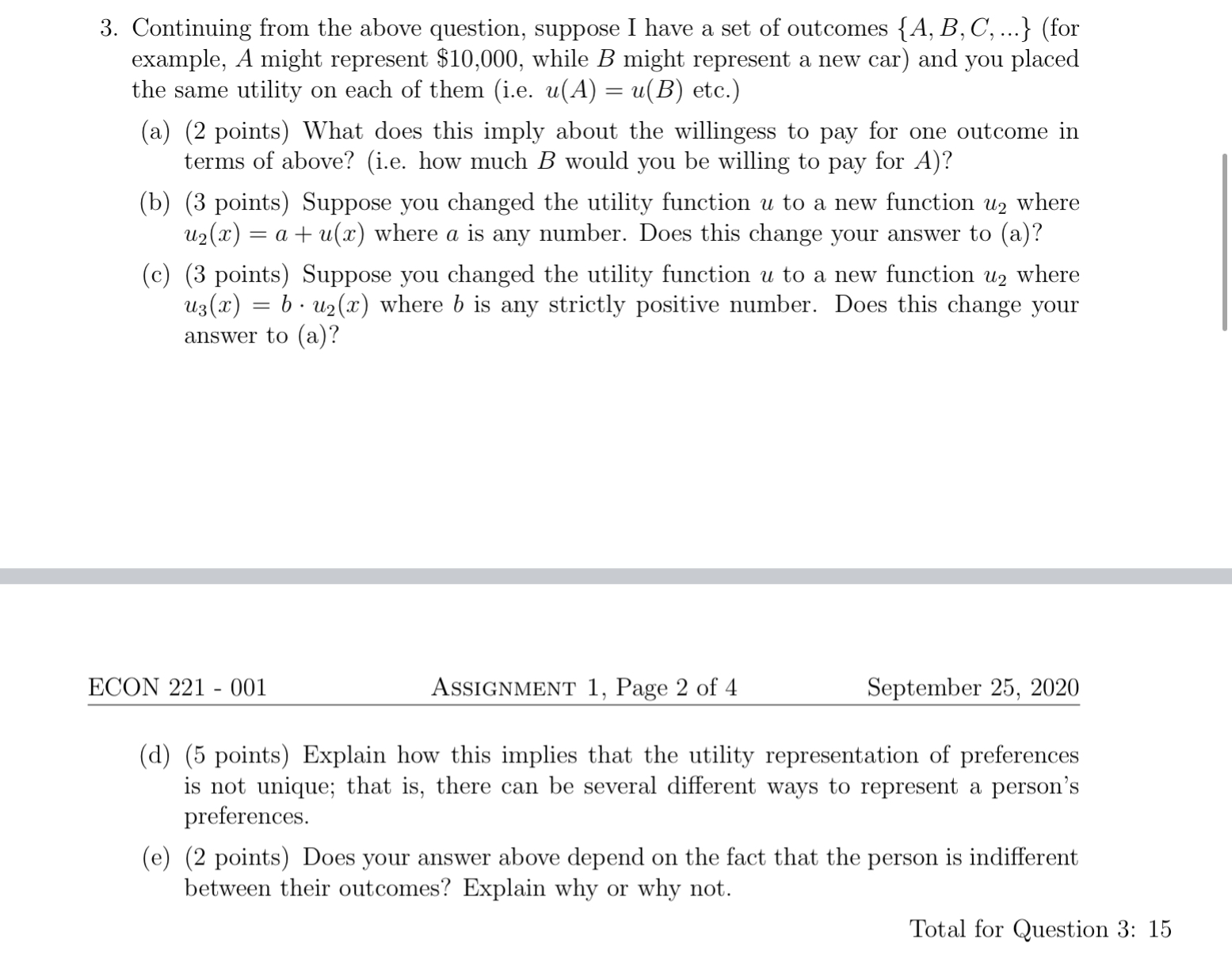
3. Continuing from the above question, suppose I have a set of outcomes {A, B, C, ...} (for example, A might represent $10,000, while B might represent a new car) and you placed the same utility on each of them (i.e. u(A) = u(B) etc.) (a) (2 points) What does this imply about the willingess to pay for one outcome in terms of above? (i.e. how much B would you be willing to pay for A)? (b) (3 points) Suppose you changed the utility function u to a new function U2 where U203) = a + Mar) where a is any number. Does this change your answer to (a)? (c) (3 points) Suppose you changed the utility function u to a new function U2 where u3(2:) = b - u2(ar) where b is any strictly positive number, Does this change your answer to (a)? ECON 221 - 001 ASSIGNMENT 1, Page 2 of 4 September 25, 2020 (d) (5 points) Explain how this implies that the utility representation of preferences is not unique; that is, there can be several different ways to represent a person's preferences. (e) (2 points) Does your answer above depend on the fact that the person is indifferent between their outcomes? Explain why or why not. Total for Question 3: 15
Step by Step Solution
There are 3 Steps involved in it

Get step-by-step solutions from verified subject matter experts
 Study Help