Question: 3. Given a diet problem with three possible foods: XI - apples, X2 = bread, and X3 = corn. These foods are needed to provide
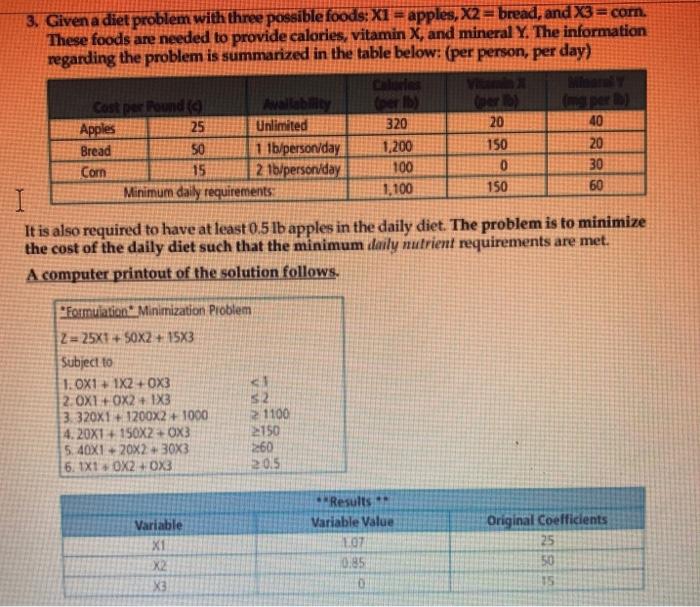
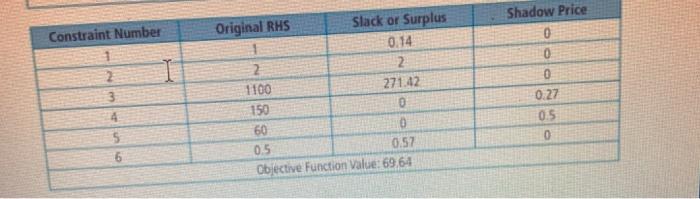
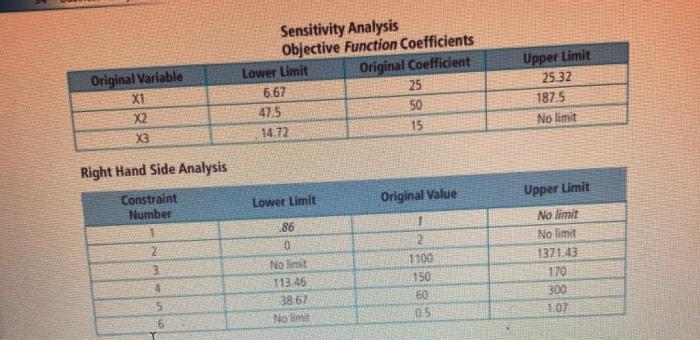
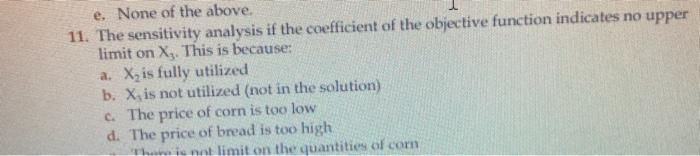
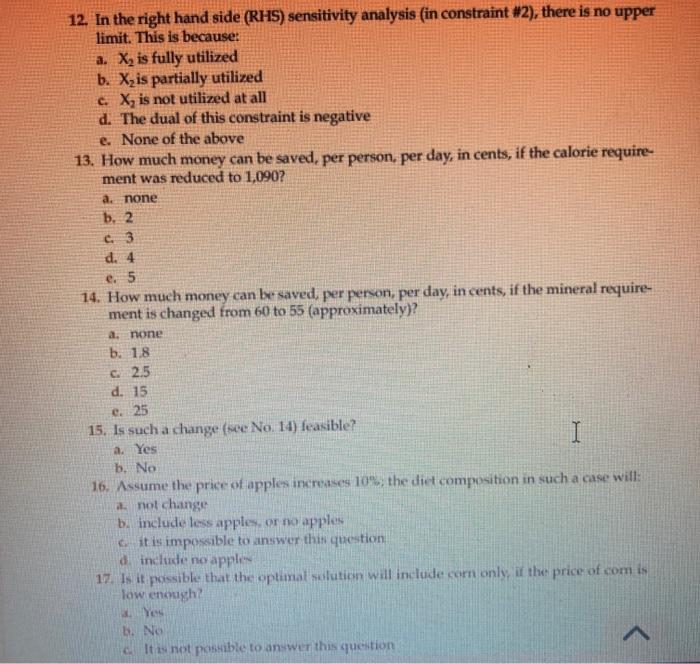
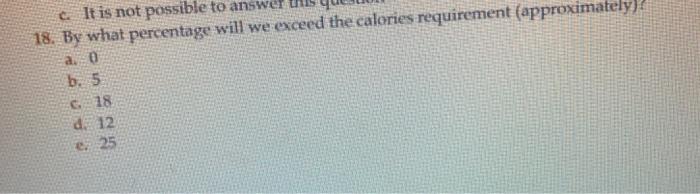
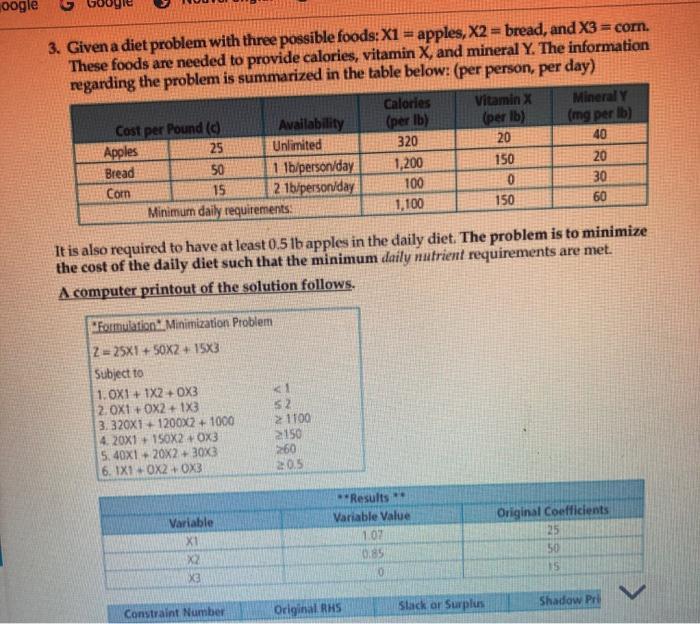
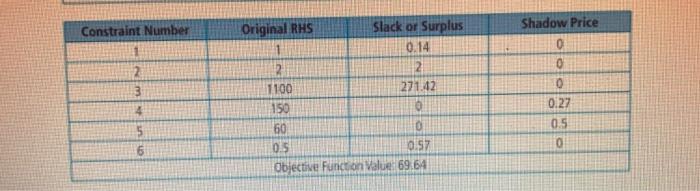
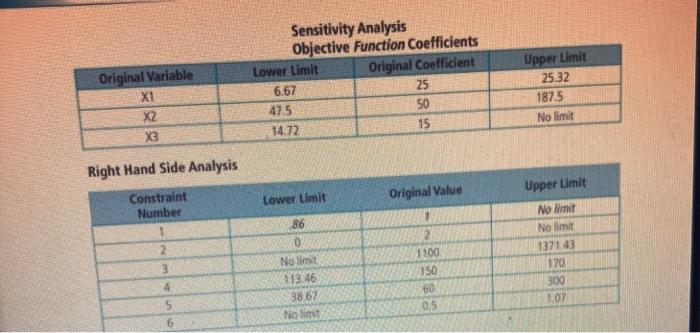
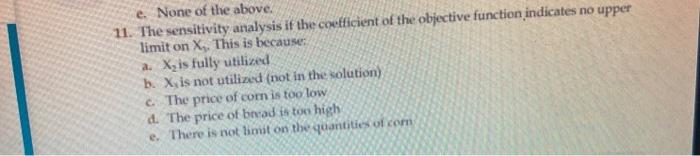
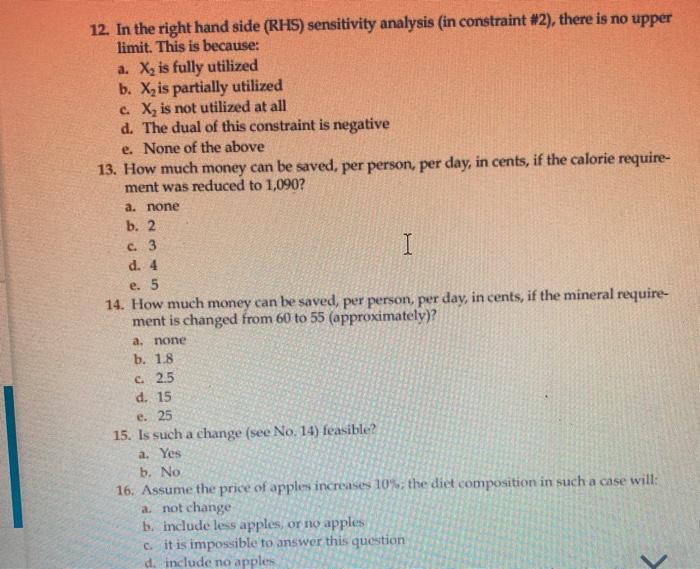
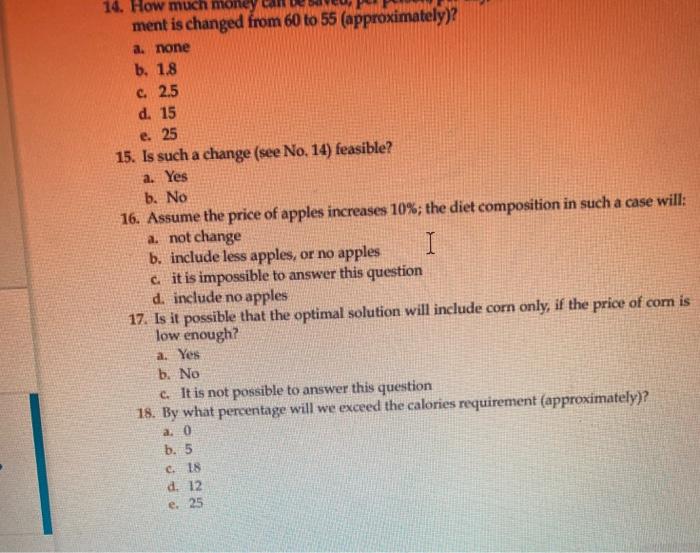
3. Given a diet problem with three possible foods: XI - apples, X2 = bread, and X3 = corn. These foods are needed to provide calories, vitamin X, and mineral Y. The information regarding the problem is summarized in the table below: (per person, per day) Calentes Cost per Pound ( Availability fer ID) Apples 25 Unlimited 320 20 40 Bread 50 1 lb/person/day 1,200 150 20 Corn 15 2. 1b/personvday 100 0 30 Minimum daily requirements: 1,100 150 60 It is also required to have at least 0.5 lb apples in the daily diet. The problem is to minimize the cost of the daily diet such that the minimum daily nutrient requirements are met. A computer printout of the solution follows. *Formulation Minimization Problem 2= 25X1 +SOX2 + 15X3 Subject to 1. OX1 + 1X2 +0X3 2. OXI-OX2 + 1X3 3.320X1+1200X2 +1000 1100 4.20X1+ 150X2+OX3 150 5.40X120X2 + 30X3 260 6. 1X1OX2 +0X3 20.5 Variable X1 X2 X3 **Results: Variable Value LOT 0.85 Original Coefficients 25 50 15 Constraint Number Shadow Price 0 0 O 2 3 4 5 6 Original RHS Slack or Surplus 1 0.14 2 2. 1100 271.42 150 0 60 0 0.5 0.57 Objective Function Value: 6964 0.27 0.5 0 Original Variable x1 X2 Sensitivity Analysis Objective Function Coefficients Lower Limit Original Coefficient 6,67 25 50 14.72 15 Upper Limit 25.32 187.5 No limit 47.5 X3 Right Hand Side Analysis Constraint Number Lower Limit Original Value Upper Limit 86 1 2 0 2 3 No limit 113.46 38 67 No limit 4 5 No limit No limit 1371.43 170 300 1.07 1100 150 60 0.5 e. None of the above. 11. The sensitivity analysis if the coefficient of the objective function indicates no upper limit on Xz. This is because: a. Xz is fully utilized b. X, is not utilized (not in the solution) c. The price of corn is too low d. The price of bread is too high This not limit on the quantities of corn 12. In the right hand side (RHS) sensitivity analysis in constraint #2), there is no upper limit. This is because: a. X, is fully utilized b. Xzis partially utilized c. X, is not utilized at all d. The dual of this constraint is negative e. None of the above 13. How much money can be saved, per person, per day, in cents, if the calorie require- ment was reduced to 1,090? a. none b. 2 c. 3 d. 4 e, 5 14. How much money can be saved, per person, per day, in cents, if the mineral require- ment is changed from 60 to 55 (approximately)? a. none b. 1.8 C.2.5 d. 15 e. 25 15. Is such a change (see No. 14) feasible? I a. Yes b. No 16. Assume the price of apples increases 10% the diet composition in such a case will: not change b. Include less apples, or no apples it is impossible to answer this question include no apple 17 Is it possible that the optimal solution will include corn only if the price of com is low enough? b. No . It is not possible to answer this question c. It is not possible to answer 18. By what percentage will we exceed the calories requirement (approximately)? a 0 b. 5 618 d. 12 en 25 oogle 3. Given a diet problem with three possible foods:X1 = apples, X2 = bread, and X3 = corn. These foods are needed to provide calories, vitamin X, and mineral Y. The information regarding the problem is summarized in the table below: (per person, per day) Calories Vitamin X Mineral y Cost per Pound (o Availability (per lb) (per lb) (mg per lb) Apples 25 Unlimited 320 20 40 Bread 50 1 1b/person/day 1,200 150 20 Com 15 2 1b/person/day 100 0 30 60 1,100 Minimum daily requirements: 150 It is also required to have at least 0.5 lb apples in the daily diet. The problem is to minimize the cost of the daily diet such that the minimum daily nutrient requirements are met A computer printout of the solution follows, Formulation : Minimization Problem 2 =25X1 +50X215X3 Subject to 1. OX1 + 1X2 +OX3 21 2.OX1+OX2 + 1x3 52 3.320X1+1200X2 + 1000 1100 4. 20X1+ 150X2+OX3 2150 5.40X120X2+ 30X3 260 6. 1X1 + OX2+OX3 20.5 Variable X1 X2 3 **Results Variable Value 1.02 0.85 Original Coefficients 25 50 V Stack or Surplus Shadow Pri Constraint Number Original RHS Shadow Price Constraint Number 0 12 3 0 Original RHS Slack or Surplus 0.14 2 1100 271.42 150 0 60 0.5 Objective Function Value: 69.64 4 0.27 0.5 0 5. 6 0.57 Original Variable X1 X2 Sensitivity Analysis Objective Function Coefficients Lower Limit Original Coefficient 6.67 25 475 50 14.72 15 Upper Limit 2532 1875 No limit 3 Right Hand Side Analysis Constraint Number Lower Limit Original Value 86 Upper Limit No limit No limit 1371.43 170 300 107 0 No limit 113.46 38.67 Not 3 1100 150 60 0.5 4 e. None of the above. 11. The sensitivity analysis if the coefficient of the objective function indicates no upper limit on X, This is because a. Xz is fully utilized b. X, is not utilized (not in the solution) c. The price of corn is too low d. The price of brad is to high e. There is not limit on the quantities of com 12. In the right hand side (RHS) sensitivity analysis in constraint #2), there is no upper limit. This is because: a. X, is fully utilized b. X, is partially utilized c. X, is not utilized at all d. The dual of this constraint is negative e. None of the above 13. How much money can be saved, per person, per day, in cents, if the calorie require- ment was reduced to 1,090? a. none b. 2 c. 3 I d. 4 e, 5 14. How much money can be saved, per person, per day, in cents, if the mineral require- ment is changed from 60 to 55 (approximately)? a. none b. 1.8 c. 2.5 d. 15 e. 25 15. Is such a change (see No. 14) feasible? a. Yes b. No 16. Assume the price of apples increases 10%- the diet composition in such a case will: a. not change b. include less apples, or no apples c. it is impossible to answer this question d. include no apples 14. How much money ment is changed from 60 to 55 (approximately)? a none b. 1.8 c. 2.5 d. 15 e. 25 15. Is such a change (see No. 14) feasible? a. Yes b. No 16. Assume the price of apples increases 10%; the diet composition in such a case will: a. not change b. include less apples, or no apples I c. it is impossible to answer this question d. include no apples 17 it possible that the optimal solution will include corn only, if the price of com is low enough? a. Yes b. No c. It is not possible to answer this question 18. By what percentage will we exceed the calories requirement (approximately)? a 0 b. 5 18 d. 12 e 25









 Study Help