







Question: 3. In Example 1.4, calculate the predictive values positive and negative, respectively, given the following information: (a) x the sensitivity and specicity as given in
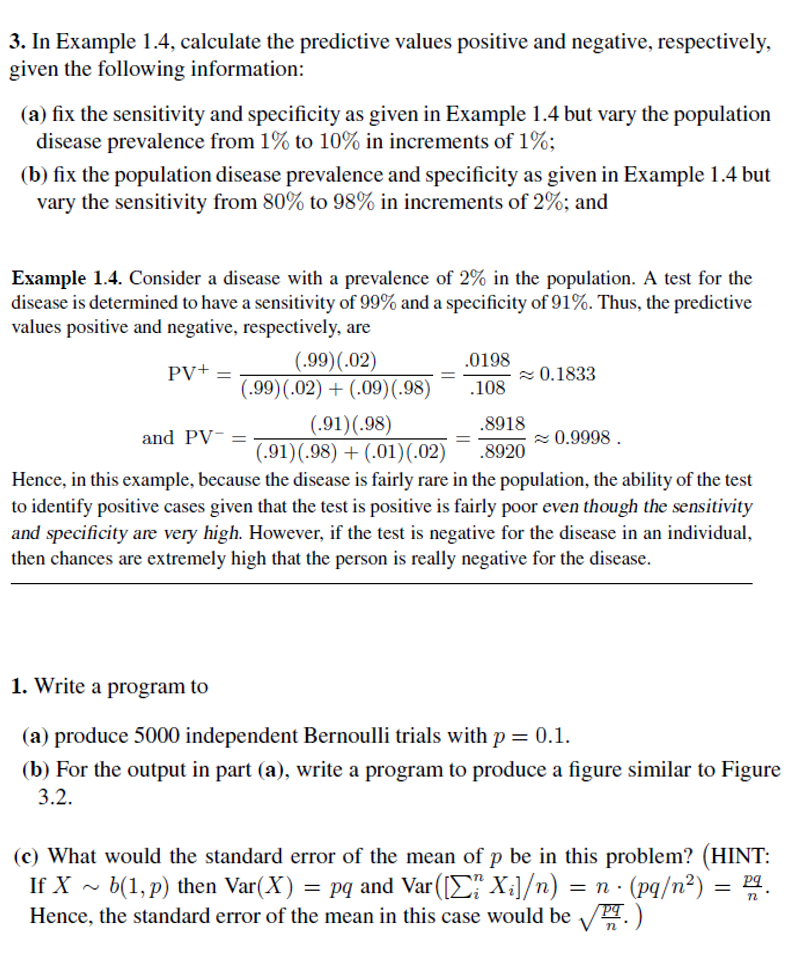
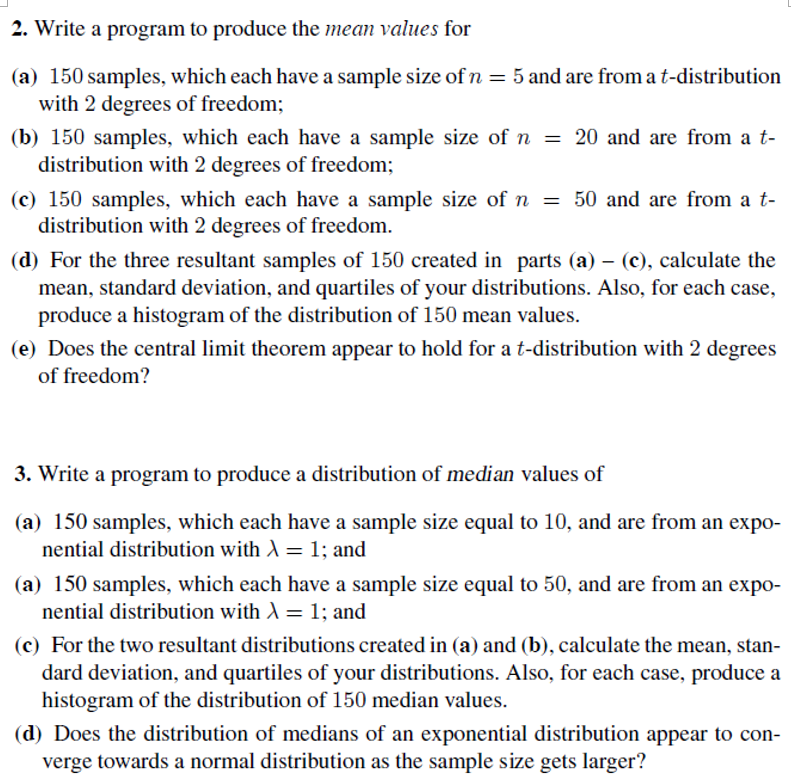
3. In Example 1.4, calculate the predictive values positive and negative, respectively, given the following information: (a) x the sensitivity and specicity as given in Example 1.4 but vary the population disease prevalence from 1% to 10% in increments of 1%; (b) x the population disease prevalence and specicity as given in Example 1.4 but vary the sensitivity from 80% to 98% in increments of 2%; and Example 1.4. Consider a disease with a prevalence of 2% in the population. A test for the disease is determined to have a sensitivity of 99% and a specicity of 91%. Thus. the predictive values positi'v'c and negative, respectively, are _ (panes) _ .0193 .... PW _ (.ss)(.02) + (.09)(.98) _ .103 \"(\"833 and Pv- : (lms) 3 0.9993 . (.91){.98) + (.01)(.02} \" .3920 Hence. in this example, because the disease is fairly rare in the population, the ability of the test to identify positive cases given that the test is positive is fairly poor even though the sensitivity and specicity are very high. However, if the test is negative for the disease in an individual, then chances are extremely high that the person is really negative for the disease. 1. Write a program to (a) produce 5000 independent Bernoulli trials with p = 0.1. (b) For the output in part (a), write a program to produce a gure similar to Figure 3.2. (c) What would the standard error of the mean of p be in this problem? (HINT: le ~ b(1,p) then Var(X} = pg and KINGS? X) = n - (pg2) = 33. Hence, the standard error of the mean in this case would be Jill1:, . ) \f
Step by Step Solution
There are 3 Steps involved in it

Get step-by-step solutions from verified subject matter experts
 Study Help