







Question: 3. Measuring stand-alone risk using realized (historical) data Returns earned over a given time period are called realized returns. Historical data on realized returns is
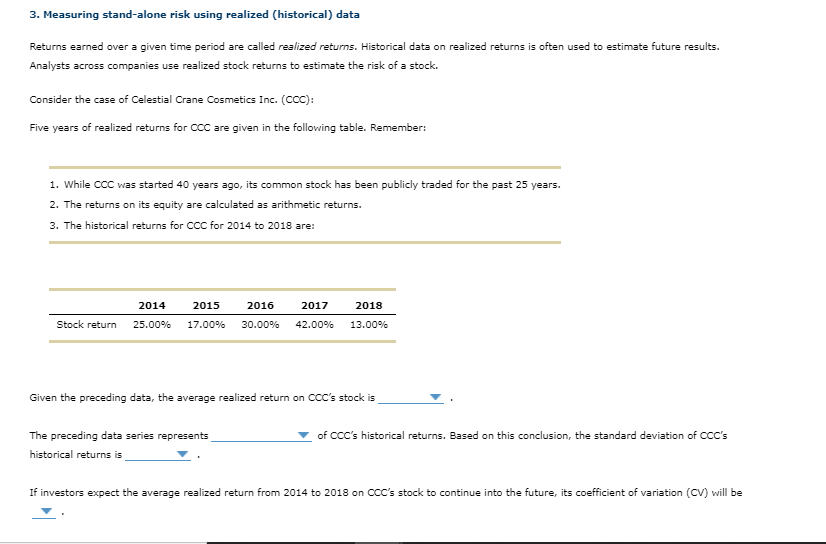
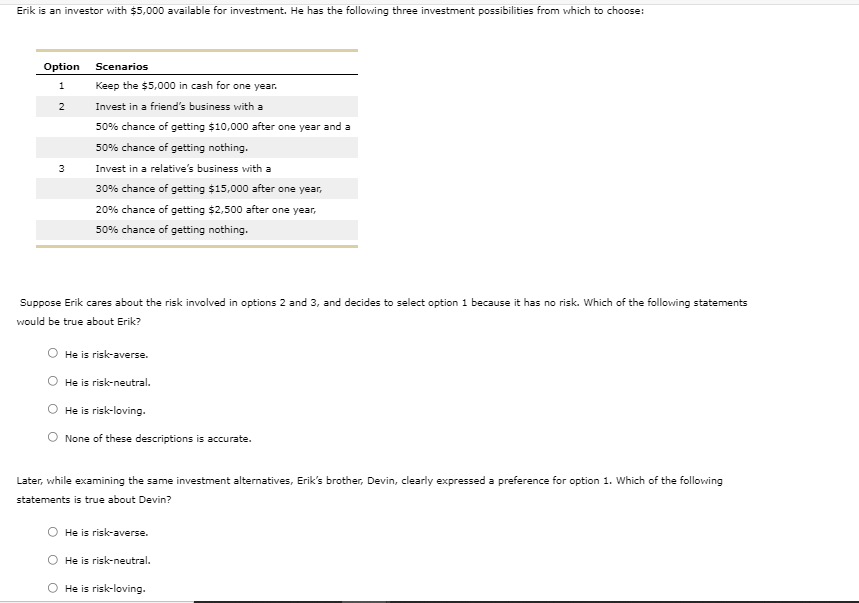
3. Measuring stand-alone risk using realized (historical) data Returns earned over a given time period are called realized returns. Historical data on realized returns is often used to estimate future results. Analysts across companies use realized stock returns to estimate the risk of a stock. Consider the case of Celestial Crane Cosmetics Inc. (COC): Five years of realized returns for CCC are given in the following table. Remember: 1. While COC was started 40 years ago, its common stock has been publicly traded for the past 25 years. 2. The returns on its equity are calculated as arithmetic returns. 3. The historical returns for CCC for 2014 to 2018 are: 2014 2015 2016 2017 2018 13.00% Stock return 25.00% 17.00% 30.00% 42.00% Given the preceding data, the average realized return on coc's stock is of coc's historical returns. Based on this conclusion, the standard deviation of CCC's The preceding data series represents historical returns is If investors expect the average realized return from 2014 to 2018 on CCC's stock to continue into the future, its coefficient of variation (CV) will be Erik is an investor with $5,000 available for investment. He has the following three investment possibilities from which to choose: Option 1 2 Scenarios Keep the $5,000 in cash for one year. Invest in a friend's business with a 50% chance of getting $10,000 after one year and a 50% chance of getting nothing. Invest in a relative's business with a 30% chance of getting $15,000 after one year, 20% chance of getting $2,500 after one year, 50% chance of getting nothing. 3 Suppose Erik cares about the risk involved in options 2 and 3, and decides to select option 1 because it has no risk. Which of the following statements would be true about Erik? He is risk-averse. He is risk-neutral. He is risk-loving. None of these descriptions is accurate. Later, while examining the same investment alternatives, Erik's brother, Devin, clearly expressed a preference for option 1. Which of the following statements is true about Devin? He is risk-averse. He is risk-neutral. He is risk-loving
Step by Step Solution
There are 3 Steps involved in it

Get step-by-step solutions from verified subject matter experts
 Study Help