



Question: 3. Open-end equity mutual funds find it necessary to keep a significant percentage of total investments, typically around 5% of the portfolio, in very liquid
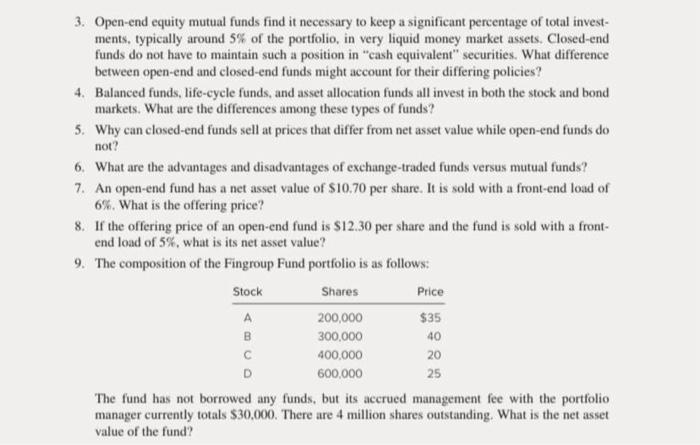
3. Open-end equity mutual funds find it necessary to keep a significant percentage of total investments, typically around 5% of the portfolio, in very liquid money market assets. Closed-end funds do not have to maintain such a position in "cash equivalent" securities. What difference between open-end and closed-end funds might account for their differing policies? 4. Balanced funds, life-cycle funds, and asset allocation funds all invest in both the stock and bond markets. What are the differences among these types of funds? 5. Why can closed-end funds sell at prices that differ from net asset value while open-end funds do not? 6. What are the advantages and disadvantages of exchange-traded funds versus mutual funds? 7. An open-end fund has a net asset value of $10.70 per share. It is sold with a front-end load of 6%. What is the offering price? 8. If the offering price of an open-end fund is $12.30 per share and the fund is sold with a frontend load of 5%, what is its net asset value? 9. The composition of the Fingroup Fund portfolio is as follows: The fund has not borrowed any funds, but its accrued management fee with the portfolio manager currently totals $30,000. There are 4 million shares outstanding. What is the net asset value of the fund
Step by Step Solution
There are 3 Steps involved in it

Get step-by-step solutions from verified subject matter experts