



Question: 3. Two bricks slide over a frictionless horizontal surface. The first brick, mass ma=10kg, is propelled with speed VA=2.25 m/s toward the second brick, mass
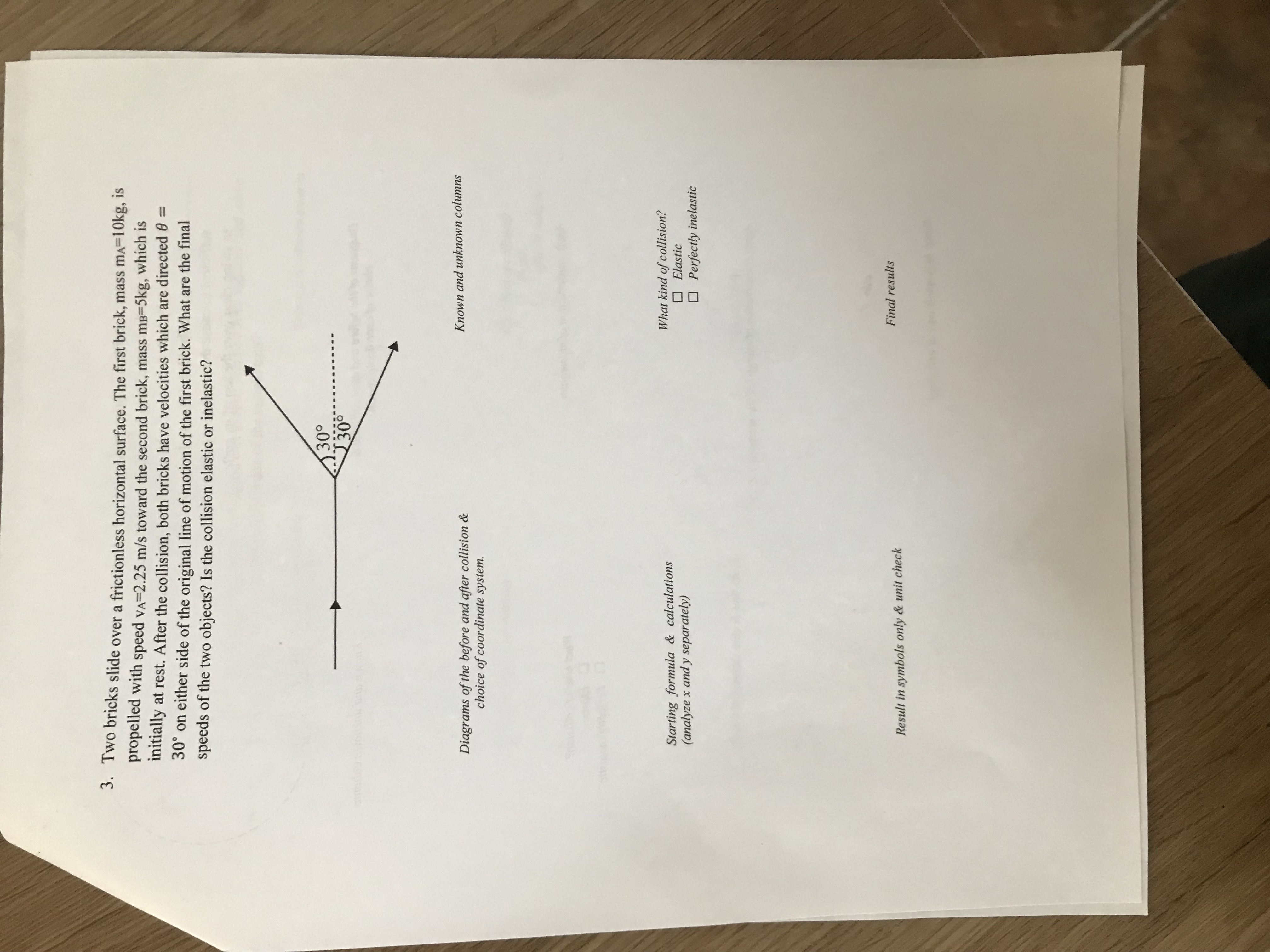
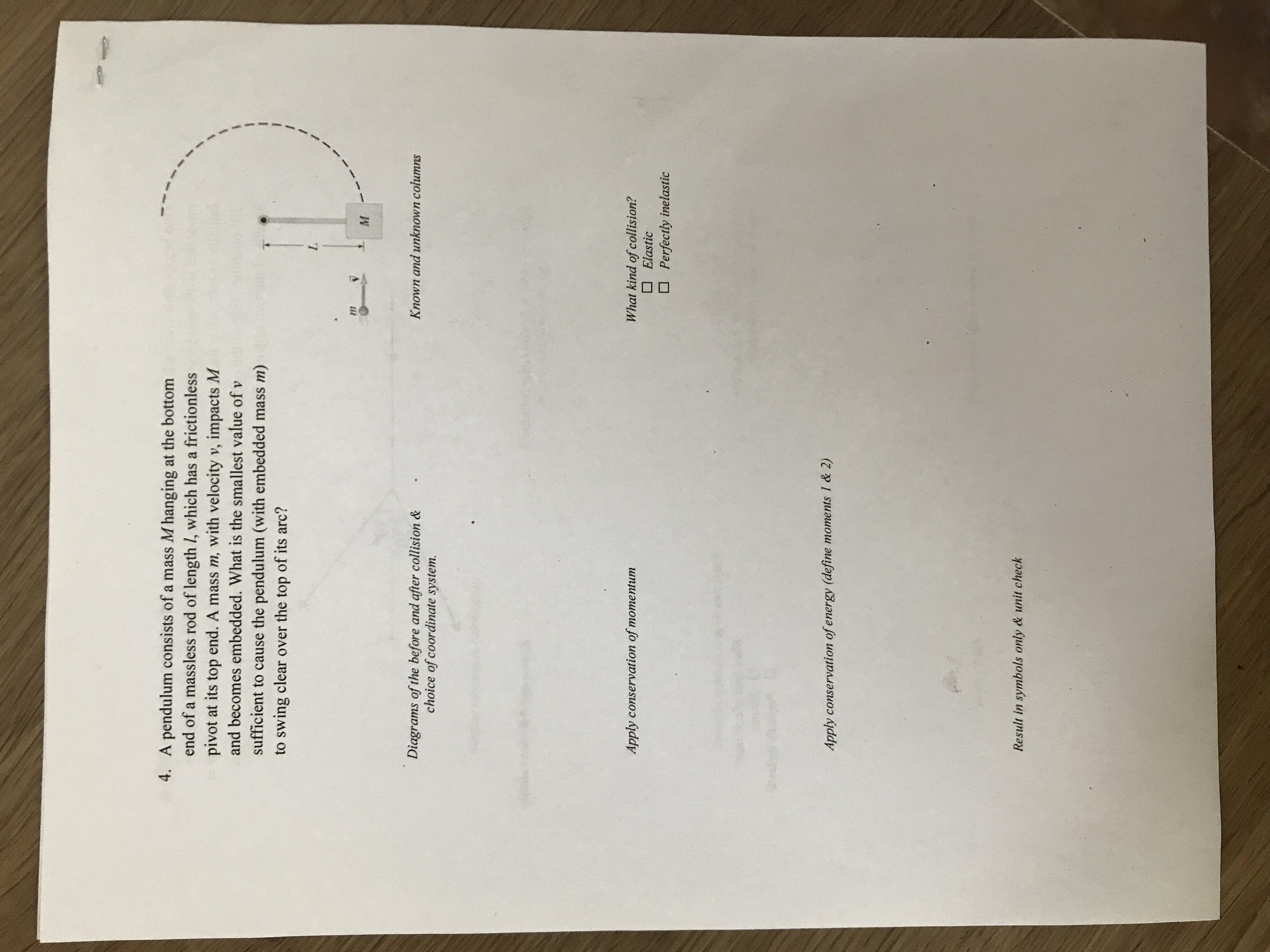
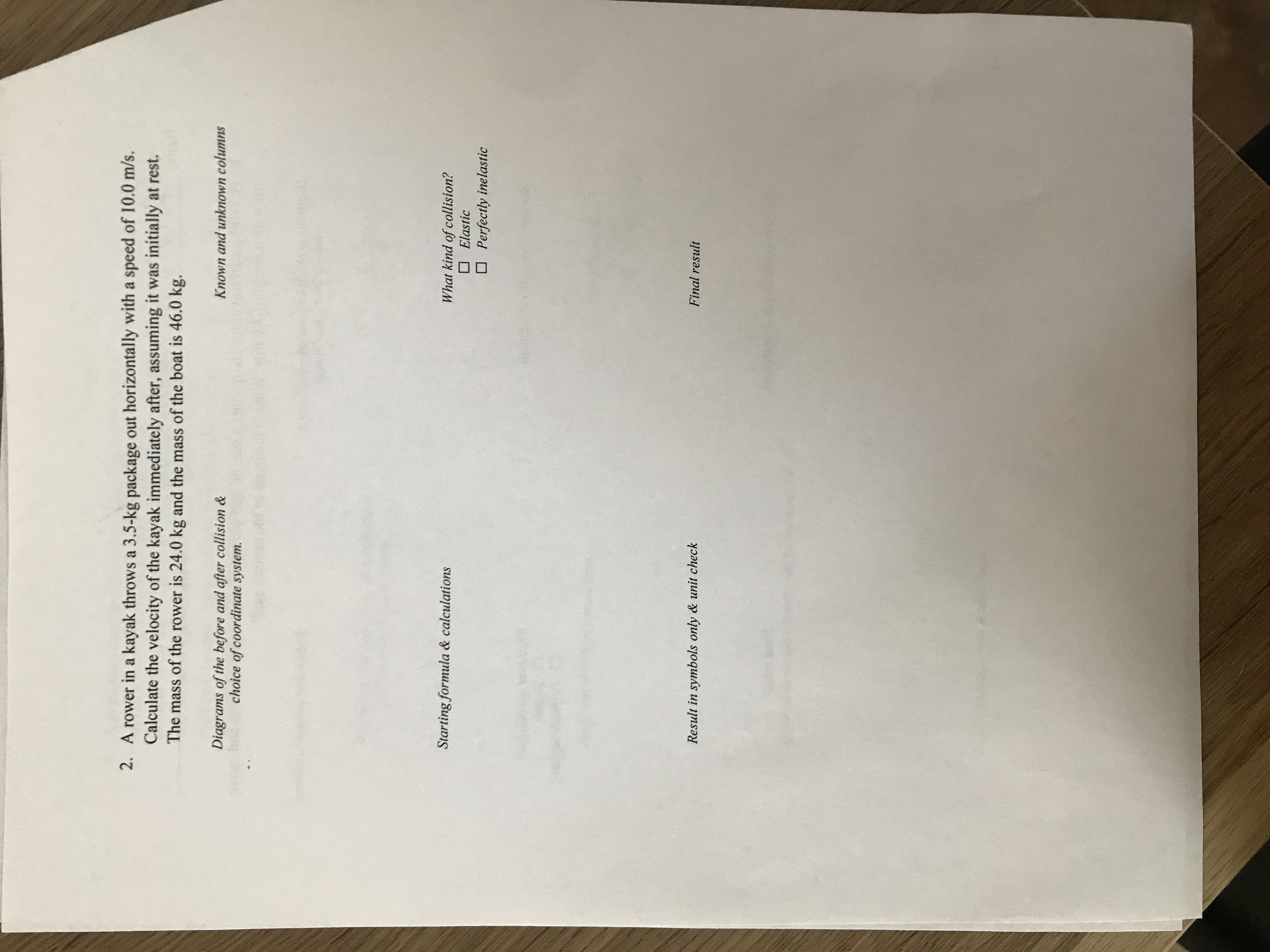
3. Two bricks slide over a frictionless horizontal surface. The first brick, mass ma=10kg, is propelled with speed VA=2.25 m/s toward the second brick, mass me=5kg, which is initially at rest. After the collision, both bricks have velocities which are directed 0 = 30 on either side of the original line of motion of the first brick. What are the final speeds of the two objects? Is the collision elastic or inelastic? 130 * 308- Diagrams of the before and after collision & Known and unknown columns choice of coordinate system. Starting formula & calculations What kind of collision? analyze x and y separately) Elastic Perfectly inelastic Result in symbols only & unit check Final results4. A pendulum consists of a mass M hanging at the bottom end of a massless rod of length /, which has a frictionless pivot at its top end. A mass m, with velocity v, impacts M and becomes embedded. What is the smallest value of v sufficient to cause the pendulum (with embedded mass m) to swing clear over the top of its arc? M Diagrams of the before and after collision & Known and unknown columns choice of coordinate system. Apply conservation of momentum What kind of collision? Elastic Perfectly inelastic Apply conservation of energy (define moments 1 & 2) Result in symbols only & unit check2. A rower in a kayak throws a 3.5-kg package out horizontally with a speed of 10.0 m/s. Calculate the velocity of the kayak immediately after, assuming it was initially at rest. The mass of the rower is 24.0 kg and the mass of the boat is 46.0 kg. Diagrams of the before and after collision & Known and unknown columns choice of coordinate system. Starting formula & calculations What kind of collision? Elastic Perfectly inelastic Result in symbols only & unit check Final result1. A 770-kg cart traveling 16 m/s hits a second cart at rest. The two stick together and move off with a speed of 7.0 m/s. What is the mass of the second cart? Diagrams of the before and after collision & Known and unknown columns choice of coordinate system. Starting formula & calculations What kind of collision? Elastic Perfectly inelastic Result in symbols only & unit check Final result
Step by Step Solution
There are 3 Steps involved in it

Get step-by-step solutions from verified subject matter experts