Question: 3. Utilizing the same spreadsheet (cell references, formulas, etc.), determine the unit cost for each model using the four activity drivers to apply overhead. (Round
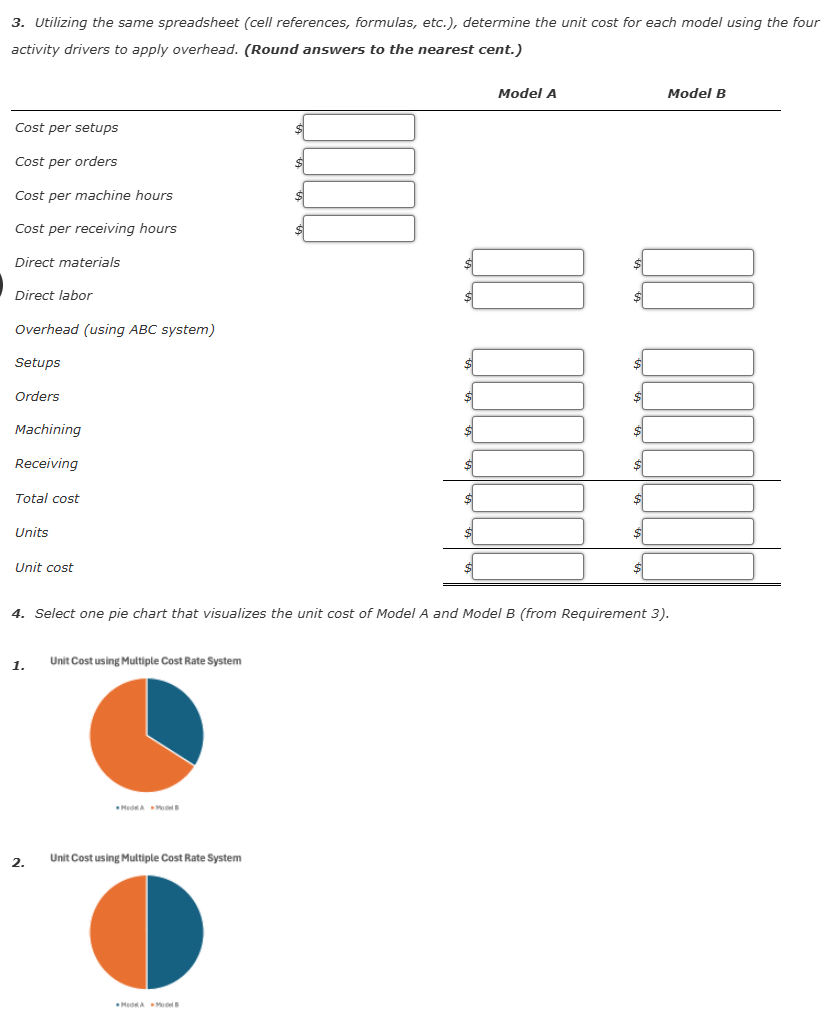
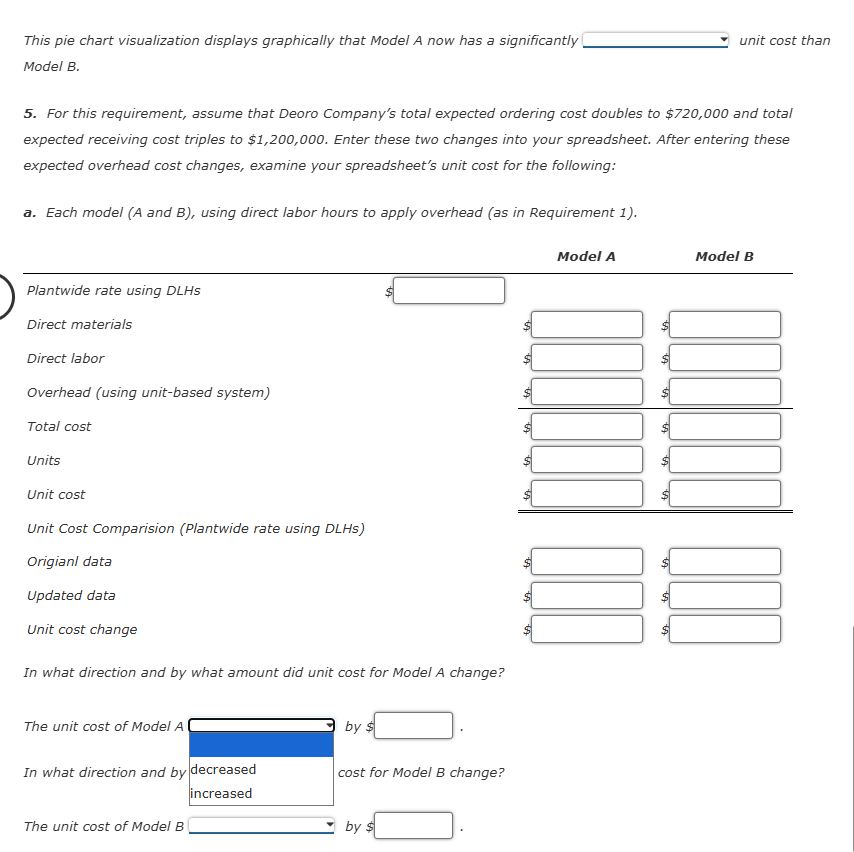
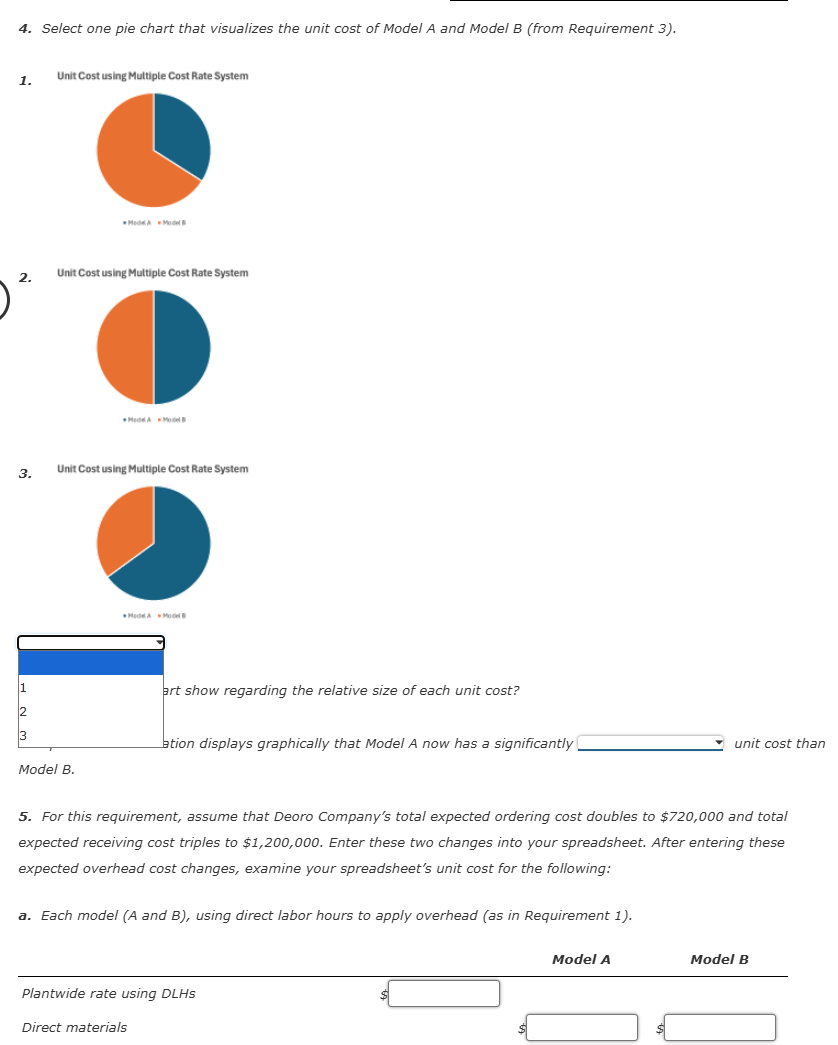
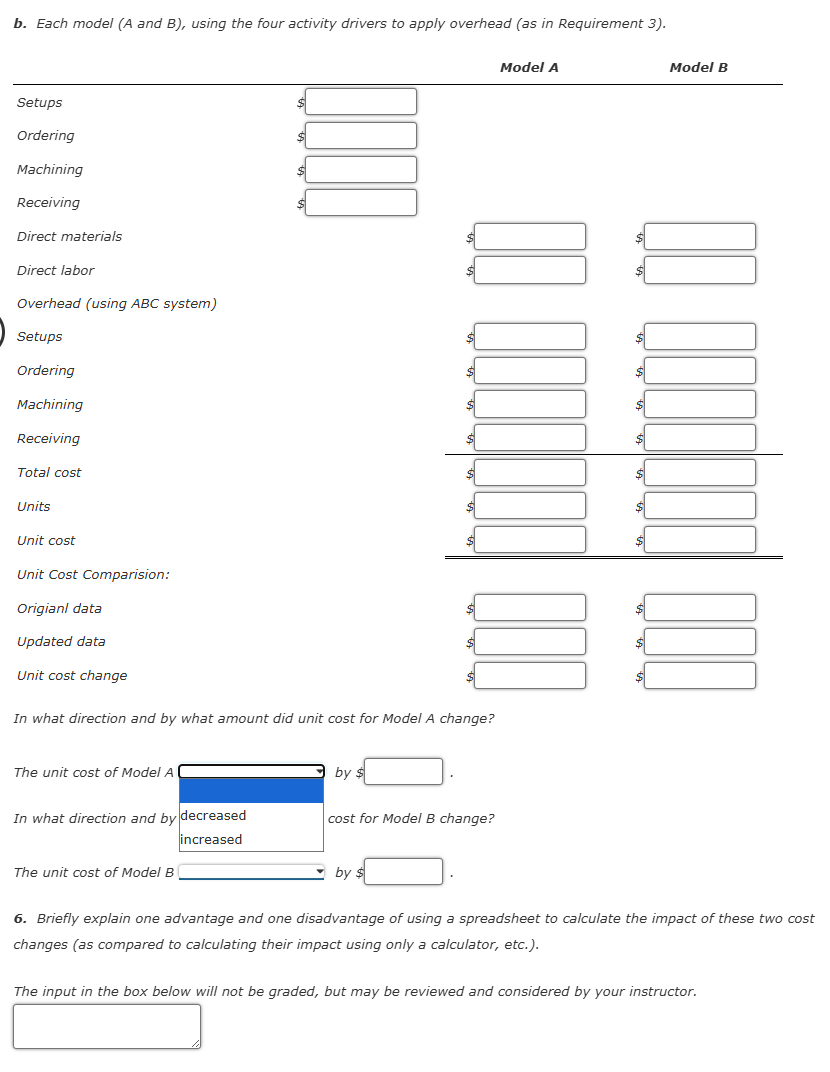
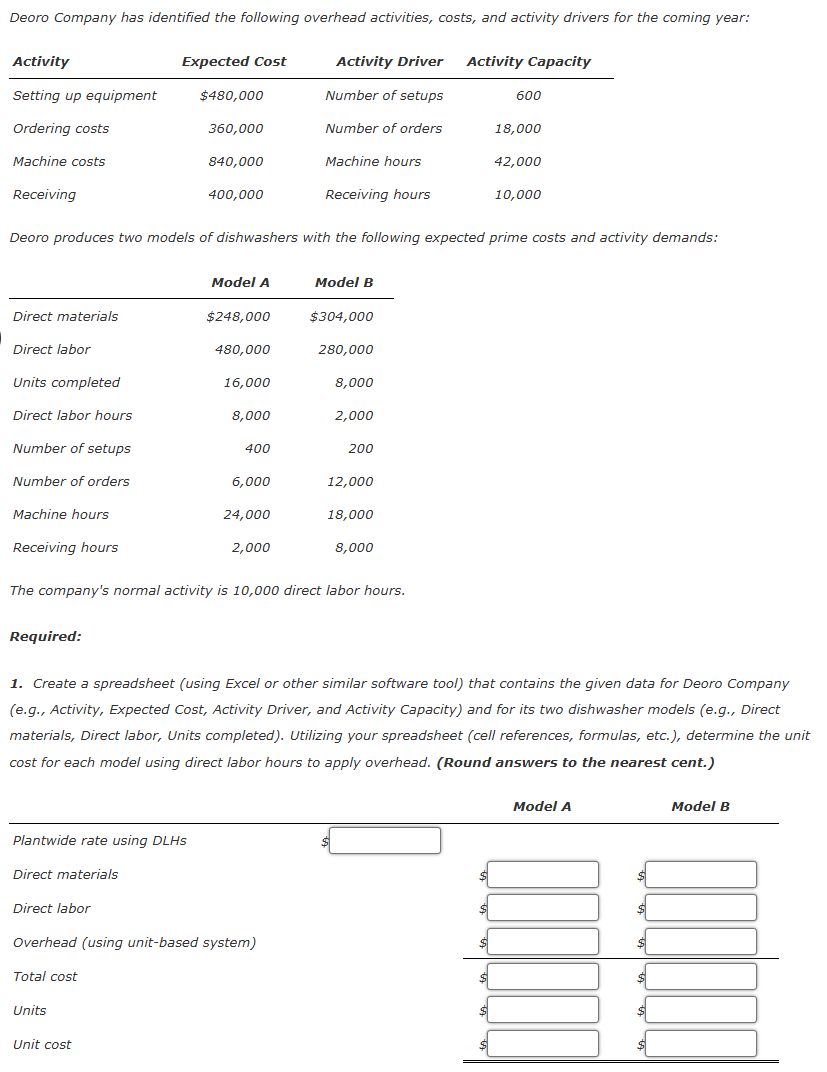
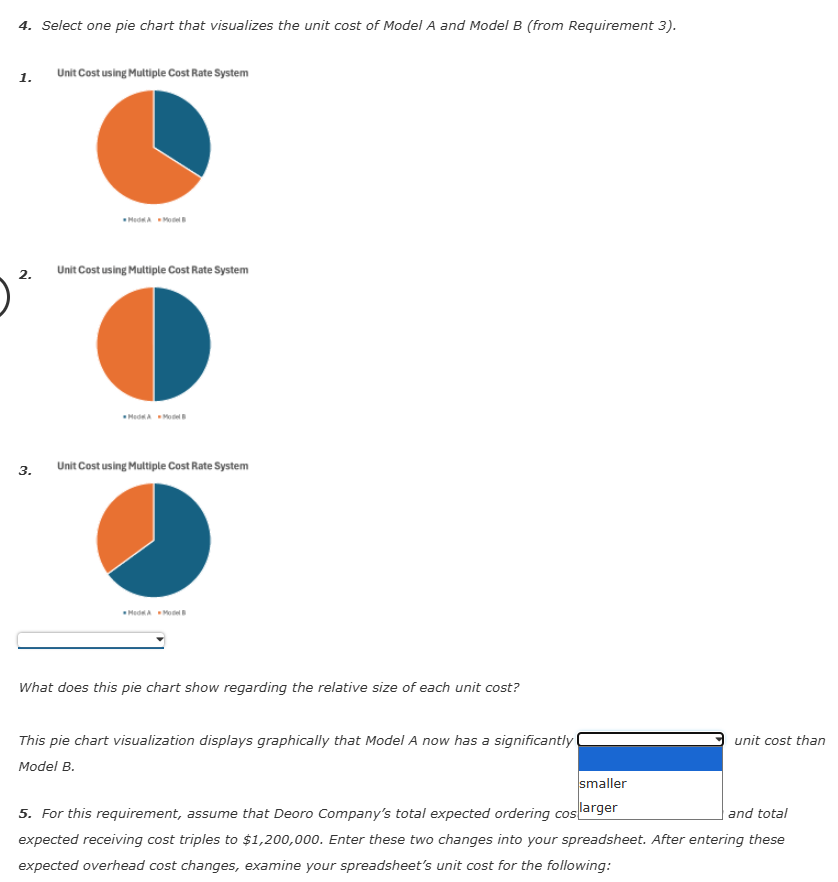
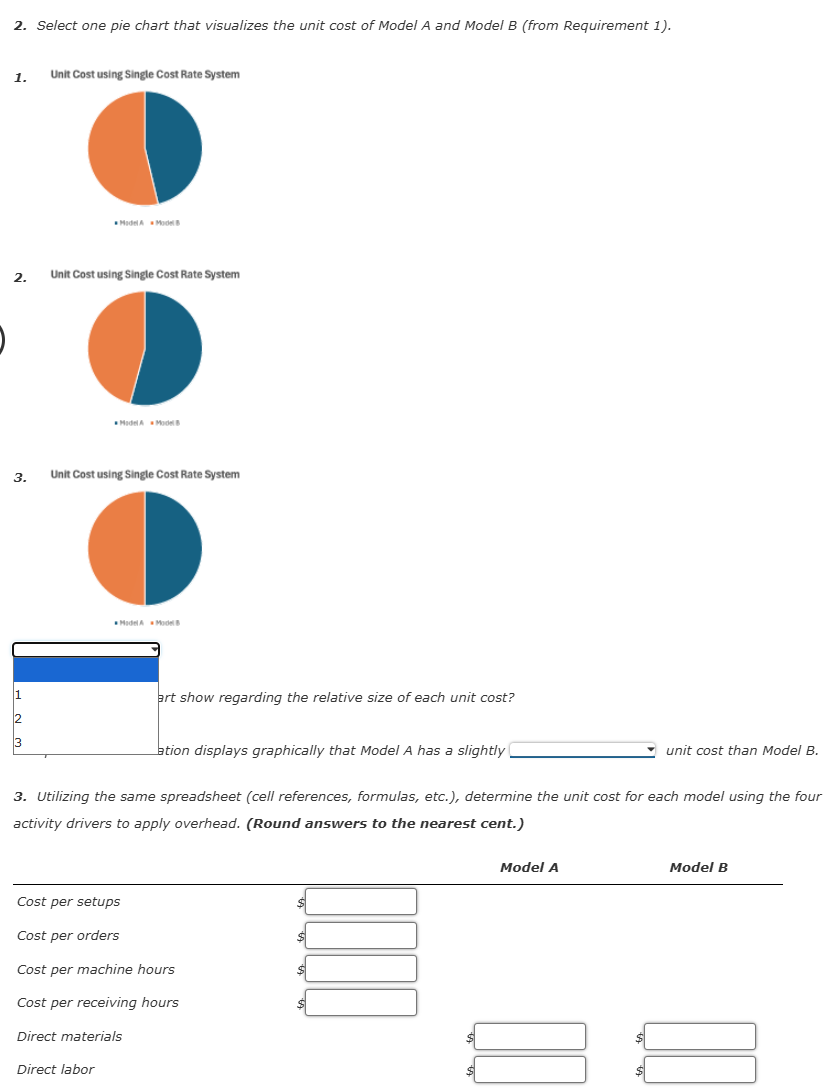
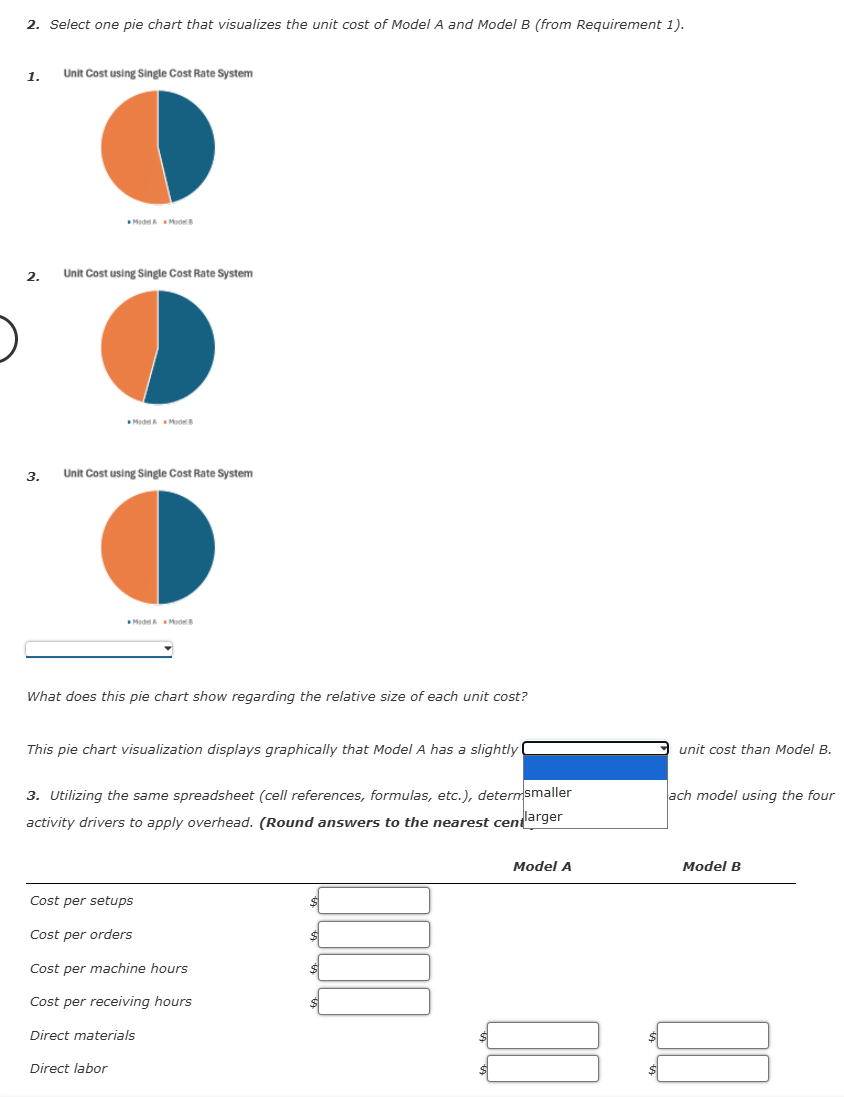
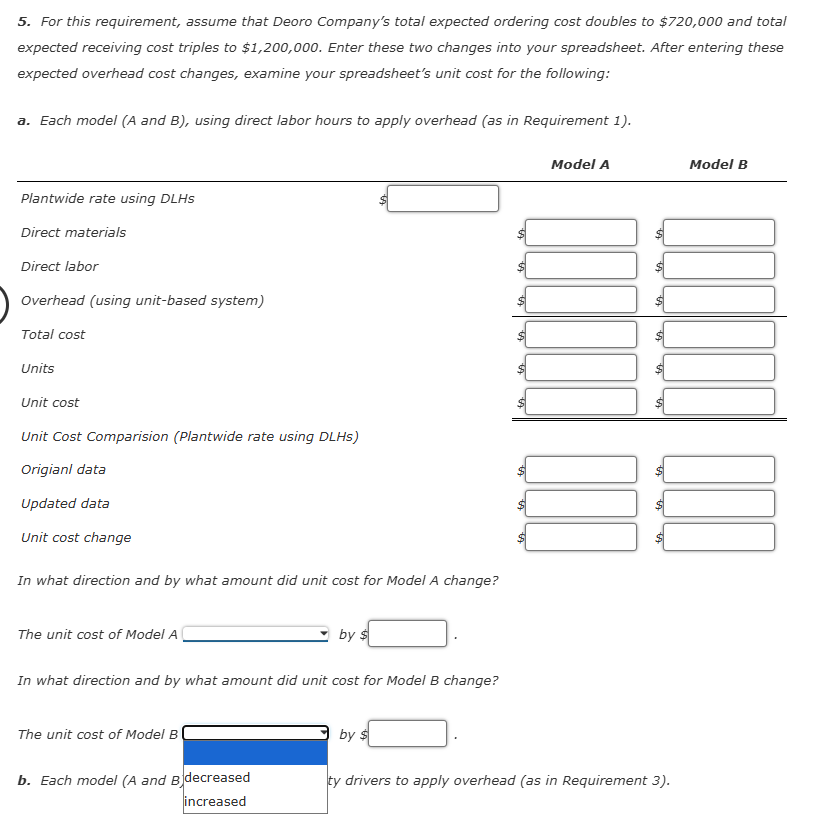
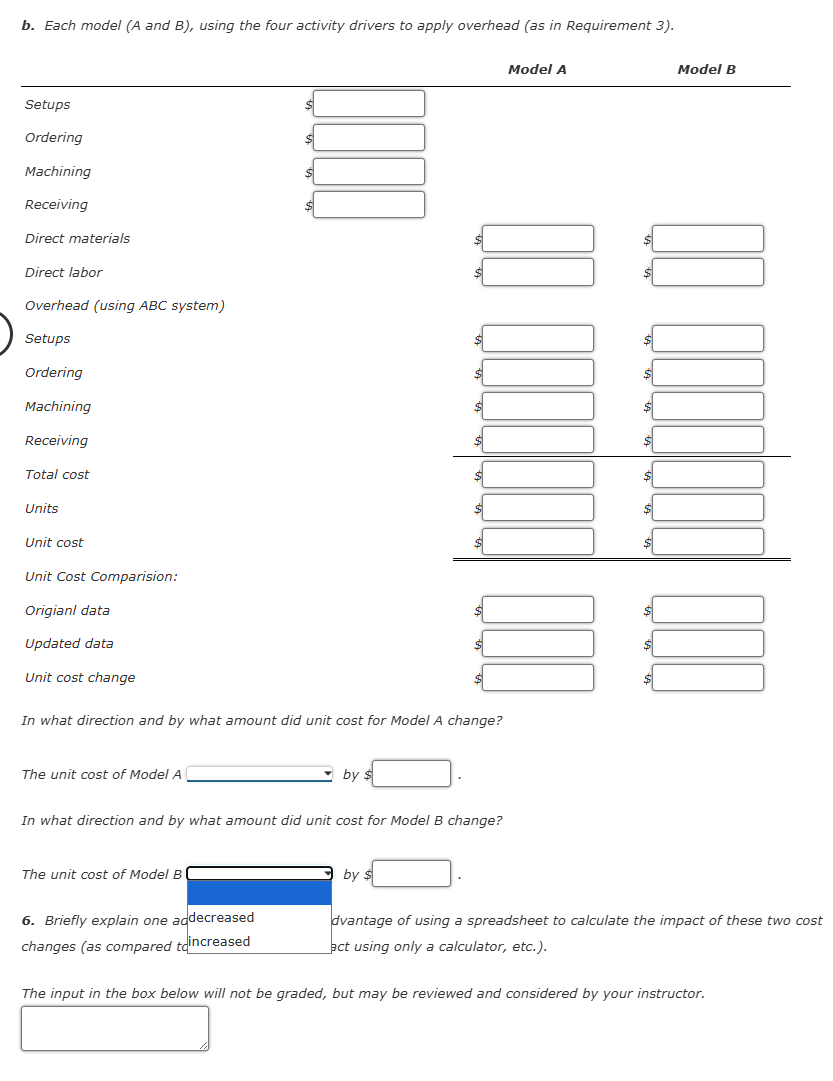
3. Utilizing the same spreadsheet (cell references, formulas, etc.), determine the unit cost for each model using the four activity drivers to apply overhead. (Round answers to the nearest cent.) Model A Model B Cost per setups Cost per orders Cost per machine hours Cost per receiving hours Direct materials Direct labor Overhead (using ABC system) Setups Orders Machining Receiving Total cost Units Unit cost 4. Select one pie chart that visualizes the unit cost of Model A and Model B (from Requirement 3). 1. Unit Cost using Multiple Cost Rate System 2. Unit Cost using Multiple Cost Rate System . Hide A . MotelThis pie chart visualization displays graphically that Model A now has 2 significantly = unit cost than Mode! B. 5. For this requirement, assume that Deoro Company's total expected ordering cost doubles to $720,000 and total! expected receiving cost triples to $1,200,000. Enter these two changes into your spreadsheet. After entering these expected overhead cost changes, examine your spreadsheet's unit cost for the following: a. Each model (A and 8), using direct labor hours to apply overhead (as in Requirement 1). Model A Model B Plantwide rate using DLHs gs Direct materials 4 sl Direct labor 4 3 Overhead (using unit-based system) 4 3 3 s Total cost 4 Units 4 Unit cost 4 3 Unit Cost Comparision (Plantwide rate using DLHs) Origian! data 4 3 Updated data 3 3 Unit cost change 4 3) In what direction and by what amount did unit cost for Model A change? The unit cost of Model A CY py sf In what direction and by |decreased cost for Model B change? increased The unit cost of Model B by 4 | - 4. Select one pie chart that visualizes the unit cost of Model A and Mode! B (from Requirement 3). 7 Unit Cost using Multiple Cost Rate System 2 Unit Cost using Multiple Cost Rate System hide A # Mone 3 Unit Cost using Multiple Cost Rate System art show regarding the relative size of each unit cost? Btion displays graphically that Model A now has a significantly * unit cost than Mode! B. 5. For this requirement, assume that Deoro Company's total expected ordering cost doubles to $720,000 and total expected receiving cost triples to $1,200,000. Enter these two changes into your spreadsheet. After entering these expected overhead cost changes, examine your spreadsheet's unit cost for the following: a. Each model (A and 8), using direct labor hours to apply overhead (as in Requirement 1). Model A Mode! B Plantwide rate using DLHs ee b. Each model (A and 8), using the four activity drivers to apply overhead (as in Requirement 3). Model A Model B Machining 4] Receiving 4] Direct materials ee 4 Overhead (using ABC system) Ordering 4 | $ Machining 4 5 Total cost 4] Unit cost 4] s Unit Cost Comparision: Unit cost change 4] 4 In what direction and by what amount did unit cost for Model A change? The unit cost of Model A (ny gf In what direction and by |decreased cost for Mode! 8 change? increased The unit cost of Mode! B by 4 . 6. Briefly explain one advantage and one disadvantage of using 2 spreadsheet to calculate the impact of these two cost changes (as compared to calculating their impact using only a calculator, etc. ). The input in the box below will not be graded, but may be reviewed and considered by your instructor. Deora Company has identified the following overhead activities, costs, and activity drivers for the coming year: Activity Expected Cost Activity Driver Activity Capacity Setting up equipment $480,000 Number of setups 600 Ordering costs 360,000 Number of orders 18,000 Machine costs 40,000 Machine fours 42,000 Receiving 400,000 Receiving hours 10,000 Deoro produces two models of dishwashers with the following expected prime costs and activity demands: Model A Model B Direct materials $248,000 $304,000 Direct labor 480,000 280,000 Units completed 16,000 ,000 Direct labor hours &,000 2,000 Number of setups 400 200 Number of orders 6,000 12,000 Machine hours 24,000 18,000 Receiving hours 2,000 8,000 The company's normal activity is 10,000 direct labor hours. Required: 1. Create a spreadsheet (using Excel or other similar software toal) that contains the given data for Deoro Company (e.g., Activity, Expected Cost, Activity Driver, and Activity Capacity) and for its two dishwasher models (e.g., Direct materials, Direct labor, Units completed). Utilizing your spreadsheet (cell references, formulas, etc.), determine the unit cost for each mode! using direct labor hours to apply overhead. (Round answers to the nearest cent.) Model A Model B Plantwide rate using DLHs f Direct materials Direct labor Overhead (using unit-based system) Total cost Units 3] Unit cost 4. Select one pie chart that visualizes the unit cost of Model A and Model B (from Requirement 3). 1. Unit Cost using Multiple Cost Rate System 2. Unit Cost using Multiple Cost Rate System 3. Unit Cost using Multiple Cost Rate System What does this pie chart show regarding the relative size of each unit cost? This pie chart visualization displays graphically that Model A now has a significantly unit cost than Model B. smaller 5. For this requirement, assume that Deoro Company's total expected ordering coslarger and total expected receiving cost triples to $1,200,000. Enter these two changes into your spreadsheet. After entering these expected overhead cost changes, examine your spreadsheet's unit cost for the following:2. Select one pie chart that visualizes the unit cost of Model A and Model B (from Requirement 1). 1. Unit Cost using Single Cost Rate System eHodel A Moxie i 2. Unit Cost using Single Cost Rate System eHadeld Hoe & 3 Unit Cost using Single Cost Rate System prt show regarding the relative size of each unit cost? tion displays graphically that Model A has a slightly * unit cost than Model B. 3. Utilizing the same spreadsheet (cell references, formulas, etc.), determine the unit cost for each model using the four activity drivers to apply overhead. (Round answers to the nearest cent.) Model A Model B Cost per setups 4 Cost per orders 4 Cost per machine hours Cost per receiving hours 4 Direct materials 4 | 2. Select one pie chart that visualizes the unit cost of Model A and Model B (from Requirement 1). 1. Unit Cost using Single Cost Rate System . Model A . Model 2. Unit Cost using Single Cost Rate System . Model A . Models 3. Unit Cost using Single Cost Rate System . Model A . Models What does this pie chart show regarding the relative size of each unit cost? This pie chart visualization displays graphically that Model A has a slightly C unit cost than Model B. 3. Utilizing the same spreadsheet (cell references, formulas, etc.), determsmaller ach model using the four activity drivers to apply overhead. (Round answers to the nearest centlarger Model A Model B Cost per setups Cost per orders Cost per machine hours Cost per receiving hours Direct materials Direct labor5. For this requirement, assume that Deoro Company's total expected ordering cost doubles to $720,000 and total expected receiving cost triples to $1,200,000. Enter these two changes into your spreadsheet. After entering these expected overhead cost changes, examine your spreadsheet's unit cost for the follawing: a. Each mode! (A and 8), using direct labor hours to apply overhead (as in Requirement 1). Model A Model B Plantwide rate using DLHs 4 Orect materials 3 Direct labor 3 Overhead (using unit-based system) 3 4 | Total cost g Units 3 Unit cost 4 4] Unit Cost Comparision (Plantwide rate using DLHs) Orgian! data Ct Unit cost change In what direction and by what amount did unit cost for Model A change? The unit cost of Model A * by 4 | . In what direction and by what amount did unit cost for Model B change? The unit cost of Model 8BL___________}) by 4 | b. Each model (A and Bjdecreased y drivers to apply overhead (as in Requirement 3). b. Each model (A and B), using the four activity drivers to apply overhead (as in Requirement 3). Model A Model B Setups Ordering Machining Receiving Direct materials Direct labor Overhead (using ABC system) Setups Ordering Machining Receiving Total cost Units Unit cost Unit Cost Comparision: Origianl data Updated data Unit cost change In what direction and by what amount did unit cost for Model A change? The unit cost of Model A In what direction and by what amount did unit cost for Model B change? The unit cost of Model BC by 6. Briefly explain one addecreased dvantage of using a spreadsheet to calculate the impact of these two cost changes (as compared toincreased act using only a calculator, etc.). The input in the box below will not be graded, but may be reviewed and considered by your instructor
Step by Step Solution
There are 3 Steps involved in it
1 Expert Approved Answer
Step: 1 Unlock
Question Has Been Solved by an Expert!
Get step-by-step solutions from verified subject matter experts
Step: 2 Unlock
Step: 3 Unlock
Students Have Also Explored These Related Accounting Questions!









 Study Help