



Question: 3. We have three bidders (A, B and C) and three goods (1, y and 2). The valuations are: 2 VA(32) = 8 VA(y) =
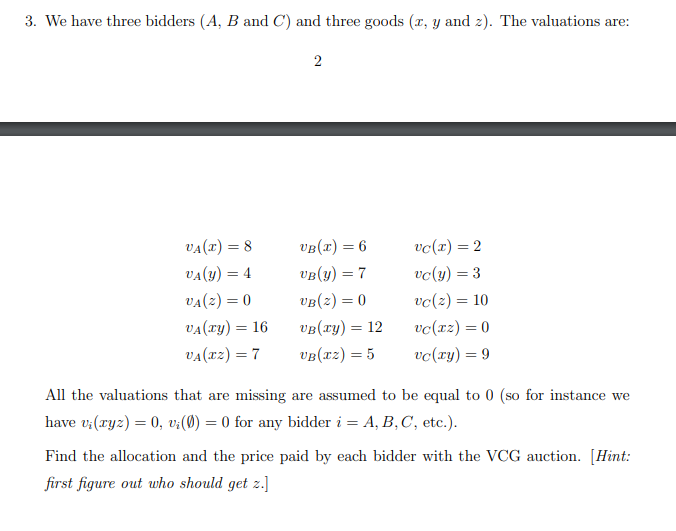
3. We have three bidders (A, B and C) and three goods (1, y and 2). The valuations are: 2 VA(32) = 8 VA(y) = 4 VA() = 0 VA (cy) = 16 VA(22) = 7 UB(x) = 6 UB(y) = 7 UB(2) = 0 UB(cy) = 12 UB(22) = 5 vc(x) = 2 vc(y) = 3 vc() = 10 vc(22) = 0 vc(xy) = 9 All the valuations that are missing are assumed to be equal to 0 (so for instance we have vi(xyz) = 0, v:(0) = 0 for any bidder i = A, B, C, etc.). Find the allocation and the price paid by each bidder with the VCG auction. (Hint: first figure out who should get z.] 3. We have three bidders (A, B and C) and three goods (1, y and 2). The valuations are: 2 VA(32) = 8 VA(y) = 4 VA() = 0 VA (cy) = 16 VA(22) = 7 UB(x) = 6 UB(y) = 7 UB(2) = 0 UB(cy) = 12 UB(22) = 5 vc(x) = 2 vc(y) = 3 vc() = 10 vc(22) = 0 vc(xy) = 9 All the valuations that are missing are assumed to be equal to 0 (so for instance we have vi(xyz) = 0, v:(0) = 0 for any bidder i = A, B, C, etc.). Find the allocation and the price paid by each bidder with the VCG auction. (Hint: first figure out who should get z.]
Step by Step Solution
There are 3 Steps involved in it

Get step-by-step solutions from verified subject matter experts