



Question: 3.2-2 Transport-layer multiplexing. What is meant by transport- layer multiplexing? Select one: a. Taking data from one socket (one of possibly many sockets), encapsulating a
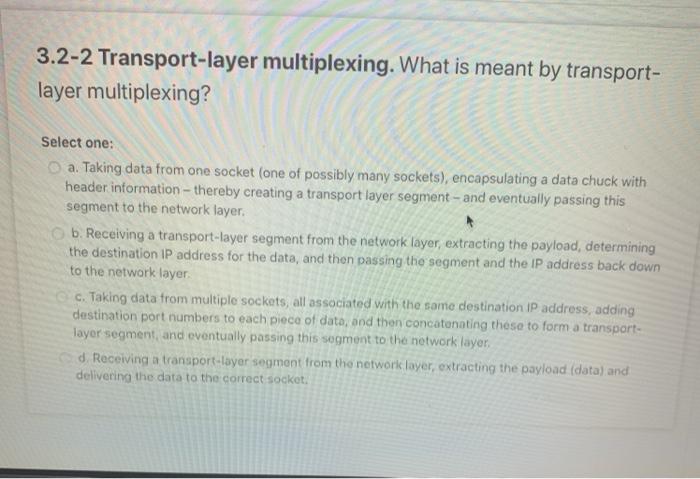
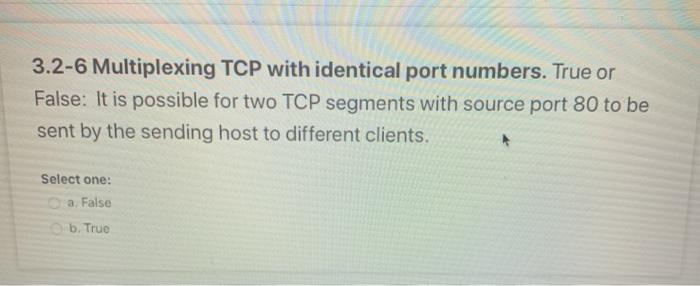
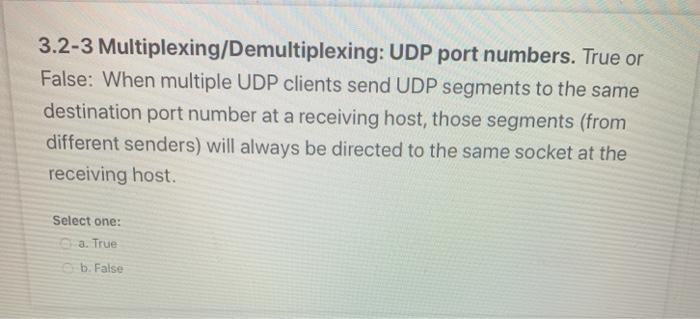
3.2-2 Transport-layer multiplexing. What is meant by transport- layer multiplexing? Select one: a. Taking data from one socket (one of possibly many sockets), encapsulating a data chuck with header information - thereby creating a transport layer segment - and eventually passing this segment to the network layer. b. Receiving a transport-layer segment from the network layer, extracting the payload, determining the destination IP address for the data, and then passing the segment and the IP address back down to the network layer c. Taking data from multiple sockets, all associated with the same destination IP address, adding destination port numbers to each piece of data, and then concatenating these to form a transport- layer segment, and eventually passing this segment to the network layer. d. Receiving a transport-layer segment from the network layer, extracting the payload (data) and delivering the data to the correct socket: 3.2-6 Multiplexing TCP with identical port numbers. True or False: It is possible for two TCP segments with source port 80 to be sent by the sending host to different clients. Select one: a False b. True 3.2-3 Multiplexing/Demultiplexing: UDP port numbers. True or False: When multiple UDP clients send UDP segments to the same destination port number at a receiving host, those segments (from different senders) will always be directed to the same socket at the receiving host. Select one: a. True b. False
Step by Step Solution
There are 3 Steps involved in it

Get step-by-step solutions from verified subject matter experts