







Question: (33%) Problem 3: The object represented in the gure on the right is rolling without slipping on a slide, gaining velocity, until it reaches the
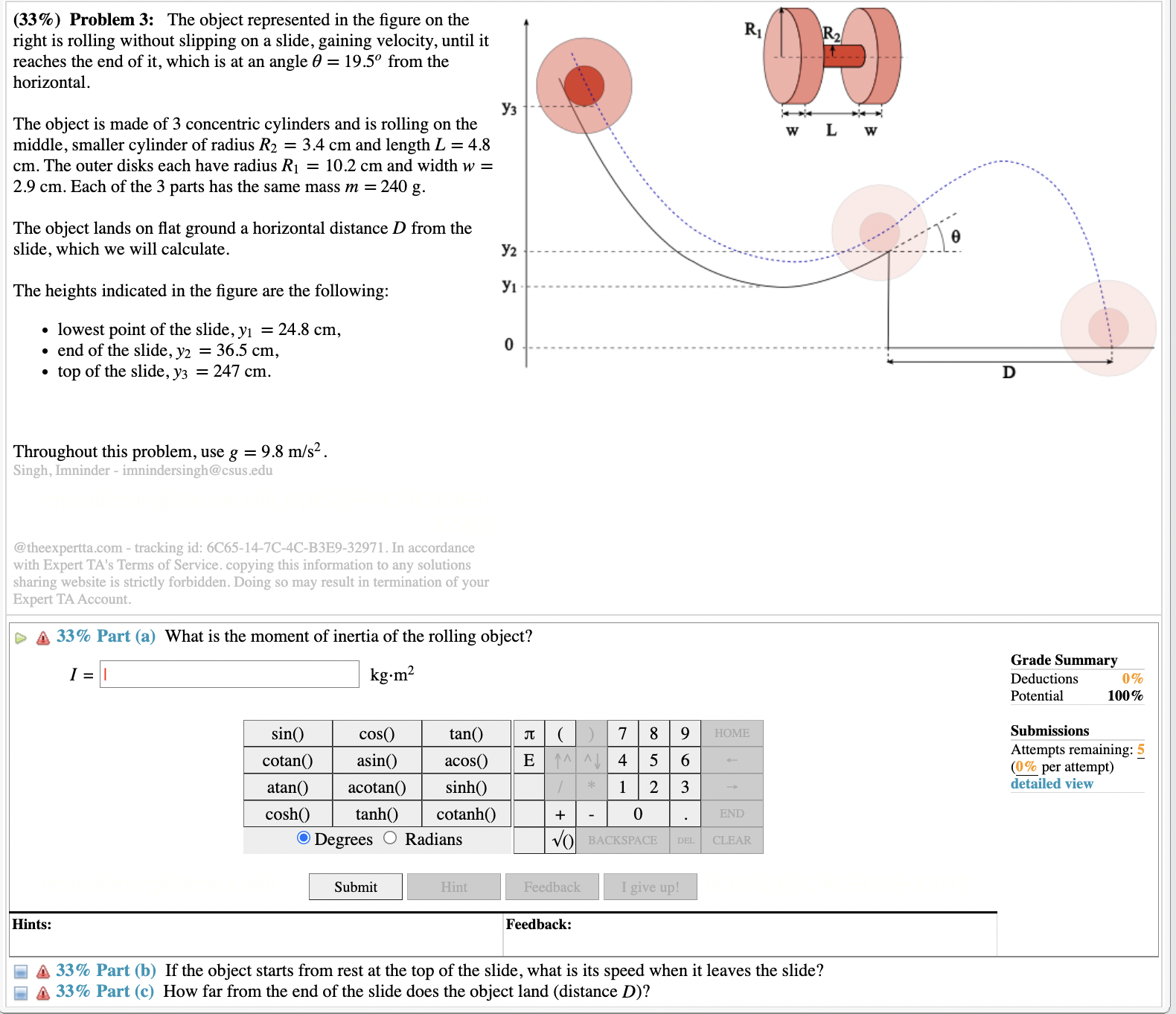
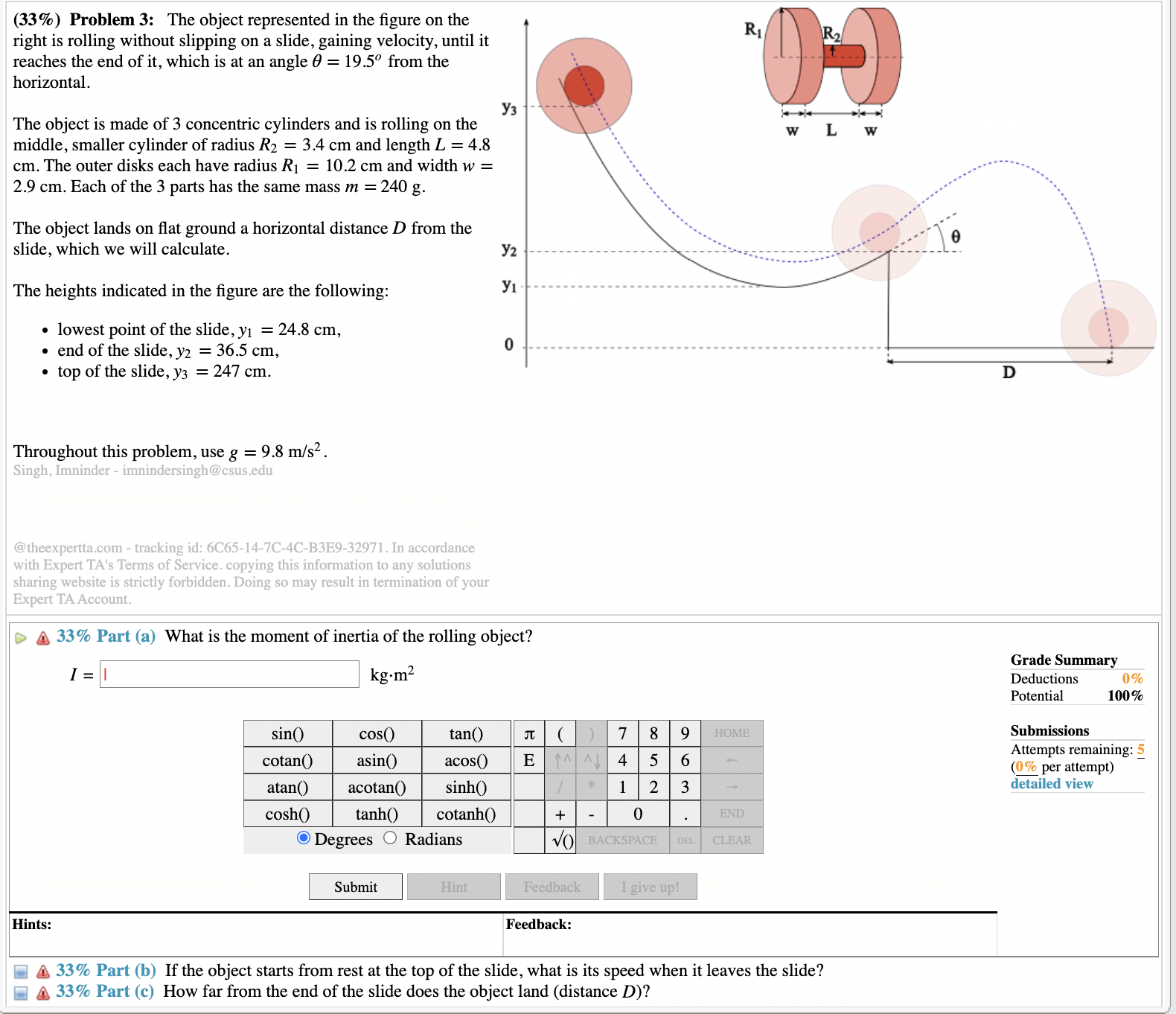
(33%) Problem 3: The object represented in the gure on the right is rolling without slipping on a slide, gaining velocity, until it reaches the end of it, which is at an angle 6' = 19.5\" from the horizontal. The object is made of 3 concentric cylinders and is rolling on the y, middle, smaller cylinder of radius R; = 3.4 cm and length L = 4.8 cm. The outer disks each have radius R1 = 10.2 cm and width w = 2.9 cm. Each ofthe 3 parts has the same mass m = 240 g. The object lands on at ground a horizontal distance D from the slide, which we will calculate. it: The heights indicated in the gure are the following: ,1 ' - lowest point of the slide, y1 = 24.8 cm, - end of the slide, y; = 36.5 cm, 0 - top of the slide, y3 = 247 cm. Throughout this problem, use g = 9.8 m/s2. Singh, lmninder imnindersinghcsus.cdu @theexpertta.coin 7 trucking id: 6C657l477Cr4-C713359732971. In accordance with Expen TA's Terms of Service. copying this information to any solutions sharing website is strictly forbidden. Doing so may result in termination of your Expert TA Account. 9 A 33% Part (a) What is the moment of inertia of the rolling object? Grade Summary I = | kg-m2 Deductions 0% Potential 100% Submissions _, Attempts remaining: (% per attempt) detailed View sum Hints: Feedback: i a 33% Part (b) Ifthe object starts from rest at the top of the slide, what is its speed when it leaves the slide? i 5 33% Part (c) How far from the end of the slide does the object land (distance D)
Step by Step Solution
There are 3 Steps involved in it

Get step-by-step solutions from verified subject matter experts
 Study Help