



Question: 350 Chapter 10 7. 5. 6. C. d. All variances from standard should be reviewed. All significant unfavorable variances should be reviewed, but significant favorable
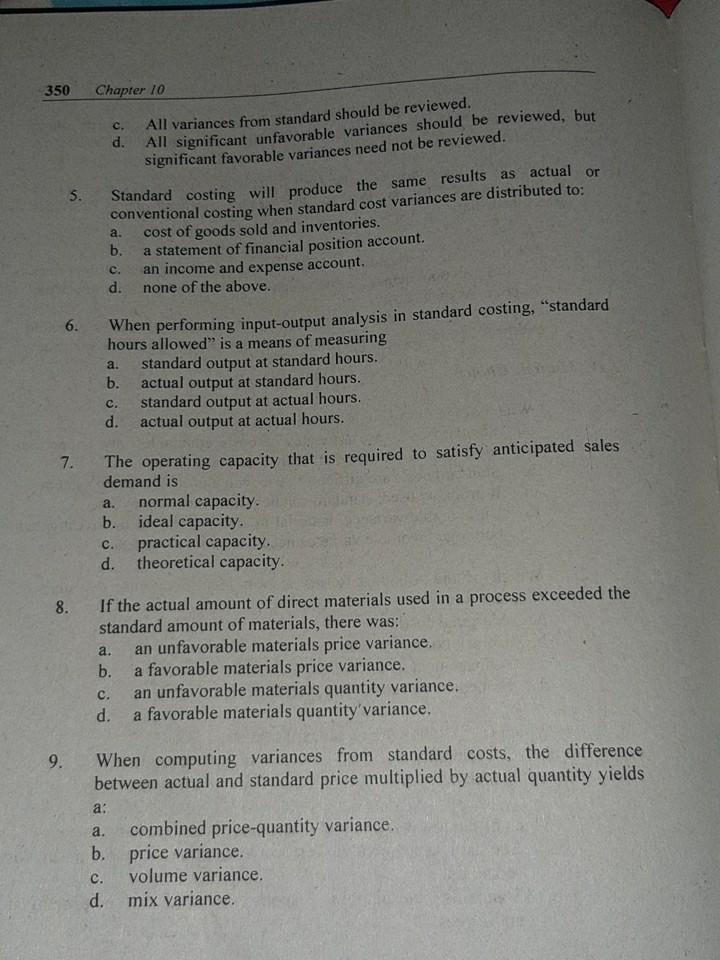
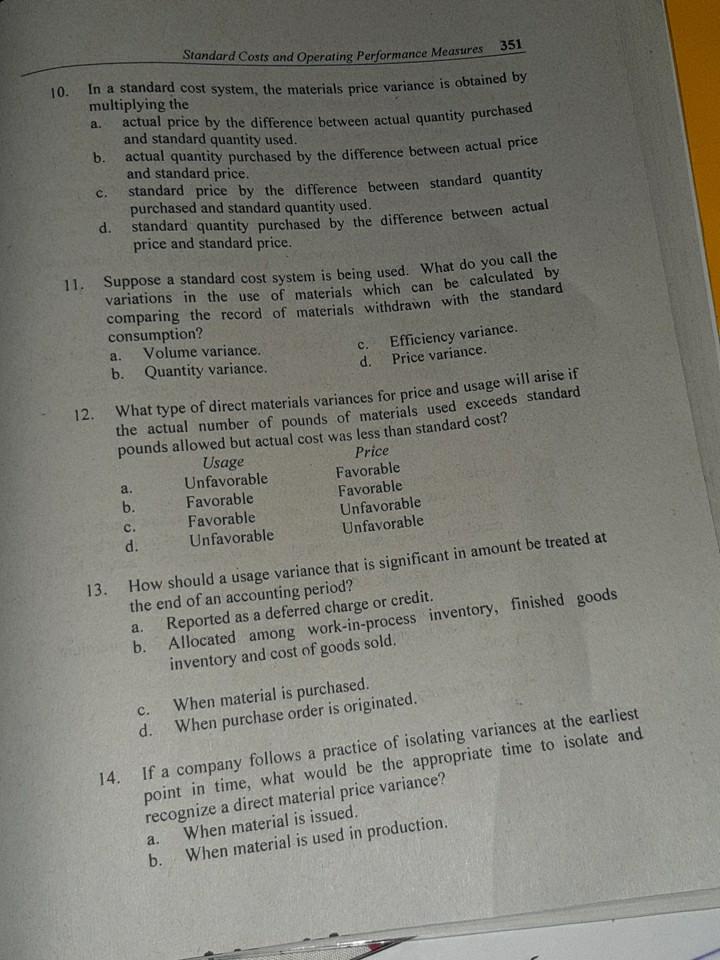
350 Chapter 10 7. 5. 6. C. d. All variances from standard should be reviewed. All significant unfavorable variances should be reviewed, but significant favorable variances need not be reviewed. Standard costing will produce the same results as actual or conventional costing when standard cost variances are distributed to: a. cost of goods sold and inventories. b. C. d. a statement of financial position account. an income and expense account. none of the above. When performing input-output analysis in standard costing, "standard hours allowed" is a means of measuring a. b. C. d. standard output at standard hours. actual output at standard hours. standard output at actual hours. actual output at actual hours. The operating capacity that is required to satisfy anticipated sales demand is a. normal capacity. b. ideal capacity. 9. 8. C. d. practical capacity. theoretical capacity. If the actual amount of direct materials used in a process exceeded the standard amount of materials, there was: a. b. C. d. an unfavorable materials price variance. a favorable materials price variance. an unfavorable materials quantity variance. a favorable materials quantity variance. When computing variances from standard costs, the difference between actual and standard price multiplied by actual quantity yields a: a. combined price-quantity variance. b. price variance. C. volume variance. d. mix variance. 10. Standard Costs and Operating Performance Measures 351 In a standard cost system, the materials price variance is obtained by multiplying the a. b. C. d. actual price by the difference between actual quantity purchased and standard quantity used. actual quantity purchased by the difference between actual price and standard price. standard price by the difference between standard quantity purchased and standard quantity used. standard quantity purchased by the difference between actual price and standard price. 11. Suppose a standard cost system is being used. What do you call the variations in the use of materials which can be calculated by comparing the record of materials withdrawn with the standard consumption? a. Volume variance. b. Quantity variance. 12. c. d. Efficiency variance. Price variance. What type of direct materials variances for price and usage will arise if the actual number of pounds of materials used exceeds standard pounds allowed but actual cost was less than standard cost? a. b. C. d. 13. Usage Unfavorable Favorable Favorable Unfavorable Price Favorable Favorable Unfavorable Unfavorable How should a usage variance that is significant in amount be treated at the end of an accounting period? a. 46 b. Reported as a deferred charge or credit. Allocated among work-in-process inventory, finished goods inventory and cost of goods sold. C. When material is purchased. d. When purchase order is originated. 14. If a company follows a practice of isolating variances at the earliest point in time, what would be the appropriate time to isolate and recognize a direct material price variance? a. b. When material is issued. When material is used in production
Step by Step Solution
There are 3 Steps involved in it

Get step-by-step solutions from verified subject matter experts