



Question: 38,400 46,080 12,500 Estimated Income Statements, using Absorption and Variable Costing Prior to the first month of operations ending October 31, Marshall Inc. estimated the
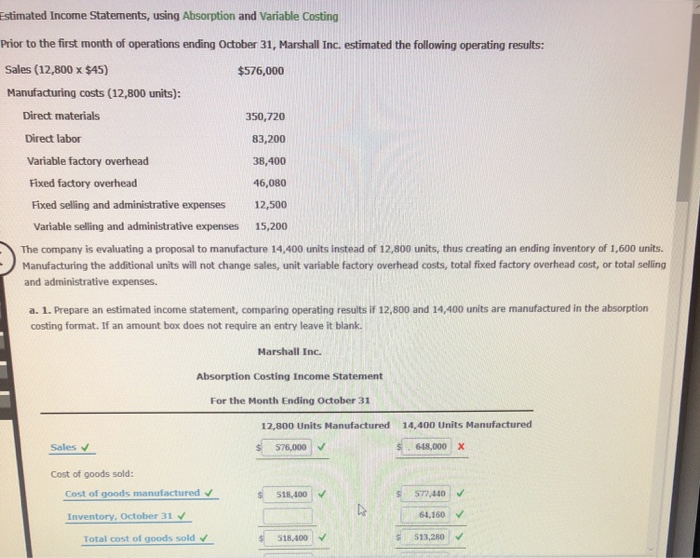
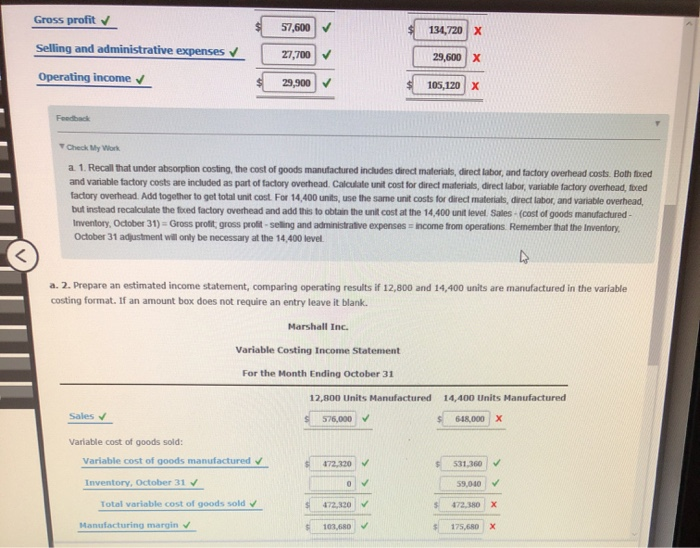
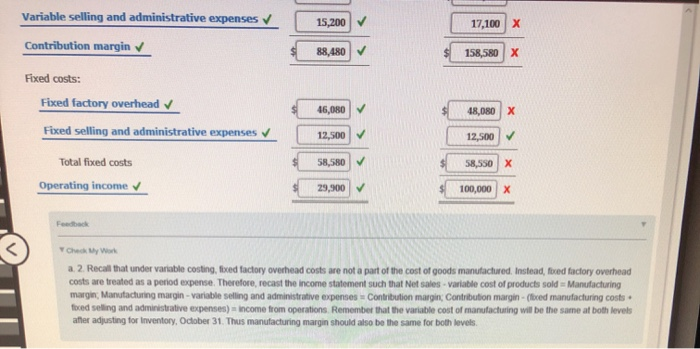
38,400 46,080 12,500 Estimated Income Statements, using Absorption and Variable Costing Prior to the first month of operations ending October 31, Marshall Inc. estimated the following operating results: Sales (12,800 x $45) $576,000 Manufacturing costs (12,800 units): Direct materials 350,720 Direct labor 83,200 Variable factory overhead Fixed factory overhead Fixed selling and administrative expenses Variable selling and administrative expenses 15,200 The company is evaluating a proposal to manufacture 14,400 units instead of 12,800 units, thus creating an ending inventory of 1,600 units. Manufacturing the additional units will not change sales, unit variable factory overhead costs, total fixed factory overhead cost, or total selling and administrative expenses. a. 1. Prepare an estimated income statement, comparing operating results if 12,800 and 14,400 units are manufactured in the absorption costing format. If an amount box does not require an entry leave it blank. Marshall Inc. Absorption Costing Income Statement For the Month Ending October 31 12,800 Units Manufactured 14,400 Units Manufactured Sales 5, 648,000 X Cost of goods sold: Cost of goods manufactured 518.400 577.410 Inventory, October 31 61,160 Total cost of goods sold 518.400 513,280 57,600 134,720 X Gross profit Selling and administrative expenses Operating income 27,700 29,600 X 29,900 105,120 X Check My Work a 1. Recall that under absorption costing, the cost of goods manufactured includes direct materials, direct labor, and factory overhead costs. Both fixed and variable factory costs are included as part of factory overhead Calculate unit cost for direct materials, direct labor, variable factory overhead, fixed factory overhead. Add together to get total unit cost. For 14,400 units, use the same unit costs for direct materials, direct labor, and variable overhead, but instead recalculate the faced factory overhead and add this to obtain the unit cost at the 14,400 unit level. Sales (cost of goods manufactured Inventory, October 31) = Gross profit; gross profit-selling and administrative expenses income from operations. Remember that the inventory October 31 adjustment will only be necessary at the 14,400 level. a. 2. Prepare an estimated income statement, comparing operating results if 12,800 and 14,400 units are manufactured in the variable costing format. If an amount box does not require an entry leave it blank. Marshall Inc. Variable Costing Income Statement For the Month Ending October 31 12,800 Units Manufactured 14,400 Units Manufactured Sales 56,000 6-18.000 X Variable cost of goods sold: Variable cost of goods manufactured 472,320 531.360 Inventory, October 31 0 59,040 Total variable cost of goods sold 472,320 47230 X Manufacturing margin 103.6D 175.680 15,200 17,100 X Variable selling and administrative expenses Contribution margin 88,480 158,580 x 46,080 48,080 X Fixed costs: Fixed factory overhead Fixed selling and administrative expenses Total fixed costs Operating income 12,500 12,500 58,580 58,550 X 29,900 100,000 X Feedback Chey a. 2. Recall that under variable costing, fed factory overhead costs are not a part of the cost of goods manufactured. Instead, foxed factory overhead costs are treated as a period expense. Therefore, recast the income statement such that Net sales - Variable cost of products sold - Manufacturing margin, Manutacturing margin-variable selling and administrative expenses Contribution margin: Contribution margin-oved manufacturing costs forced selling and administrative expenses) income from operations. Remember that the variable cost of manufacturing will be the same at both levels after adjusting for Inventory, October 31. Thus manufacturing margin should also be the same for both levels
Step by Step Solution
There are 3 Steps involved in it

Get step-by-step solutions from verified subject matter experts