







Question: 4 . 2 Counters A counter is a sequential circuit that counts in a particular code ( upwards or downwards ) . A counter can
Counters
A counter is a sequential circuit that counts in a particular code upwards or downwards A counter can be realized using all types of FFs the additional logic gates need to be changed when you change the FF type, however Counters for the binary code and the Gray code are already well know from the lecture.
Some properties of a counter:
Counting up means that the number in the next cycle will be higher than the current one
Autorun means that the counter automatically starts when the circuit is powered onthe simulation begins
A synchronous counter is a counter where each of the flipflops is connected to one single clock line, that means all flipflop have a common clock line.
For an asynchronous counter, the clockinputs of some flipflops are connected to the outputs of other flipflops, that is each of the flipflops may have a different clock
Counter for code
As circuit diagrams for counters using binary code an Gray code are well known, in this lab a counter using the code is to be designed.
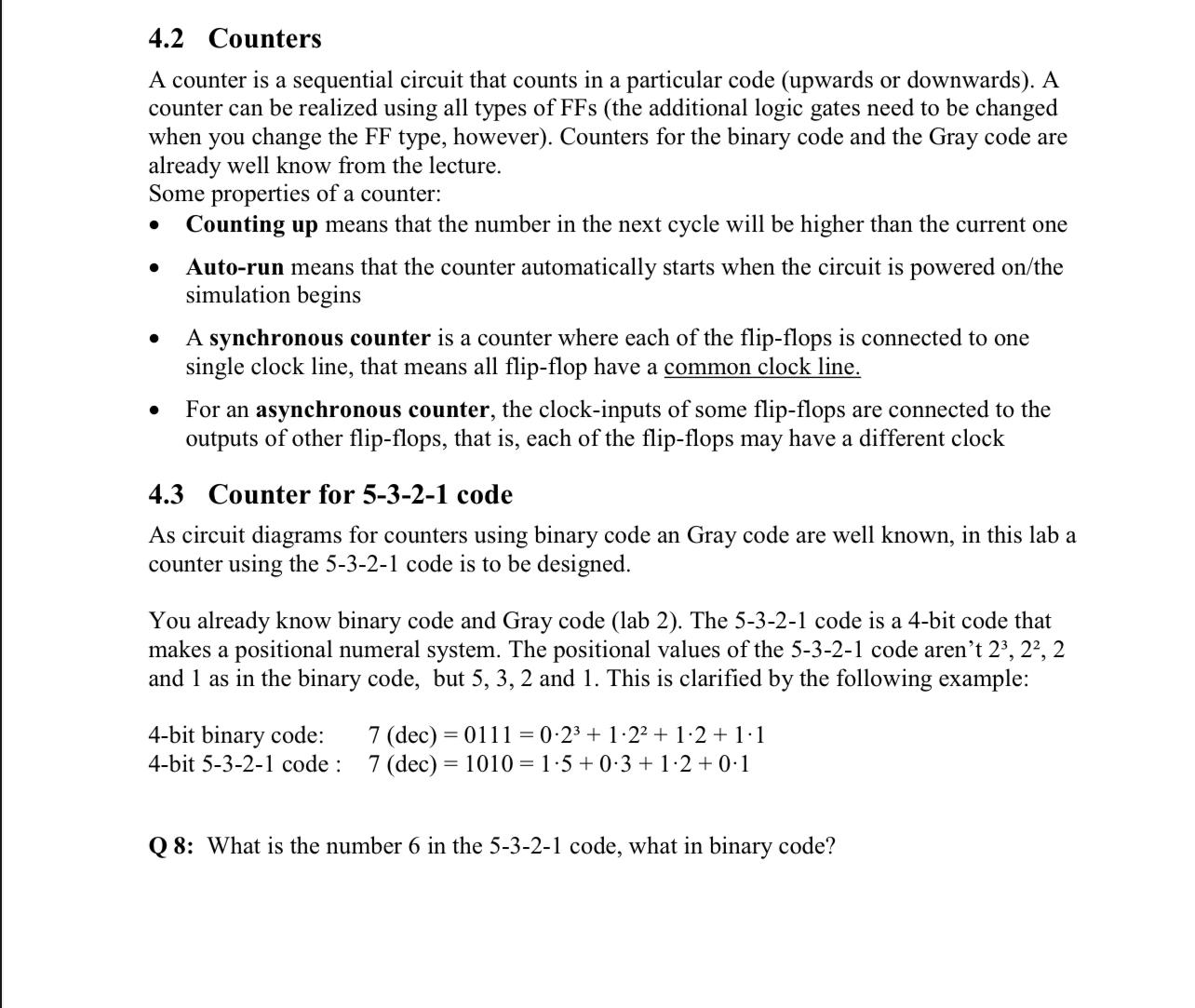
You already know binary code and Gray code lab The code is a bit code that makes a positional numeral system. The positional values of the code aren't and as in the binary code, but and This is clarified by the following example:
bit binary code:
bit code :
Q : What is the number in the code, what in binary code?
Step by Step Solution
There are 3 Steps involved in it
1 Expert Approved Answer
Step: 1 Unlock

Question Has Been Solved by an Expert!
Get step-by-step solutions from verified subject matter experts
Step: 2 Unlock
Step: 3 Unlock
 Study Help